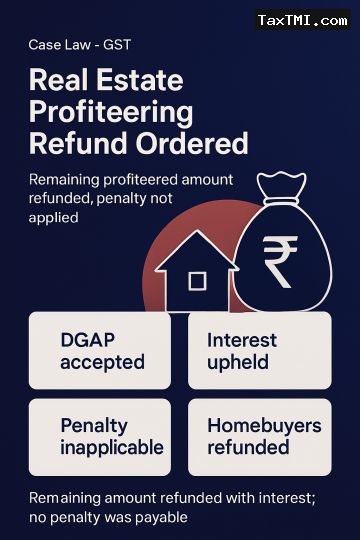
In a real estate anti-profiteering matter, the Tribunal accepted the DGAP report in full because the respondent unconditionally accepted the methodology, quantification and contravention finding, and the remaining profiteered amount for the period up to receipt of the Occupancy Certificate was ordered to be refunded to eligible homebuyers. It also upheld interest on the profiteered amount, holding that interest is payable from the dates of excess collection until actual refund. The penalty provision was held inapplicable because the alleged profiteering had ended before Section 171(3A) came into force, so no penalty was payable.
In a real estate anti-profiteering matter, the Tribunal accepted the DGAP report in full because the respondent unconditionally accepted the methodology, quantification and contravention finding, and the remaining profiteered amount for the period up to receipt of the Occupancy Certificate was ordered to be refunded to eligible homebuyers. It also upheld interest on the profiteered amount, holding that interest is payable from the dates of excess collection until actual refund. The penalty provision was held inapplicable because the alleged profiteering had ended before Section 171(3A) came into force, so no penalty was payable.
Note: It is a system-generated summary and is for quick reference only.
 TaxTMI
  TaxTMI
 of 4912