Explained Investment Sources: documented gifts and traceable salary savings supported deletion of additions for property and mutual-fund SIP investmen...
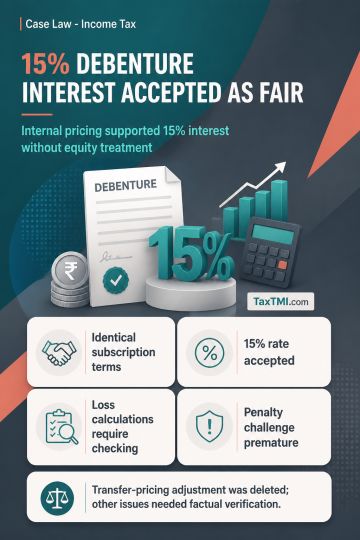
Internal comparable pricing supports arm's-length interest on compulsorily convertible debentures, preventing their recharacterisation as equity for t...
Nominee director protection shields independent financial-institution appointees from criminal liability where they lack involvement in deposit defaul...
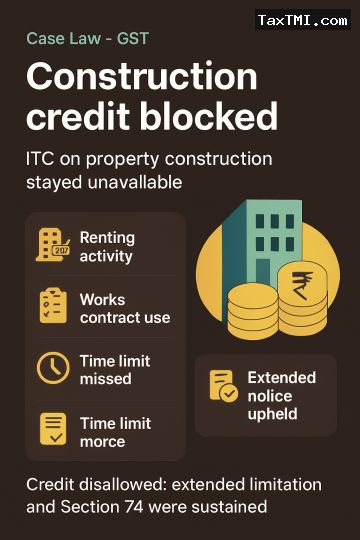
Blocked input tax credit on construction of immovable property remained unavailable where the taxpayer was engaged in renting immovable property, used works contract services for construction, and the credit fell within clauses (c) and (d) of Section 17(5). The Court also treated the claim as belated because the credit was not taken within the statutory time limit under Section 16. It held that a unilateral letter proposing availment did not amount to departmental approval, and that availing a much larger credit without concurrence justified invocation of fraud and suppression, the extended limitation period, and Section 74. The challenge to the common notice covering multiple tax periods also failed.
Blocked input tax credit on construction of immovable property remained unavailable where the taxpayer was engaged in renting immovable property, used works contract services for construction, and the credit fell within clauses (c) and (d) of Section 17(5). The Court also treated the claim as belated because the credit was not taken within the statutory time limit under Section 16. It held that a unilateral letter proposing availment did not amount to departmental approval, and that availing a much larger credit without concurrence justified invocation of fraud and suppression, the extended limitation period, and Section 74. The challenge to the common notice covering multiple tax periods also failed.
Note: It is a system-generated summary and is for quick reference only.
 TaxTMI
  TaxTMI
 of 4886