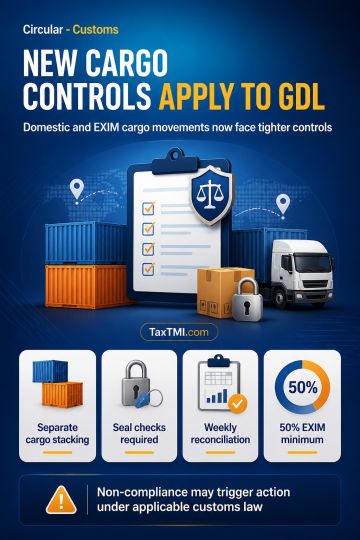
Customs-controlled cargo movement now includes GDL, subject to EXIM prioritisation, segregation, verification, reconciliation and enforcement safeguar...
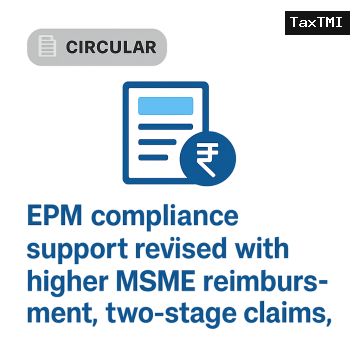
Trade Notice amends the EPM-Niryat Disha guidelines by replacing the certification list with Annexure-I, expanding the eligible testing, inspection and certification entries. Financial assistance is now differentiated by MSME class: micro and small enterprises may receive up to 95% of actual cost, while medium enterprises may receive up to 80%, subject to the notified ceiling; the maximum cumulative reimbursement rises to 50 lakh per IEC, with higher support subject to Sub-Committee review. Support is now disbursed in two instalments, and reimbursement claims are split into RC-1 and RC-2, with export evidence required before the second claim. Failure to act within the prescribed timelines causes lapse and possible recovery.
Trade Notice amends the EPM-Niryat Disha guidelines by replacing the certification list with Annexure-I, expanding the eligible testing, inspection and certification entries. Financial assistance is now differentiated by MSME class: micro and small enterprises may receive up to 95% of actual cost, while medium enterprises may receive up to 80%, subject to the notified ceiling; the maximum cumulative reimbursement rises to 50 lakh per IEC, with higher support subject to Sub-Committee review. Support is now disbursed in two instalments, and reimbursement claims are split into RC-1 and RC-2, with export evidence required before the second claim. Failure to act within the prescribed timelines causes lapse and possible recovery.
Note: It is a system-generated summary and is for quick reference only.
 TaxTMI
  TaxTMI
 of 4881