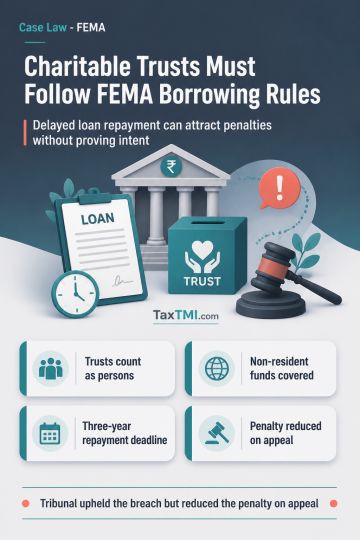
FEMA borrowing restrictions bind charitable trusts, and civil penalties apply without proving intent for delayed repayment of non-resident rupee loans...
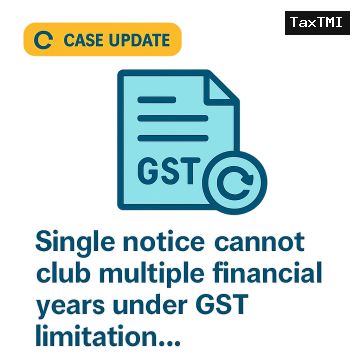
Section 74 does not permit a single show-cause notice to club multiple financial years, because limitation is linked to each relevant financial year and a consolidated notice would unlawfully extend the five-year period for earlier years. The impugned notice and consequential order were therefore treated as de hors the statute and without jurisdiction. The alternative-remedy rule was also held to be only a self-imposed restraint: where the defect is ex facie jurisdictional and apparent on the record, writ relief remains maintainable despite an available statutory appeal.
Section 74 does not permit a single show-cause notice to club multiple financial years, because limitation is linked to each relevant financial year and a consolidated notice would unlawfully extend the five-year period for earlier years. The impugned notice and consequential order were therefore treated as de hors the statute and without jurisdiction. The alternative-remedy rule was also held to be only a self-imposed restraint: where the defect is ex facie jurisdictional and apparent on the record, writ relief remains maintainable despite an available statutory appeal.
Note: It is a system-generated summary and is for quick reference only.
 TaxTMI
  TaxTMI
 of 4888