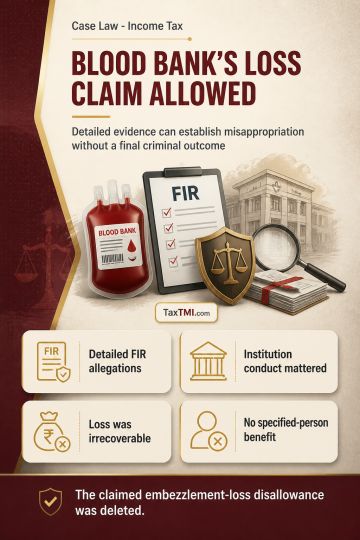
Embezzlement losses in charitable institutions remain allowable when misappropriation is established, irrecoverable, and not a specified-person benefi...
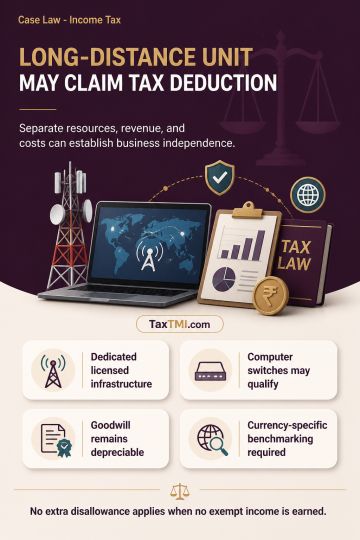
National long-distance undertaking status supports deduction where separately licensed infrastructure, resources, revenue, and expenditure establish c...
Agency reimbursement income follows contractual deposit-liability computation, while pending deposit collections do not constitute deemed-dividend loa...
Membership-consent thresholds for oppression petitions are satisfied by unchallenged voter-list consents, while unsupported forgery claims require pro...
Under the GST law, proceedings initiated in the name of a deceased assessee were not invalidated where the death had not been intimated to the department. The HC further noted that, even if recourse to the extended limitation under Section 74 was unavailable, proceedings under Section 73 could still be maintained because of the limitation extensions under Section 168A and the Supreme Court's exclusion of limitation in Re: Cognizance; objections based on absence of Section 74 ingredients and limitation were rejected. The Court also affirmed that a legal representative is liable, out of the estate, for tax dues of the deceased, but set aside the ex parte assessment orders and remitted the matters for fresh adjudication on merits.
Under the GST law, proceedings initiated in the name of a deceased assessee were not invalidated where the death had not been intimated to the department. The HC further noted that, even if recourse to the extended limitation under Section 74 was unavailable, proceedings under Section 73 could still be maintained because of the limitation extensions under Section 168A and the Supreme Court's exclusion of limitation in Re: Cognizance; objections based on absence of Section 74 ingredients and limitation were rejected. The Court also affirmed that a legal representative is liable, out of the estate, for tax dues of the deceased, but set aside the ex parte assessment orders and remitted the matters for fresh adjudication on merits.
Note: It is a system-generated summary and is for quick reference only.
 TaxTMI
  TaxTMI
 of 4881