Political contribution deductions require genuine transactions; banking records and party registration alone cannot defeat evidence of accommodation e...
Post-death GST liability permits fresh proceedings against legal representatives, while discontinued-business recovery remains limited to the inherite...
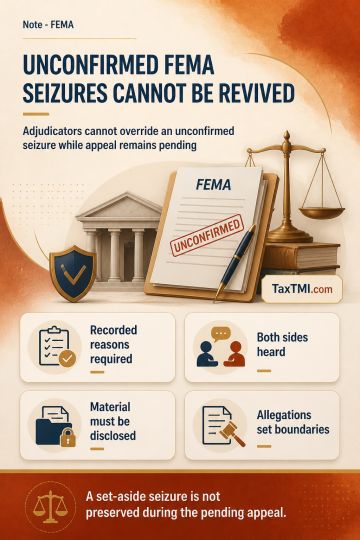
Non-confirmation of FEMA seizure prevents adjudicators from overriding pending appellate findings on recorded reasons and suspected foreign asset hold...
Section 53A of the Transfer of Property Act did not confer ownership for depreciation where there was no written and registered transfer instrument, so the assessee could not treat the properties as firm assets or claim depreciation on that basis. The assessment was also not vitiated by natural justice grounds because the show-cause process and repeated notices already covered the relevant factual basis, and the shift from unexplained investment to unexplained credit was treated as a consequence of the same inquiry. Having rejected the jurisdictional and procedural objections, the Court declined to examine the merits of the unexplained credit dispute in writ jurisdiction and relegated the assessee to the statutory appellate remedy.
Section 53A of the Transfer of Property Act did not confer ownership for depreciation where there was no written and registered transfer instrument, so the assessee could not treat the properties as firm assets or claim depreciation on that basis. The assessment was also not vitiated by natural justice grounds because the show-cause process and repeated notices already covered the relevant factual basis, and the shift from unexplained investment to unexplained credit was treated as a consequence of the same inquiry. Having rejected the jurisdictional and procedural objections, the Court declined to examine the merits of the unexplained credit dispute in writ jurisdiction and relegated the assessee to the statutory appellate remedy.
Note: It is a system-generated summary and is for quick reference only.
 TaxTMI
  TaxTMI
 of 4918