Opportunity to furnish unsecured-loan confirmations is required before reassessment initiation; proceedings require fresh consideration after taxpayer...
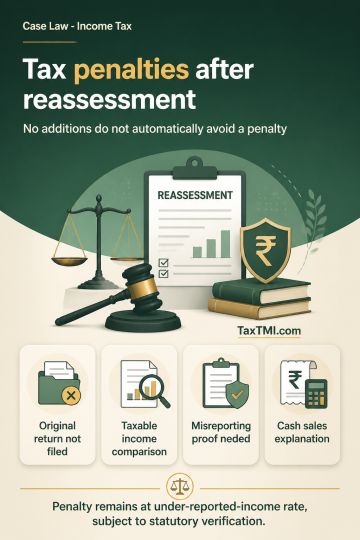
Under-reporting on a first reassessment return attracts penalty, while enhanced misreporting penalty requires proof of a statutory misreporting catego...
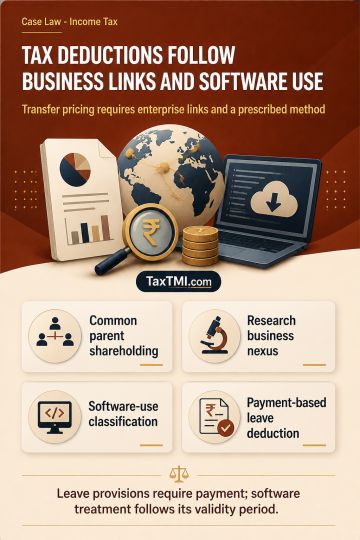
Transfer pricing benchmarking had to be confined to the assessee's international transactions where segmental results for associated enterprise and non-associated enterprise dealings were available and capable of segregation. Entity-level margins could not be used merely because the segmental accounts were unaudited, and the benchmarking was therefore directed to be on segmental profitability. In applying external TNMM, comparables had to satisfy functional, asset and risk similarity; retail businesses, fabric or yarn manufacturers, contract socks manufacturers, leather garment manufacturers, and companies with merger or acquisition during the year were excluded, and exporters with export revenue below 75% of sales were also filtered out. The TPO was directed to redo comparability analysis and allow the +/- 5% tolerance under section 92C(2).
Transfer pricing benchmarking had to be confined to the assessee's international transactions where segmental results for associated enterprise and non-associated enterprise dealings were available and capable of segregation. Entity-level margins could not be used merely because the segmental accounts were unaudited, and the benchmarking was therefore directed to be on segmental profitability. In applying external TNMM, comparables had to satisfy functional, asset and risk similarity; retail businesses, fabric or yarn manufacturers, contract socks manufacturers, leather garment manufacturers, and companies with merger or acquisition during the year were excluded, and exporters with export revenue below 75% of sales were also filtered out. The TPO was directed to redo comparability analysis and allow the +/- 5% tolerance under section 92C(2).
Note: It is a system-generated summary and is for quick reference only.
 TaxTMI
  TaxTMI
 of 4915