Loading...

⚠ ✕
❮ Top
☎ Help
☰
×

By creating an account you can:

Logo TaxTMI
Call Us / Help / Feedback✕

Contact Us At :

✉ E-mail: [email protected]

✆ To Call / Whatsapp, Check Contact Us

FAQs :

To know Frequently Asked Questions, Check FAQs

Most Asked Video Tutorials :

For more tutorials, Check Video Tutorials

Submit Feedback/Suggestion :

Email :
Please provide your email address so we can follow up on your feedback.
Category :
Description :
Min 15 characters 0/2000
Make Most of Text Search ✕
  1. Checkout this video tutorial: How to search effectively on TaxTMI.
  2. Put words in double quotes for exact word search, eg: "income tax"
  3. Avoid noise words such as : 'and, of, the, a'
  4. Sort by Relevance to get the most relevant document.
  5. Press Enter to add multiple terms/multiple phrases, and then click on Search to Search.
  6. Text Search
  7. The system will try to fetch results that contains ALL your words.
  8. Once you add keywords, you'll see a new 'Search In' filter that makes your results even more precise.
  9. Text Search
╳
Add to...
You have not created any category. Kindly create one to bookmark this item!
✕
Create New Category
Hide
Title :
Description :
❮❮ Hide
❮ Default View
Expand ❯❯
Close ✕
🔎 Filters / Advanced Search ❯
TEXT

Press 'Enter' to add multiple search terms. Rules for Better Search

Search In
Main Text + AI Text ❯
  • Main Text
  • Main Text + AI Text
  • AI Text
Law:
---- All Laws---- ❯
  • ---- All Laws----
  • Benami Property
  • Bill
  • Central Excise
  • Companies Law
  • Customs
  • DGFT
  • FEMA
  • GST
  • GST - States
  • IBC
  • Income Tax
  • Indian Laws
  • Money Laundering
  • SEBI
  • SEZ
  • Service Tax
  • VAT / Sales Tax
Types:
---- All Types ---- ❯
  • ---- All Types ----
  • Act Rules
  • Case Laws
  • Circulars
  • Manuals
  • News
  • Notifications
Sort By: ?
In Sort By 'Default', exact matches for text search are shown at the top, followed by the remaining results in their regular order.
Relevance Default Date
☰   Show Results ❯
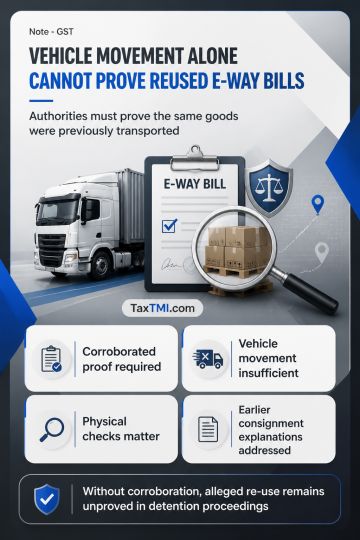
    Alleged Re-use of E-Way Bills under Section 129: Evidentiary Burden in Detention Proceedings
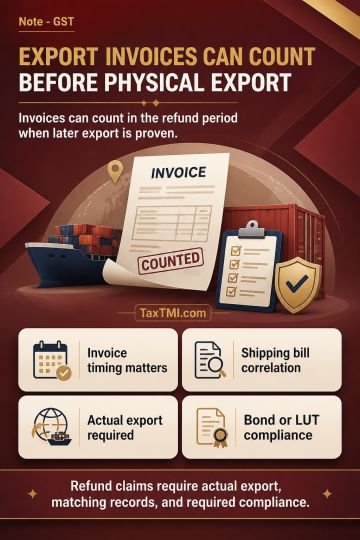
    Turnover of Zero-Rated Supply Under Rule 89(4): Invoice Period and Subsequent Physical Export
    Case Laws Income Tax
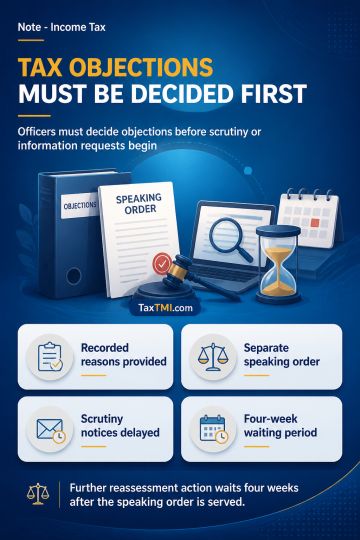
    Reassessment Proceedings: Speaking Disposal of Objections Before Scrutiny Under Sections 143(2) and ...
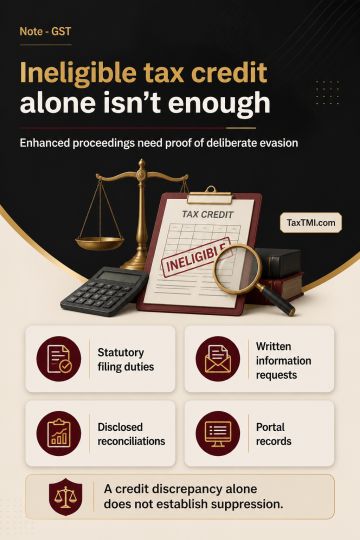
    Suppression of Facts under Explanation 2 to Section 74 of the CGST Act in Cases of Ineligible Input ...
    Case Laws Customs
    Classification of Low-Ethoxylated Non-Ionic Fatty Alcohol Ethoxylates under Headings 3402 and 3824
    Case Laws Customs
    Seizure and Detention of Imported Cars under Sections 110, 110A and 124 of the Customs Act, 1962
    Case Laws Companies Law
    Lifting the Corporate Veil Where Promoter Shareholding Is Allegedly Dissipated Despite Judicial Assu...
    Consolidated Show Cause Notices under Sections 73 and 74 and Taxability of School Affiliation Servic...
    Fraudulent Input Tax Credit from Non-Existent Suppliers: Application of Sections 16, 74 and 155 of t...
    Case Laws Money Laundering
    Prolonged Pre-Trial Incarceration and Bail under Section 45 of the Prevention of Money-Laundering Ac...
    Case Laws Income Tax
    Prospective Operation of Section 56(2)(x)(b) in Stamp-Value Difference Cases Involving Immovable Pro...
    Seizure of Cash under Section 67 of the CGST Act and Interest on Illegal Retention
    Case Laws Income Tax
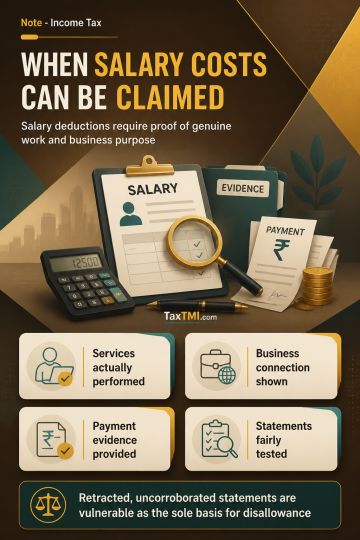
    Disallowance of Salary Expenditure for Allegedly Non-Genuine Services under Section 37
    Case Laws Income Tax
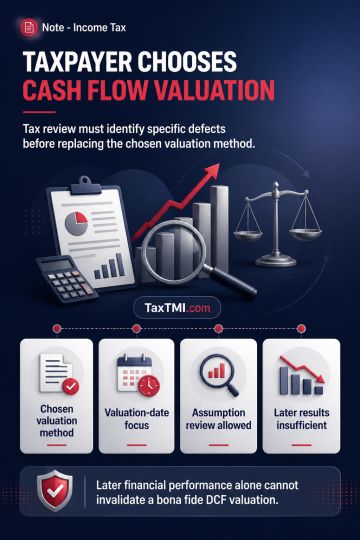
    Fair Market Value of Unquoted Equity Shares Under Section 56(2)(viib) and Rule 11UA
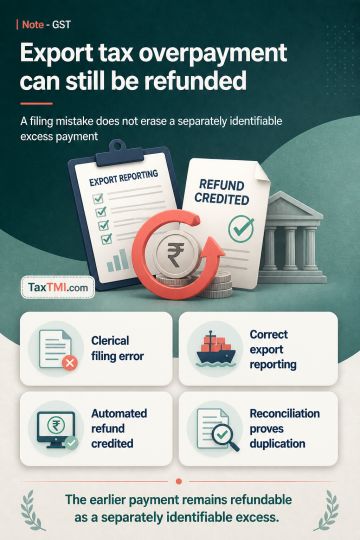
    Refund of Excess IGST Paid on Exports Following Clerical Error in FORM GSTR-3B
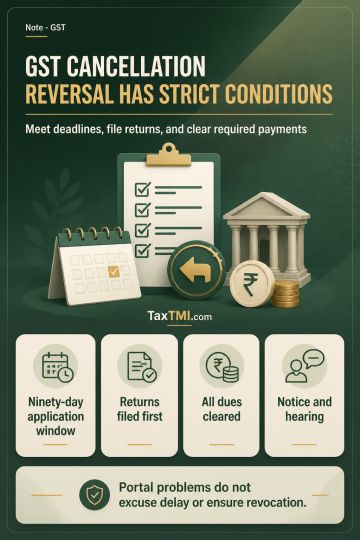
    Revocation of Cancellation of GST Registration for Non-Filing of Returns under Section 30 and Rule 2...
    Case Laws Income Tax
    TOLA, Section 149 and the Surviving-Time Test for Reassessment Proceedings
    Case Laws Customs
    Provisional Release of Unseized Imported Food Consignments under the Customs Act, 1962
    Case Laws Customs
    Recovery of Unpaid Anti-Dumping Duty After Self-Assessment Under Section 28 of the Customs Act, 1962
    Project-Wise Anti-Profiteering Methodology in Real Estate under Section 171 of the Central Goods and...
❮
❯
❯❯
Maximize Maximize Maximize
0 / 200
Expand Note
Add to Folder

No Folders have been created

+

Are you sure you want to delete "My most important" ?

NOTE:

Notes
Showing Results for :
Reset Filters
Results Found:
Show All Summaries Hide All Summaries
Case Laws GST
Show AI Summary
E-way bill re-use allegations require corroborated proof identifying the same goods; vehicle movement alone cannot establish contravention.
Alleged re-use of invoices and e-way bills requires the seizing authority to establish through positive, corroborated evidence that the intercepted goods are the same consignment previously transported under those documents. Toll data, vehicle movements and photographs may justify inquiry but do not alone prove prior delivery, identity of goods or re-use. Where invoices and e-way bills accompany the goods and physical verification shows no discrepancy, the authority must investigate and address any explanation of a different earlier consignment. Cases involving absent or expired transport documents remain factually distinct.
Case Laws GST
Show AI Summary
Zero-rated supply turnover includes export invoices from the refund period when actual export is subsequently established under bond or LUT.
Under Rule 89(4), invoice values for goods invoiced before or at removal for export under bond or Letter of Undertaking may be included in zero-rated turnover for the relevant refund period, although physical export occurs later. The invoice and removal determine period-wise attribution for the refund formula, while actual export remains essential to sustain the claim. Shipping bills, bills of export and related export records must correlate with the export invoices to establish that the goods were ultimately exported. Compliance with valuation, input tax credit eligibility and bond or Letter of Undertaking conditions remains necessary.
Case Laws Income Tax
Show AI Summary
Reassessment objections require speaking disposal and a four-week pause before scrutiny or information requests can begin.
Under the pre-amendment Section 148 framework, reassessment jurisdiction must be resolved before merits-stage scrutiny begins. The Assessing Officer must furnish recorded reasons when requested, permit objections, and decide them through a separate speaking order. A Section 143(2) notice commences scrutiny, while a Section 142(1) notice is a substantive inquiry step; neither may issue before objections are decided. Following rejection, a four-week period from service of the speaking order must be allowed before further reassessment action, preserving an effective opportunity to challenge reopening.
Case Laws GST
Show AI Summary
Suppression of facts requires proof of deliberate tax evasion; ineligible input tax credit alone cannot support enhanced proceedings.
Section 74 permits enhanced tax determination for wrongly availed or utilised input tax credit only where fraud, wilful misstatement, or suppression of facts to evade tax is established. Wrong or ineligible credit is distinct from substantive credit eligibility and cannot, without evidence of deliberate conduct and intent, amount to suppression. Under historical Explanation 2, suppression required either omitted information legally required in prescribed filings or failure to provide information sought in writing; both operate subject to the statutory evasion requirement. Disclosed reconciliations and portal records materially weaken a bare allegation of non-declaration.
Case Laws Customs
Show AI Summary
Organic surface-active agent classification requires water solubility and stability; phase-separating low-ethoxylated products fall outside Heading 3402.
Classification of low-ethoxylated non-ionic fatty alcohol ethoxylates under Heading 3402 requires satisfaction of the cumulative water test in Chapter Note 3. At the prescribed concentration, temperature, and standing period, the product must both remain a transparent or translucent liquid, or stable emulsion, without phase separation and reduce water surface tension to the stated threshold. Non-ionic character or surface activity alone is insufficient. Where a low-ethoxylated product separates into layers and fails the solubility and stability requirement, Heading 3824 may be considered after exclusion from Heading 3402.
Case Laws Customs
Show AI Summary
Lawful customs seizure requires recorded confiscation grounds, formal restraint where needed, and timely notice; detention cannot bypass safeguards.
Customs seizure of an imported car requires recorded reason to believe that it is liable to confiscation. A panchnama restraint cannot replace a lawful seizure order, an undertaking where seized goods remain in custody, or a served non-dealing order where seizure is impracticable. Section 110(2) requires prompt notice under Section 124, subject only to the prescribed extension mechanism. Prolonged effective detention cannot postpone those safeguards. Provisional release under Section 110A applies only to goods lawfully seized and cannot validate an earlier detention without statutory authority.
Case Laws Companies Law
Show AI Summary
Corporate veil-piercing permits forensic scrutiny in execution where promoter-controlled entities may dissipate shareholding despite judicial assurances.
Corporate veil-piercing in execution is an exceptional response where promoters allegedly use layered entities and securities transactions to deplete shareholding represented as security through judicial assurances. Separate personality remains the rule, and control or ownership alone does not suffice; there must be a nexus between control, misuse of the corporate form, and frustration of enforcement. A forensic audit reconstructs share movements, pledges, sales, financing, approvals, disclosures, and fund flows, distinguishing legitimate enforcement of pre-existing security from coordinated asset dissipation.
Case Laws GST
Show AI Summary
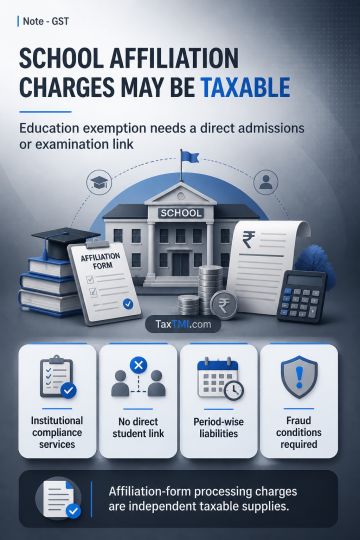
School affiliation services fall outside educational exemption without a direct nexus to admissions or examination conduct.
Consolidated show cause notices may combine financial years governed by Sections 73 and 74 where liabilities are segregated period-wise, each component independently meets limitation and notice requirements, the additional ingredients for fraud-based proceedings are satisfied, and no actual prejudice arises. School affiliation and affiliation-form processing charges are independent taxable supplies where they concern institutional eligibility and compliance, rather than directly and immediately relating to student admission or the conduct of examinations. A broad connection with education does not satisfy the educational-services exemption.
Case Laws GST
Show AI Summary
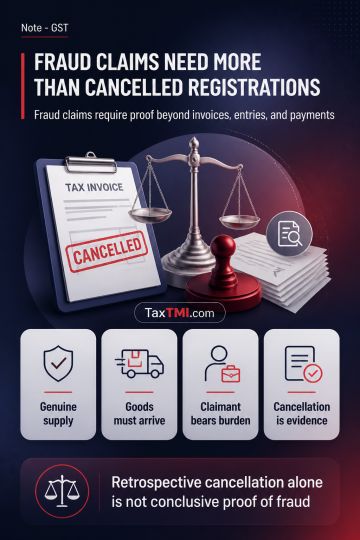
Fraudulent input tax credit requires proof of fictitious supplies, absent goods receipt, and fraud-linked self-assessment, not cancellation alone.
Input tax credit from allegedly non-existent suppliers depends on proof of genuine supply and actual receipt of goods or services, not merely invoices, accounting entries, or banking-channel payments. Section 155 places the burden of establishing ITC eligibility on the claimant. Section 74 requires more than ineligible credit: the wrongful availment must be linked to fraud, wilful misstatement, or suppression to evade tax. Retrospective supplier-registration cancellation is relevant evidence but is not conclusive. A fraud-based notice must disclose facts showing fictitious suppliers, absence of supply, and a basis for inferring the recipient's knowledge or participation.
Case Laws Money Laundering
Show AI Summary
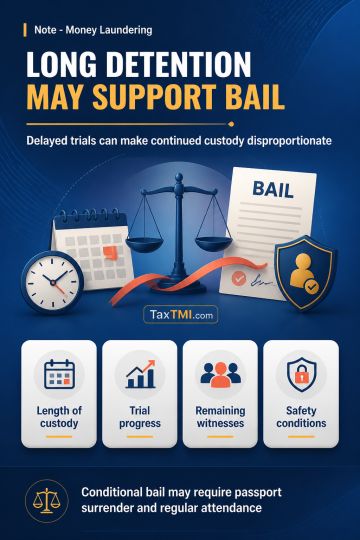
Prolonged pre-trial incarceration may justify conditional PMLA bail when delayed trials make continued detention constitutionally disproportionate.
Section 45 of the Prevention of Money-Laundering Act remains the stringent ordinary bail threshold, requiring prosecutorial opportunity and, on opposition, reasonable grounds to believe that the accused is not guilty and unlikely to offend while on bail. Article 21 nevertheless requires a separate, fact-sensitive inquiry where prolonged pre-trial detention and an unrealistic trial timetable make custody disproportionate. Relevant factors include custody length, trial progress, remaining witnesses, secured documentary evidence, source of delay, predicate-case status, and risks of absconding or witness interference. Conditions such as passport surrender, attendance, non-contact directions, and residence disclosure may safeguard the trial.
Case Laws Income Tax
Show AI Summary
Prospective operation of stamp-value taxation prevents retrospective application where property agreements and substantial payments predate the charging provision.
Section 56(2)(x)(b) applies to immovable property received for inadequate consideration only where its temporal and valuation conditions are satisfied. A stamp-value difference alone does not establish taxability. Where consideration was fixed and substantial payments or contractual performance occurred before the charging provision commenced, later conveyance or registration does not by itself attract the later charge. Agreement-date valuation is available only for covered transactions where consideration was fixed and paid, wholly or partly, through prescribed banking or electronic modes on or before the agreement date. The tax authority must identify the correct statutory basis and provide a meaningful opportunity to respond.
Case Laws GST
Show AI Summary
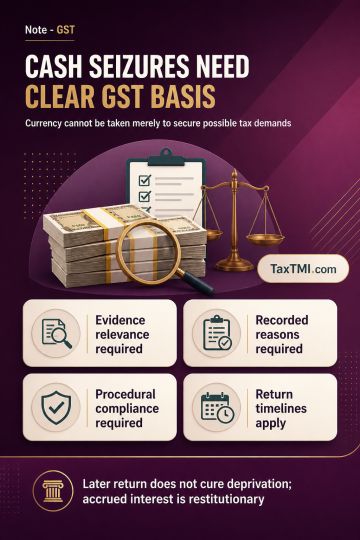
GST cash seizure limits require statutory relevance and restitutionary interest for unlawfully retained currency following searches.
GST seizure powers cannot be used to take cash as a general investigative measure or security for a possible tax demand. Currency is excluded from goods, and "things" is confined contextually to articles useful or relevant as evidence in GST proceedings. Valid seizure and retention require recorded statutory reasons, procedural compliance and observance of return timelines. Unauthorised retention engages property protections; later return does not cure the deprivation, and accrued interest is restitutionary rather than delayed-refund interest.
Case Laws Income Tax
Show AI Summary
Salary expense genuineness requires proof of actual services, business purpose, and fair testing of adverse third-party statements.
Under Section 37(1), salary expenditure is deductible only where it is actually incurred wholly and exclusively for business purposes and is supported by proof of genuine employment, services rendered, business nexus, and payment. Bank transfers and accounting entries alone are not conclusive. Where a third-party statement is central to an allegation of non-genuine salary, the taxpayer should receive disclosure and a meaningful opportunity to rebut it, including cross-examination where appropriate. A retracted and uncorroborated statement is vulnerable as the sole basis for disallowance.
Case Laws Income Tax
Show AI Summary
Discounted cash flow valuation remains taxpayer-selected under prescribed rules, while tax scrutiny must identify specific valuation-date defects.
The taxpayer may elect a prescribed DCF valuation for unquoted equity shares, and scrutiny of that method does not permit substitution with Net Asset Value merely because it produces a lower fair market value. The Assessing Officer may examine projections, discount rates, terminal assumptions, computations and source data, but rejection requires demonstrably wrong facts, material errors, a wholly erroneous basis or objectively unsupported assumptions. Subsequent financial performance cannot alone invalidate a bona fide DCF valuation; the relevant inquiry remains the reasonableness of valuation-date information.
Case Laws GST
Show AI Summary
Excess IGST on exports remains refundable when later correction triggers automated refund and reconciliation proves duplicate payment.
Refund of excess IGST paid on zero-rated exports may arise where turnover and tax are mistakenly entered under non-zero-rated supplies in FORM GSTR-3B while export invoices and shipping bills are correctly reported in FORM GSTR-1. If the exporter then pays the same IGST in the correct zero-rated field and the automated refund is credited against that later payment, the earlier payment remains a separately identifiable potential excess; its claim is not a repeat request for the same export-tax refund.
Case Laws GST
Show AI Summary
GST registration revocation requires timely application, return compliance, payment of dues, and a reasoned statutory decision.
GST registration revocation after cancellation for return default is a conditional, time-bound process. An application under Section 30 and Rule 23 must ordinarily be filed within ninety days, subject to prescribed extension, and cannot be made until pending returns are filed and tax, interest, penalty and late fee are paid. Portal non-acceptance may permit online or physical submission where technically unavailable, but does not condone delay or ensure revocation. The competent authority must assess statutory eligibility, sufficient grounds and compliance while following notice and hearing requirements before rejection.
Case Laws Income Tax
Show AI Summary
Reassessment limitation under TOLA requires final notices to issue within surviving time and satisfy statutory safeguards.
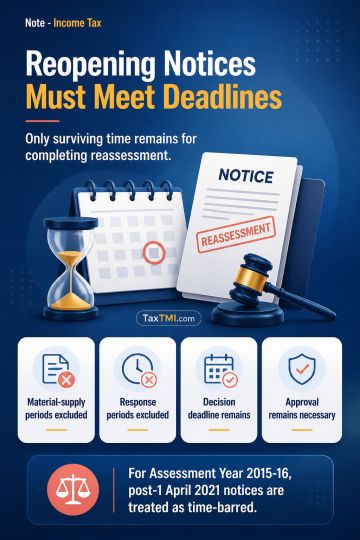
Reassessment limitation under TOLA is a jurisdictional restraint. Transitional notices issued between 1 April 2021 and 30 June 2021 are treated as Section 148A(b) show-cause notices, but only the surviving time remaining until 30 June 2021 is available for completing the reassessment process. Periods for supply of material and the assessee's response are excluded, but the Section 148A(d) decision, statutory approval and final Section 148 notice must issue within the remaining period. For Assessment Year 2015-16, post-1 April 2021 notices are treated as time-barred.
Case Laws Customs
Show AI Summary
Unseized food consignments cannot face indefinite detention without lawful seizure, valid sampling, and prompt assessment.
Provisional release of an unseized imported food consignment is not mechanically governed by Section 110A, which applies to goods seized under Section 110. Customs may examine, test, verify and reassess imports, but indefinite retention without a seizure memorandum or disclosed reasons connecting the goods with confiscation is not justified. Food sampling should follow the specialised food-safety process through an authorised officer. A valid food-safety report may support conditional clearance, while classification, duty liability, confiscation and adjudication remain open. Revenue may be protected through proportionate security.
Case Laws Customs
Show AI Summary
Anti-dumping duty recovery permits post-clearance demands and consequential import IGST where self-assessment omitted an applicable levy.
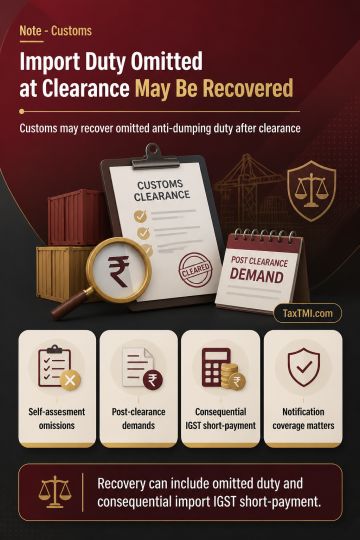
Unpaid anti-dumping duty omitted during self-assessment may be pursued through the customs recovery procedure without prior appellate modification of the self-assessment. The recovery framework applies to anti-dumping duty through statutory incorporation of provisions concerning assessment, non-levy, short-levy, interest and recovery. Where anti-dumping duty is chargeable, it forms part of the aggregate value used to compute IGST on imports, potentially creating a consequential IGST short-payment. Recovery requires accurate assessment of notification coverage, product, origin, rate, valuation, limitation and procedural safeguards.
Case Laws GST
Show AI Summary
Project-wise anti-profiteering requires actual input tax credit measurement and area-based allocation of benefits to real-estate purchasers.
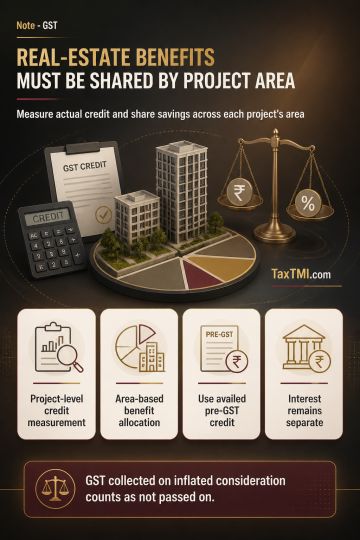
Real-estate anti-profiteering under Section 171 requires project-level identification of additional input tax credit and allocation of the saving across total project area on a per-square-foot basis. Purchase value may quantify credit attributable to project expenditure, but turnover or collections cannot serve as the allocation basis. The comparison must use pre-GST credit actually availed rather than merely available credit. GST collected on consideration inflated by an undistributed benefit forms part of the amount not passed on and remains distinct from statutory interest.

TMI Notes

Back

All TMI Notes

Showing Results for :
Reset Filters
No Records Found

TMI Notes

Back

All TMI Notes

Legal Framework for Technological Innovation in Tax Administration : Clause 532 of the Income Tax Bill, 2025 Vs. Section 157A of the Income-tax Act, 1961

13 June, 2025

Contents
Acts
Rules & Regulations
Summary
Note

Note

-

Bookmark

(New) -

Download

Print

Print

Clause 532 Power to frame schemes.

Income Tax Bill, 2025

Introduction

Clause 532 of the Income Tax Bill, 2025 introduces a broad enabling provision empowering the Central Government to frame schemes for the implementation of the Act, with the stated objectives of enhancing efficiency, transparency, and accountability within the tax administration system. This clause is situated within the miscellaneous segment of the Bill, reflecting its overarching and facilitative character. Its scope is general, providing a statutory mechanism for the Government to innovate and adapt administrative processes, particularly through technological means and organisational restructuring. Section 157A of the Income-tax Act, 1961, inserted by the Taxation and Other Laws (Relaxation and Amendment of Certain Provisions) Act, 2020, represents a more targeted intervention. It empowers the Central Government to notify a scheme for faceless rectification, amendment, and issuance of notices or intimations under specified sections of the Act. Section 157A was a legislative response to the growing demand for minimising physical interface between taxpayers and the tax department, thereby reducing discretion, corruption, and inefficiencies.

Both provisions are part of a continuing legislative trend towards the modernisation and digitisation of tax administration in India. However, Clause 532 of the 2025 Bill represents a significant expansion in the scope and flexibility of such powers. The following commentary provides a comprehensive analysis of Clause 532, its objectives, detailed provisions, practical implications, and a comparative evaluation with Section 157A of the 1961 Act.

Objective and Purpose

Legislative Intent and Policy Considerations

The primary objective of Clause 532 is to provide the Central Government with a legislative tool to create and implement schemes that improve the administration of the Income Tax Act, 2025. The explicit policy goals are:

  • Imparting greater efficiency in tax administration.
  • Enhancing transparency and accountability, particularly through technological interventions.
  • Reducing direct interface between taxpayers and tax authorities to the extent feasible.
  • Optimising resource utilisation through economies of scale and functional specialisation.

This approach reflects the Government's commitment to leveraging technology for governance reforms, in line with the broader "Digital India" initiative. The provision is also a response to persistent challenges in tax administration, such as delays, discretion, lack of uniformity, and opportunities for rent-seeking behaviour.

Historical Context

The genesis of such provisions can be traced to the gradual evolution of the Indian tax administration from a manual, paper-based system to a technology-driven, faceless, and process-oriented regime. The introduction of faceless assessment, appeals, and rectification over the past decade has been a significant milestone. Section 157A, introduced in 2020, was a specific measure to extend the faceless regime to rectification and related procedures. Clause 532, however, generalises this power, untethering it from specific sections and enabling its application to any aspect of the Act.

Detailed Analysis of Clause 532 of the Income Tax Bill, 2025

Sub-section (1): Power to Frame Schemes

"The Central Government may, by notification, make a scheme for any of the purposes of this Act, so as to impart greater efficiency, transparency and accountability by- (a) eliminating the interface with the assessee or any other person to the extent technologically feasible; (b) optimising utilisation of the resources through economies of scale and functional specialisation."

This sub-section confers a wide-ranging power on the Central Government to notify schemes for "any of the purposes" of the Act. The breadth of this language is significant; it is not confined to specific functions (such as assessment or rectification) but potentially covers all aspects of tax administration, compliance, enforcement, and dispute resolution. The sub-section also articulates the guiding principles for such schemes:

  • Elimination of Interface: The explicit aim is to minimise physical or direct interaction between taxpayers (assessees) and tax officials, leveraging technology to the maximum extent feasible. This is intended to reduce opportunities for corruption, ensure uniformity, and enhance taxpayer confidence.
  • Optimisation of Resources: The provision recognises the benefits of economies of scale (centralisation, pooling of resources) and functional specialisation (dedicated units for specific functions), both of which are facilitated by digital platforms and modern organisational structures.

Sub-section (2): Power to Modify Application of the Act

"The Central Government may, for the purposes of giving effect to the scheme made under sub-section (1), by notification, direct that any of the provisions of this Act shall not apply or shall apply with such exceptions, modifications and adaptations as specified in the notification."

This is a crucial enabling provision. It authorises the Government to modify the application of any provision of the Act for the purpose of implementing a notified scheme. This may include:

  • Exempting certain provisions from application in the context of a scheme.
  • Applying provisions with modifications or adaptations tailored to the scheme's operational requirements.

The effect is to create a mini-legislative power, subject to the boundaries set by the parent Act and the requirement of notification. This flexibility is essential for the operationalisation of innovative schemes, which may not fit neatly within the existing statutory framework.

Sub-section (3): Modification of Existing Schemes

"Where a scheme has been notified under the provisions of the Income-tax Act, 1961 (43 of 1961) with a view to eliminating the interface with the assessee or any other person, the Central Government may by notification amend or modify the said scheme as per the provisions of sub-section (1), and the provisions of sub-section (2) shall apply accordingly."

This transitional provision ensures continuity and adaptability. It allows the Government to amend or modify schemes notified under the 1961 Act (such as faceless assessment or rectification schemes), bringing them in line with the new legislative framework of the 2025 Act. The application of sub-section (2) means that such modifications may also involve exceptions or adaptations of the Act's provisions.

Sub-section (4): Parliamentary Oversight

"Every notification issued under sub-sections (1), (2) and (3) shall, as soon as may be after the notification is issued, be laid before each House of Parliament."

This is a standard safeguard in delegated legislation. It ensures that all notifications issued under this clause are subject to parliamentary oversight, providing a check on executive discretion and an opportunity for legislative scrutiny.

Practical Implications

Impact on Stakeholders

  • Taxpayers: The elimination of physical interface and the move towards faceless, technology-driven processes can significantly reduce compliance costs, subjectivity, and harassment. However, it also requires taxpayers to be digitally literate and have access to requisite infrastructure.
  • Tax Administration: The provision enables the reorganisation of administrative processes, creation of specialised units, and adoption of best practices in public administration. It also places a premium on technological capacity and data security.
  • Legal Certainty: The power to modify the application of the Act's provisions may lead to concerns about legal certainty and uniformity. The requirement of notification and parliamentary oversight partially mitigates this risk.
  • Regulators and Policymakers: The provision gives significant operational flexibility to respond to emerging challenges, technological advances, and feedback from implementation experience.

Compliance and Procedural Impact The notification of schemes under Clause 532 will likely be accompanied by detailed procedural guidelines, timelines, and technical standards. Taxpayers and practitioners will need to stay abreast of such notifications and adapt their compliance strategies accordingly. There may be transitional issues as old schemes are modified or replaced.

Comparative Analysis with Section 157A of the Income-tax Act, 1961

Scope of Power

  • Section 157A: The power to notify schemes is limited to rectification u/s 154, amendments u/s 155, issuance of notice of demand u/s 156, and intimation of loss u/s 157. The focus is on these specific procedural aspects.
  • Clause 532: The power is general, extending to "any of the purposes of this Act." This means schemes could be framed for assessment, appeals, collection, enforcement, or any other function under the Act.

Objectives and Mechanisms

Both provisions share common objectives-efficiency, transparency, accountability, elimination of interface, and optimisation of resources. However, Section 157A includes an additional feature:

  • Introduction of "team-based rectification of mistakes, amendment of orders, issuance of notice of demand or intimation of loss, with dynamic jurisdiction."

This reflects a move towards collective decision-making and dynamic allocation of cases, which may or may not be expressly replicated in Clause 532 (though the broader power would allow it).

Delegated Legislative Power

  • Section 157A(2): The power to modify provisions of the Act is present, but subject to a temporal limitation: "no direction shall be issued after the 31st day of March, 2022." This sunset clause restricts the duration of the delegated power.
  • Clause 532(2): No such time limit is prescribed. The power is open-ended, subject only to the requirement of notification and parliamentary laying.

Continuity and Transition

  • Section 157A: There is no express provision for modification of existing schemes notified under previous law.
  • Clause 532(3): Provides an explicit mechanism for the Government to amend or modify schemes notified under the 1961 Act, ensuring continuity and adaptability during the legislative transition.

Parliamentary Oversight

Both provisions require that notifications be laid before Parliament, ensuring a measure of accountability.

Unique Features and Potential Issues

  • Section 157A: The specificity of the provision ensures clarity of scope, but limits flexibility.
  • Clause 532: The generality of the provision maximises flexibility but may raise concerns about excessive delegation of legislative power. The absence of a sunset clause or express limitations (other than the purpose and notification requirements) may attract judicial scrutiny if the power is exercised in a manner inconsistent with the parent Act's objectives or constitutional safeguards.

Comparative Table: Key Differences and Similarities

Aspect Clause 532 of the Income Tax Bill, 2025 Section 157A of the Income-tax Act, 1961
Scope Any purpose under the Act Specific to rectification, amendment, demand/intimation
Duration Indefinite (no sunset clause) Limited (directions only up to 31 March 2022)
Modification of Law Permitted via notification for schemes Permitted via notification for schemes
Policy Objectives Efficiency, transparency, accountability Same, plus express mention of team-based/dynamic jurisdiction
Parliamentary Oversight Notification to be laid before Parliament Notification to be laid before Parliament
Transitional Provisions Allows modification of existing schemes Not applicable

Ambiguities and Issues in Interpretation

Extent of Modification Power - Clause 532(2) authorises the Government to specify that any provision "shall not apply or shall apply with such exceptions, modifications and adaptations as specified." The breadth of this language raises questions about:

  • Whether core substantive rights or obligations under the Act could be modified via notification, or whether the power is limited to procedural or administrative provisions.
  • The standard of judicial review applicable to such notifications-whether courts would scrutinise the reasonableness, necessity, or proportionality of the modifications.

Safeguards and Limitations - While the requirement of laying notifications before Parliament provides a measure of oversight, it may not be sufficient to prevent arbitrary or excessive use of the power. The absence of a requirement for prior consultation or public notice may also be a concern.

Interaction with Other Laws - The potential for conflict with other statutes or regulatory frameworks (such as data protection, administrative law, or sectoral regulations) exists, particularly as schemes become more technology-driven and data-intensive.

Conclusion

Clause 532 of the Income Tax Bill, 2025 represents a significant evolution in the legislative approach to tax administration in India. It provides the Central Government with a general and flexible power to notify schemes aimed at enhancing efficiency, transparency, and accountability, with a strong emphasis on technological solutions and organisational innovation. Its scope is considerably broader than Section 157A of the Income-tax Act, 1961, which was limited to specific procedural functions and subject to a temporal limitation. The practical implications of Clause 532 are profound, offering opportunities for transformative reform but also raising important questions about the extent of delegated legislative power, safeguards against arbitrariness, and the need for robust oversight mechanisms. The comparative analysis highlights the shift from targeted, time-bound interventions to a general, ongoing framework for administrative innovation. As the Income Tax Bill, 2025 moves towards implementation, careful attention will be required to ensure that the exercise of powers under Clause 532 remains consistent with the principles of legality, transparency, and accountability. The experience with Section 157A provides valuable lessons in both the potential and the limitations of such enabling provisions.


Full Text:

Clause 532 Power to frame schemes.

Topics

Acts Income Tax