

Loading...

⚠ ✕
❮ Top
☎ Help
☰
×

By creating an account you can:

Logo TaxTMI
Call Us / Help / Feedback✕

Contact Us At :

✉ E-mail: [email protected]

✆ Call / WhatsApp at: +91 99117 96707

For more information, Check Contact Us

FAQs :

To know Frequently Asked Questions, Check FAQs

Most Asked Video Tutorials :

For more tutorials, Check Video Tutorials

Submit Feedback/Suggestion :

Email :
Please provide your email address so we can follow up on your feedback.
Category :
Description :
Min 15 characters 0/2000
Make Most of Text Search ✕
  1. Checkout this video tutorial: How to search effectively on TaxTMI.
  2. Put words in double quotes for exact word search, eg: "income tax"
  3. Avoid noise words such as : 'and, of, the, a'
  4. Sort by Relevance to get the most relevant document.
  5. Press Enter to add multiple terms/multiple phrases, and then click on Search to Search.
  6. Text Search
  7. The system will try to fetch results that contains ALL your words.
  8. Once you add keywords, you'll see a new 'Search In' filter that makes your results even more precise.
  9. Text Search
╳
Add to...
You have not created any category. Kindly create one to bookmark this item!
✕
Create New Category
Hide
Title :
Description :
❮❮ Hide
❮ Default View
Expand ❯❯
Close ✕
🔎 Filters / Advanced Search ❯
TEXT

Press 'Enter' to add multiple search terms. Rules for Better Search

Search In
Main Text + AI Text ❯
  • Main Text
  • Main Text + AI Text
  • AI Text
Category: ?
Categorized by AI
---- All Categories ---- ❯
  • ---- All Categories ----
  • Income Tax
  • GST
  • Customs, DGFT & SEZ
  • FEMA & RBI
  • Corp. Laws, SEBI & IBC
  • PMLA, Black Money & ED
  • Budget
  • News and Press Release
  • PTI News
Month:
---- All Months ---- ❯
  • ---- All Months ----
  • January
  • February
  • March
  • April
  • May
  • June
  • July
  • August
  • September
  • October
  • November
  • December
Year:
---- All Years ---- ❯
  • ---- All Years ----
  • 2026
  • 2025
  • 2024
  • 2023
  • 2022
  • 2021
  • 2020
  • 2019
  • 2018
  • 2017
  • 2016
  • 2015
  • 2014
  • 2013
  • 2012
  • 2011
Sort By: ?
In Sort By 'Default', exact matches for text search are shown at the top, followed by the remaining results in their regular order.
Relevance Default Date
    Government Approves One-Time Interest-Free Loan of ₹50,000 per Barn for FCV Tobacco Growers in Andhra Pradesh
    Issuance Calendar for Marketable Dated Securities for October 2026-March 2027
    Government’s Borrowing Plan for the second half of FY 2026-27
    APEDA Facilitates Export of GI-Tagged Gulbarga Tur Dal from Karnataka to Maldives
    11th Meeting of National Traders’ Welfare Board Convened in New Delhi
    DRI seizes 9.40 kg foreign-origin gold worth around Rs. 15 crore at Mumbai airport; three arrested
    DRI seizes over 125,000 kg foreign-origin smuggled areca nuts and 41,000 kg poppy seeds worth around Rs. 20.31 crore in Assam and Mizoram in a crackdo...
    Envision Energy Secures TÜV SÜD Certificate for Wind Farm Control System, Strengthening Long-Term Resilience for Future Energy Systems
    India's forex reserves fall USD 14.89 bn to USD 766 bn: RBI data
    No commitment given to bank unions on 5-day work week by Finance Ministry, say sources
    Ethanol can help raise farmers' income and reduce fuel imports: Gadkari
    Rupee rises 19 paise to close at 95.80 against US dollar
    Check Credit Score and Understand Credit Health with the Bajaj Finance Credit Pulse Report
    Europe uses subsidies, taxes and policy pauses to offset pain of high fuel prices
    Loyalty Juggernaut Advances Responsible AI with ISO/IEC 42001 Certification
    Draft Warehousing Operations Regulations, 2026 - uploading on the CBIC website for inviting comments/views/suggestions from stakeholders
    From Digital Banking to Resilient Banking – Technology, Cyber Security and AI as Pillars of Trust - Address by Shri Rohit Jain, Deputy Governor at t...
    Union Minister of Commerce and Industry Shri Piyush Goyal Highlights India’s Expanding Global Economic Engagement and Growing Integration with Globa...
    India Participates in 14th East Asia Summit Economic Ministers’ Meeting and 23rd ASEAN-India Economic Ministers Consultation
    Sebi board approves slew of reforms; widens investment avenues, FPI access
❮
❯
❯❯
Maximize Maximize Maximize
0 / 200
Expand Note
Add to Folder

No Folders have been created

+

Are you sure you want to delete "My most important" ?

NOTE:

News
Showing Results for :
Reset Filters
Results Found:
Show All Summaries Hide All Summaries
September 25, 2026
Show AI Summary
Interest-free working capital assistance for FCV tobacco growers supports liquidity, institutional loan repayment, crop inputs, and reduced private borrowing.
A one-time, interest-free working-capital loan of Rs. 50,000 per barn is approved for FCV tobacco growers in Andhra Pradesh under the Interest-Free Working Capital Assistance Scheme. Covering about 44,000 growers, the assistance is proposed to be delivered through direct benefit transfer. It is intended to provide liquidity for household requirements, institutional loan repayment and crop inputs, while reducing dependence on private borrowing.
September 25, 2026
Show AI Summary
Government securities auction calendar establishes retail bidding access, flexible issuance terms, greenshoe subscriptions, and periodic debt switch operations.
Each auction carries a non-competitive bidding facility, under which five per cent of the notified amount is reserved for specified retail investors. The Government may modify indicated amounts, issuance periods and maturities, and may issue instruments with non-standard maturities, floating-rate bonds or inflation-indexed bonds, having regard to governmental requirements, market conditions and other relevant factors. It may retain additional subscriptions through a greenshoe option and conduct switch or buyback auctions of dated securities.
September 25, 2026
Show AI Summary
Market borrowing plan sets dated securities auctions, Treasury Bill issuance, redemption management, and temporary cash-flow support.
Government market borrowing for the second half of FY 2026-27 is to be raised through weekly auctions of dated securities, including Sovereign Green Bonds, across maturities from 3 to 50 years. Debt-management measures include switching and buyback operations to smooth the redemption profile and a greenshoe option for additional subscriptions. Treasury Bills are to be issued through weekly auctions in 91-day, 182-day and 364-day maturities. The Ways and Means Advances limit is fixed to address temporary mismatches in government accounts.
September 25, 2026
Show AI Summary
GI-tagged agricultural exports expand farmer access to international markets through FPO-led value chains and higher price realisation.
APEDA facilitated the export of a one-metric-tonne consignment of GI-tagged Gulbarga Tur Dal from Karnataka to the Maldives through an FPO-led brand. Gulbarga Tur Dal has held GI registration since 2019. The export-linked channel provides farmers a realisation of Rs.82 per kg compared with a prevailing market price of Rs.60 per kg, while supporting closer integration of FPOs and farmers into export-oriented supply chains.
September 25, 2026
Show AI Summary
Trader welfare policy discussions covered GST reform, digital commerce, finance access, export promotion, and coordinated institutional support.
Deliberations covered GST rationalisation, refund delays, audit duration, amnesty schemes, input tax credit anomalies and pending appeals, alongside proposed inclusion of traders in MSME facilitation committees, a centralised loan portal with a 30-day timeline, CIBIL score reforms and grievance helplines. Trader welfare measures considered timely contractor payments, safeguards against technical penalties, loan-repayment flexibility during lean periods and stronger Centre-State coordination.
September 25, 2026
Show AI Summary
Gold smuggling through powdered gold concealed in food products led to seizure and arrests under customs law.
Intelligence-led interception and baggage examination identified foreign-origin gold converted into fine powder and mixed with packaged food products of similar colour, texture and consistency. Segregation and assaying yielded 9.40 kg foreign-origin gold, which was seized under the Customs Act, 1962. Questioning linked the passengers to the same organised gold-smuggling syndicate, and they were arrested under that Act.
September 25, 2026
Show AI Summary
Customs seizure of suspected smuggled areca nuts and restricted poppy seeds followed intelligence-led cross-border enforcement operations.
Intelligence-led customs enforcement in Mizoram and Assam resulted in seizure, under the Customs Act, 1962, of suspected foreign-origin areca nuts and poppy seeds believed on preliminary inquiry to have been smuggled from Myanmar. Searches of locked, unattended godowns near the Indo-Myanmar border recovered the commodities, while interception of two trucks carrying poppy seeds without valid import documents led to seizure of the consignments and vehicles. Four persons connected with transportation of the poppy seeds were arrested.
September 25, 2026
Show AI Summary
Industrial control system cybersecurity certification validates system-level protection across wind farm controls, networks, and lifecycle security services.
IEC 62443-3-3 Security Level 2 certification applies to a wind farm control system covering SCADA, PPC, PLC and industrial network devices. It assesses system-level security requirements, including the interaction of components, networks and security mechanisms within an overall industrial control environment. The cybersecurity framework also spans secure development, certified core control components, system-level protection, and security integration and maintenance services across the lifecycle of wind energy technologies.
September 25, 2026
Show AI Summary
Foreign exchange reserve composition reflects a weekly decline driven by foreign currency assets despite a modest gold increase.
India's foreign exchange reserves declined by USD 14.881 billion to USD 765.901 billion for the week ended 18 September 2026. The contraction was principally driven by a reduction in foreign currency assets, which also reflect valuation effects from movements in non-US reserve currencies. Gold reserves increased, while Special Drawing Rights decreased and the reserve position with the International Monetary Fund remained reported separately.
September 25, 2026
Show AI Summary
Five-day banking proposal remains under consideration amid strike plans and measures for uninterrupted banking and advance disbursements.
Five-day banking remains under governmental consideration, with no Finance Ministry commitment to implementation. Unions linked the proposal to the 12th Bipartite Settlement/9th Joint Note, which contemplated extended Monday-to-Friday working hours. Family pension revision and a pension option for resignees were identified as addressed, while withdrawal of the Performance Linked Incentive scheme remains in abeyance. Public sector banks were instructed to remain open on the preceding Sunday, and central government salaries, wages and pensions were directed to be disbursed in advance.
September 25, 2026
Show AI Summary
Alternative fuel transition promotes ethanol, electric and hydrogen mobility to reduce imports, pollution, and strengthen farm income.
Alternative-fuel and public-transport measures seek to reduce dependence on imported petroleum, curb air pollution, and support farmer income and employment. Ethanol is positioned as a farm-income source through increased demand and returns for maize growers, alongside electricity, hydrogen and waste-derived CNG. Development and introduction of flex-fuel vehicles, using engines capable of operating on ethanol, electric tractors, hydrogen-powered vehicles and hydrogen buses form part of a cleaner-mobility strategy.
September 25, 2026
Show AI Summary
Foreign-exchange market intervention expectations supported rupee appreciation amid improved risk sentiment, while importer demand and crude prices constrained gains.
Foreign-exchange market conditions supported a 19-paise appreciation of the rupee to 95.80 against the US dollar, aided by improved global risk sentiment and expectations of Reserve Bank intervention. Dollar demand from importers, high crude prices and US dollar strength constrained gains. Lower crude prices and dollar weakness could support the rupee, while geopolitical escalation may create pressure. Market participants expected intervention if the currency weakened toward 96.
September 25, 2026
Show AI Summary
Credit health assessment combines score, repayment history, utilisation, accounts and enquiries to support informed borrowing and profile monitoring.
Credit health is broader than a numerical credit score and encompasses the way credit has been managed over time. Credit analysis requires a combined review of the score, repayment history, credit accounts, credit utilisation, credit history and credit enquiries. A credit report may identify management of EMIs and credit-card dues, existing borrowing obligations, use of revolving credit relative to available limits, and recent lender checks associated with credit applications. Incorrect or unfamiliar entries may be reviewed and, where necessary, raised with the relevant lender or credit bureau.
September 25, 2026
Show AI Summary
Fuel-price mitigation measures use tax reductions, targeted subsidies and energy-security policies to ease pressure on households and energy-intensive industries.
European fuel-price intervention combines targeted subsidies, fuel-tax reductions, temporary regulatory flexibilities and energy-security investment to moderate the economic effects of sharply higher gasoline and diesel prices caused by disrupted supplies. Member States have temporary discretion to grant state aid to households and energy-intensive sectors, including agriculture, transport and fishing, and limited flexibility under EU spending rules for investments that improve energy security and reduce dependence on imported fossil fuels.
September 25, 2026
Show AI Summary
AI management certification anchors responsible lifecycle governance, transparency, accountability, security, and human oversight for agentic loyalty systems.
ISO/IEC 42001:2023 certification applies to an Artificial Intelligence Management System governing AI development, deployment, oversight and continual improvement within the GRAVTY platform. The framework supports AI-related risk management, responsible governance, transparency, accountability, security and human oversight throughout the AI lifecycle. Its scope includes supervised and unsupervised learning models and large language models supporting personalised engagement, fraud management, loyalty intelligence, autonomous decision-making, operational automation and workflow support.
September 25, 2026
Show AI Summary
Digital warehousing controls propose electronic tracking, secure transport, monthly returns, and risk-based compliance verification for warehoused goods.
Draft Warehousing Operations Regulations, 2026 would require public and private warehouse licensees to use the electronic portal and a digital warehouse management system for receipt, storage, transfers, removals and accounting of warehoused goods. Transport would generally require a one-time-lock and transit-risk insurance, subject to specified exemptions. Licensees would verify locks and goods, report discrepancies, maintain auditable electronic records, submit monthly returns, and permit removals for home consumption or export only upon electronic clearance orders. Non-confirmation, discrepancies and contraventions would trigger information demands, risk-based verification and action under the Customs Act.
September 25, 2026
Show AI Summary
Technology risk governance requires banks to retain accountability, test resilience, and govern artificial intelligence before scaling financial services.
Technology risk governance must treat technology architecture as a first-order enterprise risk, alongside conventional financial risks, because the availability and integrity of core banking, payments, onboarding, credit, fraud-monitoring and reporting systems determine whether customers can access essential financial services. Banks may outsource technology functions but retain accountability for access controls, concentration, recoverability, data protection and exit options. Effective resilience requires secure architecture, asset visibility, timely remediation of vulnerabilities and legacy systems, identity and access management, effective controls, third-party oversight, post-incident learning, and regular recovery testing.
September 25, 2026
Show AI Summary
Global value chain integration advances trade partnerships, semiconductor capacity, and deep-tech innovation within broader economic engagement.
India's global economic engagement prioritises trade and economic partnerships to strengthen participation in global value chains and supply chains, facilitating cross-border movement of goods and services. The approach is linked to projected semiconductor demand and development of artificial-intelligence capabilities, alongside innovation, deep-tech startup support and private-sector space activity. The startup ecosystem is described as having expanded substantially, with current policy emphasis on deep-tech innovation and participation in global markets.
September 25, 2026
Show AI Summary
Trade agreement review targets balanced, user-friendly, trade-facilitative rules to address asymmetries and strengthen regional commerce.
The ongoing review of the ASEAN-India Trade in Goods Agreement seeks to enhance trade flows, address trade asymmetries, and deliver a balanced, effective, user-friendly, and trade-facilitative arrangement for businesses. It forms part of India's commitment to mutually beneficial trade partnerships and regional trade arrangements.
September 24, 2026
Show AI Summary
Portfolio management reforms broaden permitted investments, establish independent fund managers, and retain registered managers' responsibility for client portfolios.
Portfolio-management reforms replace the 2020 framework and expand investments into IPOs, primary-market debt, listed overseas equity and debt, and direct plans of Indian mutual fund schemes. Investment-grade unlisted non-convertible debt may comprise up to 10 per cent of client assets under management with client consent. Independent Fund Managers may operate with registered portfolio managers, which retain responsibility and liability. Accredited-investor eligibility is broadened, while specified compliance requirements are relaxed where adequate audit trails and internal controls exist.

News

Back

All News

Showing Results for :
Reset Filters
No Records Found

News

Back

All News

Conference on “Financing India’s Journey towards Viksit Bharat” concludes in New Delhi

September 21, 2026

Contents
Summary
Note

Note

-

Bookmark

Print

Print

Day One focused on macroeconomic priorities, savings, investment and fiscal resilience; Day Two focused on agricultural transformation, energy transition and included short sessions on role of technology, banking and aspects of measuring GSDP

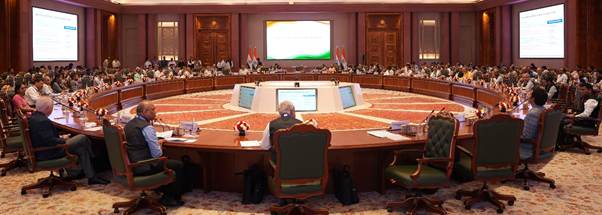
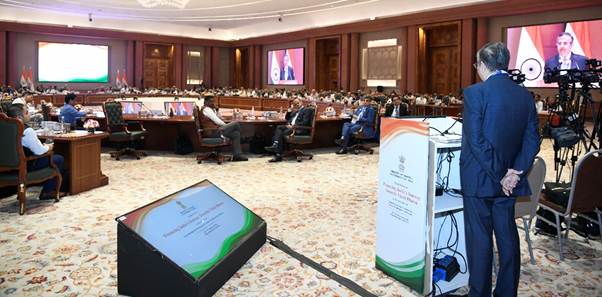
The Conference on “Financing India’s Journey towards Viksit Bharat” with Finance Ministers and Finance Secretaries of States and Union Territories with Legislature, experts from academia, industry, banking and policymaking, concluded in New Delhi, today. The conference witnessed series of deliberations across two days on India’s financing requirements and pathways for sustained, inclusive and broad-based growth.
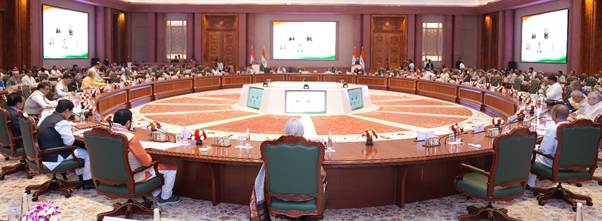
The two-day conference was attended by the Union Minister for Finance & Corporate Affairs and had the Chief Ministers of Assam, Delhi, Goa, Haryana, Jammu & Kashmir, Keralam, Manipur, Meghalaya, Nagaland; Deputy Chief Ministers of Arunachal Pradesh, Bihar, and Odisha; and Finance Ministers of Andhra Pradesh, Assam, Gujarat, Himachal Pradesh, Jharkhand, Maharashtra, Tamil Nadu, Tripura, UP, Uttarakhand, and West Bengal, besides senior officers of States and Ministry of Finance in attendance.
DAY ONE

On day one, Smt. Anuradha Thakur, Secretary, Department of Economic Affairs (DEA) Ministry of Finance, welcomed the participants and set out the context in the inaugural session.

Smt. Thakur highlighted that this first-of-its-kind Conference adopts a longer-term and broader canvas, bringing together issues related to public & private finance, assembling experts from academia, industry, banking and policymaking States shared their perspectives and underscored that the journey towards Viksit Bharat rests on deep complementarities and multi-tiered partnership between the Union & the States. She mentioned that macroeconomic stability and fiscal prudence have received global recognition, including four sovereign rating upgrades by major international rating agencies over the past 16–17 months, with JCR recently upgrading India by one notch from BBB+ to A-.
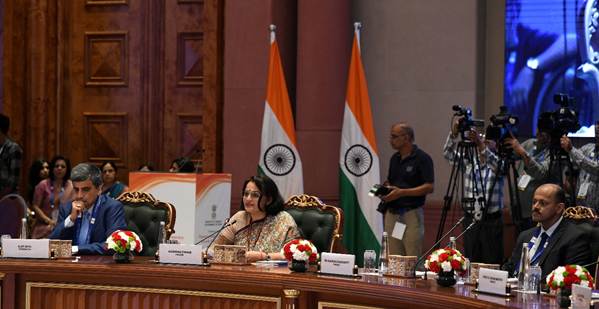
The DEA Secretary emphasised that the scale of transformation to attain Viksit Bharat could not be met by Government Budgets alone. Private-sector financing, innovative financing mechanisms and stronger cooperation across levels of government will play a critical role.

She informed the gathering that working groups, with participation from States, will take forward the thematic deliberations and identify sectoral financing requirements and actionable recommendations.

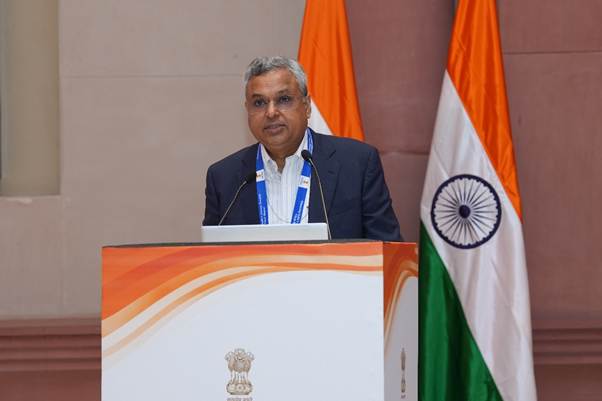
Shri Sudhir Shrivastava, former Additional Chief Secretary, Government of Maharashtra, made a presentation on States’ Financing Perspective in the inaugural session.
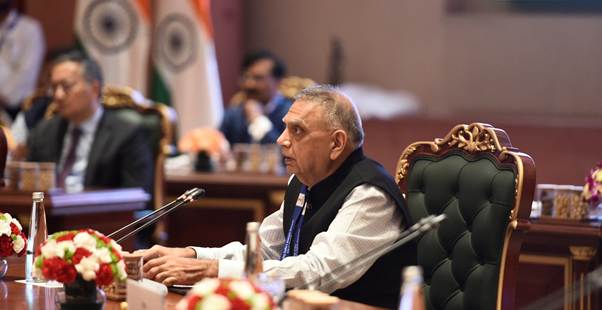
In his Keynote Address, Shri N.K. Singh, President and Life Trustee, Institute of Economic Growth, and Chairman, 15th Finance Commission (XVFC), highlighted India’s strong macroeconomic foundation, and noted the 7.8 per cent GDP growth in Q1 of FY 2026–27 and the recent upgrade by Japan Credit Rating Agency from BBB+ to A-.
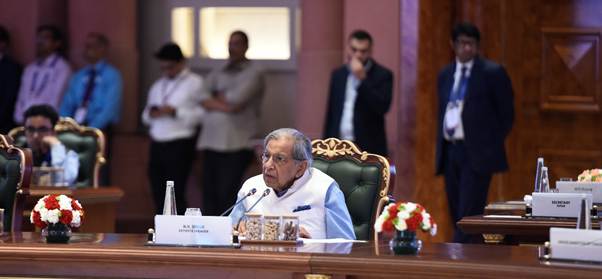
He emphasised that India’s gross domestic savings rate, currently around 34 per cent of GDP, needs to rise towards 38–40 per cent to sustain the 7–8 per cent growth required for Viksit Bharat. On fiscal sustainability, Shri Singh advocated State-wise debt sustainability assessments, and stressed greater fiscal transparency, including accounting for off-budget borrowings, guarantees, arrears and borrowings through State-owned entities. On revenue mobilisation, he observed that the larger opportunity lies in leveraging information rather than merely increasing tax rates. AI and machine learning, combined with existing tax databases, can help identify compliance gaps, broaden the effective tax base and improve revenue mobilisation. Shri Singh stressed the need to move from public finance to private capital, with public resources playing a catalytic role. He also emphasised predictable rules, enforceable contracts, faster dispute resolution and stronger investment treaties to facilitate domestic and foreign investment. On factor-market reforms, Shri Singh identified capital, labour and land as critical areas, touched upon our relatively higher cost of capital, emphasised labour productivity through skilling, apprenticeships and stronger university-industry linkages, and urged States to improve land-use efficiency, streamline approvals and strengthen digital land records.

THEMATIC SESSIONS

The first thematic session, “Macroeconomic Overview,” was moderated by Shri Ajay Seth, Chairman, Insurance Regulatory and Development Authority of India. Dr. Sajjid Z. Chinoy, Managing Director and Chief India Economist, J.P. Morgan, and Part-time Member, Prime Minister’s Economic Advisory Council (PM-EAC), delivered the keynote address in this thematic session.

The panel deliberated on three themes: “Enhancing Savings and Investment Rates for Viksit Bharat 2047,” presented by Dr. Samiran Chakraborty, Chief Economist, India, Citibank; “Fiscal Golden Rule at the State Level, Facilitated by Innovative Finance,” addressed by Prof. Ashima Goyal, Professor, Indira Gandhi Institute of Development Research, Mumbai; and “Strengthening Public Finances to Improve Fiscal Resilience and Mobilising Resources,” discussed by Prof. N. R. Bhanumurthy, Director, Madras School of Economics.

A special session featured Shri Uday Kotak, Founder and Non-Executive Director, Kotak Mahindra Bank.
DAY TWO

The second day commenced with as session on “Financing Agriculture Sector Transformation,” moderated by Dr. Devesh Chaturvedi, former Secretary, Department of Agriculture. The keynote address was delivered by Dr. Harsh Kumar Bhanwala, Public Interest Director and Chairman of MCX.

The panel examined “Market Access and Reliable Agricultural Financing,” with Shri Anil Kumar SG, Founder and Non-Executive Chairman, Samunnati; “Issues in Post-Harvest Marketing, Logistic Support, Infrastructure and Food Processing,” with Dr. Shoumitro Chatterjee, Assistant Professor, Johns Hopkins University, USA; and “Experience of IFAD on Financial Instruments that Could Be Scaled Up or Need to Be Explored in the Context of Agriculture Transformation,” with Dr. Marc De Sousa Shield, Country Director and Head, South Asia Hub, International Fund for Agricultural Development (IFAD).

The third thematic session, “Financing the Energy Transition,” was moderated by Shri Alok Kumar, former Secretary, Ministry of Power. Shri Tarun Kapoor, Advisor to the Prime Minister, delivered the keynote address for this session.

The panelists made presentations on “Financing Renewable Energy and Transmission Assets,” with Mr. Harsh Shah, Managing Director, IndiGrid; “Financing of Battery Energy Storage Systems (BESS), Pumped Storage Projects (PSP) and Other Energy Storage Solutions,” with Dr. Praveer Sinha, Managing Director and Chief Executive Officer, Tata Power; and “Financing Carbon Capture, Utilization and Storage (CCUS) and Designing a Carbon Credits Framework to Ensure Primacy for the Country’s NDC Targets,” with Mr. Rahul Kitchlu, Practice Manager and Head of Energy and Mining Sectors, South Asia Region, The World Bank.

All the sessions included experience-sharing by State Governments, providing an opportunity to exchange perspectives on financing priorities and challenges.

SPECIAL SESSIONS

Two special-session presentations addressed emerging dimensions of India’s development journey. Dr. Saurabh Garg, Secretary, Ministry of Statistics and Programme Implementation (MoSPI), presented “Measuring India’s Viksit Bharat Journey: A Gross State Domestic Product (GSDP) Perspective”; and Shri S. Krishnan, Secretary, Ministry of Electronics and Information Technology (MeitY), spoke on “Role of New-Age Technology in India’s Journey Towards Viksit Bharat.”
CONCLUDING SESSION

In his remarks during the concluding session, Dr. V. Anantha Nageswaran, Chief Economic Adviser, Government of India, observed that the Conference had provided a valuable opportunity for the Union and States to move beyond discussions on resource generation and sharing, and deliberate collectively on financing India’s development over the next two decades. He noted that the quality of discussions and the openness with which States shared their perspectives had strongly established the case for holding the Conference annually. He emphasised that while India’s savings base was substantial and would need to grow further, significantly greater participation by private capital would be essential to mobilise the investment required for Viksit Bharat.
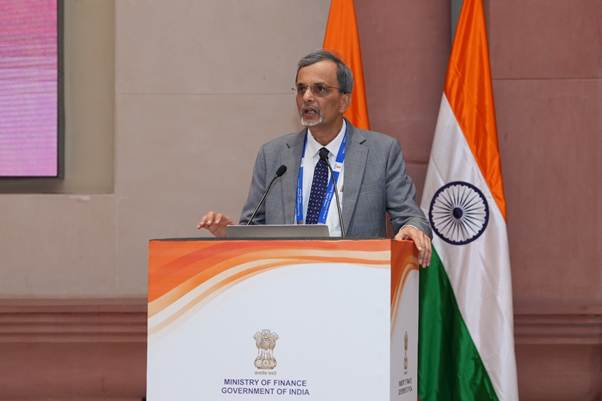
He outlined three priorities for States: creating an enabling environment for private investment through the availability of land, power and logistics, supported by effective single-window clearances; improving the quality of investment through robust project-preparation pipelines and credible project reports to facilitate access to domestic and multilateral finance, alongside directing credit towards underserved districts with growth potential; and strengthening States’ own capital expenditure despite fiscal constraints. In this context, he referred to Shri Sudhir Shrivastava’s proposal to raise capital outlay from approximately 2.4 per cent to 3 per cent of GSDP by 2031-32.

Emphasising that “Viksit Bharat depends on Viksit Rajya,” Dr. Nageswaran called for the practices shared by States, ongoing deregulation efforts and expert recommendations to be taken forward and translated into partnerships with clear responsibilities and timelines. He concluded by underscoring the dual imperative before India: sustaining the long-term development journey towards 2047 while accelerating resource mobilisation over the next five years, when global financing opportunities remain available.

Shri Challa Sreenivasulu Setty, Chairman, State Bank of India, addressed the topic of “Sources of Finance from Banking Sector”, in the concluding session of the two-day conference.

Topics

Acts Income Tax