

Loading...

Top
Help
×

By creating an account you can:

Logo TaxTMI
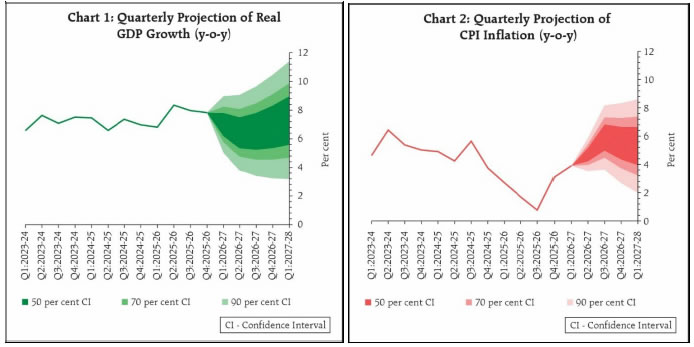
Call Us / Help / Feedback

Contact Us At :

E-mail: [email protected]

Call / WhatsApp at: +91 99117 96707

For more information, Check Contact Us

FAQs :

To know Frequently Asked Questions, Check FAQs

Most Asked Video Tutorials :

For more tutorials, Check Video Tutorials

Submit Feedback/Suggestion :

Email :
Please provide your email address so we can follow up on your feedback.
Category :
Description :
Min 15 characters 0/2000
Make Most of Text Search
  1. Checkout this video tutorial: How to search effectively on TaxTMI.
  2. Put words in double quotes for exact word search, eg: "income tax"
  3. Avoid noise words such as : 'and, of, the, a'
  4. Sort by Relevance to get the most relevant document.
  5. Press Enter to add multiple terms/multiple phrases, and then click on Search to Search.
  6. Text Search
  7. The system will try to fetch results that contains ALL your words.
  8. Once you add keywords, you'll see a new 'Search In' filter that makes your results even more precise.
  9. Text Search
Add to...
You have not created any category. Kindly create one to bookmark this item!
Create New Category
Hide
Title :
Description :
❮❮ Hide
Default View
Expand ❯❯
Close ✕
🔎 News - Adv. Search
TEXT SEARCH:

Press 'Enter' to add multiple search terms. Rules for Better Search

Search In:
Main Text + AI Text
  • Main Text
  • Main Text + AI Text
  • AI Text
Category: ?
Categorized by AI
---- All Categories ----
  • ---- All Categories ----
  • Income Tax
  • GST
  • Customs, DGFT & SEZ
  • FEMA & RBI
  • Corp. Laws, SEBI & IBC
  • PMLA, Black Money & ED
  • Budget
  • News and Press Release
  • PTI News
Month:
---- All Months ----
  • ---- All Months ----
  • January
  • February
  • March
  • April
  • May
  • June
  • July
  • August
  • September
  • October
  • November
  • December
Year:
---- All Years ----
  • ---- All Years ----
  • 2026
  • 2025
  • 2024
  • 2023
  • 2022
  • 2021
  • 2020
  • 2019
  • 2018
  • 2017
  • 2016
  • 2015
  • 2014
  • 2013
  • 2012
  • 2011
Sort By: ?
In Sort By 'Default', exact matches for text search are shown at the top, followed by the remaining results in their regular order.
Relevance Default Date
    Kolkata flags off first jewellery exports to UK under CETA
    UK-India trade pact comes into force; Envoy Cameron hails it as 'gold standard'
    RBI issues draft ‘Guidance on Regulatory Expectations for Data Governance’
    Govt unveils Rs 1.9 lakh cr semiconductor, mobile manufacturing push
    India-UK trade pact takes effect as Modi says deal will deepen economic ties and boost exports
    Cabinet approves two multitracking projects covering Four Districts across Odisha and Jharkhand, increasing the existing network of Indian Railways by...
    Cabinet approves National Investment Policy for Urea-2026 for Atmanirbhar Bharat (NIPU-2026)
    Cabinet approves development of 6 lane Greenfield Elevated Corridor & Ramps/Loops & Foot Over Bridge between National Highway-19 and Varanasi Ring Roa...
    Cabinet approves development of 6/4 lane Elevated Corridor along Varuna River Bank & its Ramps/Loops in Uttar Pradesh on Hybrid Annuity Model at total...
    Bajaj Finance Launches Loan Fest with Exclusive Rewards on Personal Loan Disbursal
    China's GDP growth slows sharply in second quarter, misses target
    Cabinet approves Rs 62,500 crore for Mobile Phone Manufacturing Scheme
    Cabinet okays new National Investment Policy to create 10 mn tons of fresh urea capacity
    India-UK trade pact 'new gold standard' of trade deals: UK High Commissioner Cameron
    World shares are mixed, oil prices climb as Iran threatens to block Middle East energy exports
    Raktsey Karpo, Halman apricots spearhead Ladakh's biggest export drive; LG pitches processing unit
    UK-India trade agreement significant milestone: Vice president
    Commerce Minister Piyush Goyal must clarify: Cong slams govt on US bill for 100-pc tariffs on India
    Tehran threatens to halt all Mideast energy exports after US reimposes its blockade on Iran
    RBI invites public comments on the draft “Reserve Bank of India (Acquisition and Holding of Shares or Voting Rights) Amendment Directions, 2026”
❯❯
Maximize Maximize Maximize
0 / 200
Expand Note
Add to Folder

No Folders have been created

+

Are you sure you want to delete "My most important" ?

NOTE:

News
Showing Results for :
Reset Filters
Results Found:
Show All Summaries Hide All Summaries
July 15, 2026
Show AI Summary
Zero-duty market access under CETA enables Indian jewellery exporters to enter overseas markets without import tariffs.
Zero-duty access under the India-UK Comprehensive Economic and Trade Agreement enables eligible Indian gem and jewellery exports to enter the United Kingdom market without UK import tariffs. The agreement is expected to improve market access and support value-added manufacturing, employment, skill development, and the participation of artisans, micro, small and medium enterprises, and exporters in West Bengal's gem and jewellery sector.
July 15, 2026
Show AI Summary
UK-India trade agreement introduces wider market access, tariff reductions and social security arrangements to support bilateral commerce.
The UK-India Comprehensive Economic and Trade Agreement has entered into force, providing expanded market access, tariff reduction and trade facilitation. India receives zero-duty access for nearly all exports to the UK, while UK products entering India receive duty-free or reduced-tariff treatment. The framework covers goods including textiles, leather, engineering products, food, cosmetics, alcoholic beverages and premium cars. A bilateral social security agreement has also been operationalised to support wider commercial engagement.
July 15, 2026
Show AI Summary
Data governance expectations propose stronger lifecycle controls, quality standards, accountability and third-party data-sharing safeguards for regulated financial entities.
Draft regulatory guidance on data governance proposes expectations for regulated financial entities to maintain data that is accurate, consistent, secure and fit for purpose. The framework addresses data-governance arrangements, defined roles, data architecture, metadata and data lineage, data quality, and third-party data-sharing arrangements. It applies to specified banking entities, financial institutions, non-banking financial companies, asset reconstruction companies and credit information companies, and invites stakeholder feedback on the proposed framework.
July 15, 2026
Show AI Summary
Semiconductor and mobile manufacturing incentives support domestic production, component sourcing, design investment, exports and resilient electronics supply chains.
Semicon 2.0 and the Mobile Phone Manufacturing Scheme provide manufacturing support to expand domestic electronics production, exports and local value addition. Semicon 2.0 covers chip design, equipment and materials, fabrication, advanced packaging and testing, research, and talent development, while supporting semiconductor intellectual property and critical-component manufacturing. The mobile-phone scheme provides production-linked incentives linked to eligible sales, with additional support for domestic component sourcing and Indian investment in product design and research. The measures seek to reduce import dependence and strengthen domestic critical-technology capabilities.
July 15, 2026
Show AI Summary
India-UK trade liberalisation expands tariff preferences, services access and skilled professional mobility while preserving protections for sensitive domestic sectors.
The India-United Kingdom Comprehensive Economic and Trade Agreement establishes preferential tariff treatment for goods and expands cooperation in services, digital trade, government procurement, investment and professional mobility. India retains protections for sensitive sectors through phased tariff reductions and quota-based access, while duties on British automobiles and alcoholic beverages are reduced in stages. The accompanying social-security convention exempts eligible Indian professionals temporarily assigned to the United Kingdom from simultaneous contributions in both jurisdictions, supporting skilled-worker mobility and reducing employment-related costs.
July 15, 2026
Show AI Summary
Railway capacity augmentation strengthens multimodal connectivity, freight movement, operational reliability and lower-emission transport across Odisha and Jharkhand.
Railway capacity augmentation is approved through doubling of the Paradeep-Haridaspur route and construction of a fourth line on the Rajkharsawan-Dangoaposi route. The projects aim to reduce congestion, improve railway operational efficiency and reliability, and strengthen integrated multimodal connectivity. Enhanced capacity is intended to support freight transport of coal, iron ore, dolomite, limestone and gypsum, improve regional and tourist connectivity, promote logistics efficiency, and reduce oil imports and carbon emissions.
July 15, 2026
Show AI Summary
Urea investment policy promotes gas-based domestic manufacturing through transparent cost treatment, return-on-equity parameters, and foreign-exchange risk mitigation.
NIPU-2026 provides a framework for investment in new gas-based urea manufacturing units to increase indigenous production and reduce reliance on imported urea. It separates fixed and variable costs for transparency, provides a prescribed return-on-equity band, and mitigates foreign-exchange exposure through conversion of fixed costs into Indian rupees after four years at prevailing exchange rates. The policy supports self-sufficiency through additional domestic urea manufacturing capacity.
July 15, 2026
Show AI Summary
Greenfield elevated corridor development strengthens multimodal connectivity, urban decongestion, road safety and pilgrimage access through the Hybrid Annuity Model.
Development of a six-lane greenfield elevated connector corridor between National Highway-19 and the Varanasi Ring Road has been approved under the National Highways (Original) programme through the Hybrid Annuity Model. The access-controlled corridor includes elevated road infrastructure, bridges, loops, ramps, link roads and service roads, and is intended to divert through traffic from congested urban roads. Aligned with the PM Gati Shakti National Master Plan, it integrates road, rail, air and inland-water connectivity while improving access to logistics, religious, educational and cultural destinations.
July 15, 2026
Show AI Summary
Hybrid annuity corridor development advances urban decongestion, multimodal connectivity, safer travel and efficient passenger and freight movement.
A predominantly elevated 6/4-lane link and connector corridor along the Varuna River Bank has been approved under the Hybrid Annuity Model. Comprising carriageways, flyovers, loops, ramps and service roads, it will connect NH-31 with the Varanasi Ring Road under the Varanasi Decongestion Plan. The corridor is intended to reduce congestion and travel time, improve safety and freight movement, and strengthen access to transport, economic, social and logistics nodes through multimodal integration.
July 15, 2026
Show AI Summary
Personal loan disbursal incentives provide eligible borrowers reward bundles, subject to eligibility conditions, verification, assessment and applicable terms.
Personal loan disbursal incentive campaign offers eligible borrowers an entertainment and lifestyle voucher bundle upon successful disbursal during the specified promotional period. Reward availability is conditional on customer eligibility and applicable terms and conditions. The collateral-free, digitally processed credit facility involves eligibility-based approval, review of loan terms, KYC and bank-account verification, and application assessment before disbursal.
July 15, 2026
Show AI Summary
Domestic-demand weakness slows China's economic growth despite export support from artificial-intelligence technology and electric-vehicle demand.
China's economic growth slowed in the second quarter amid weak domestic demand, property-market weakness, subdued consumer confidence and higher energy costs. Export demand, especially for artificial-intelligence technology and electric vehicles, supported foreign trade and industrial production, but underscored reliance on overseas demand. Property investment and new-home prices continued to decline, while youth unemployment remained elevated. Further support measures focused on new infrastructure could be considered as investment growth weakens and systemic risks require management.
July 15, 2026
Show AI Summary
Mobile phone manufacturing incentives link eligible sales, domestic sourcing, design and research support to indigenous brands and expanded production.
The Mobile Phone Manufacturing Scheme establishes a five-year incentive-linked framework for manufacturing mobile phones in India. It provides differentiated incentive support on eligible sales, additional support for domestic sourcing of key components and sub-assemblies, and a further incentive for product design and research and development aimed at building Indian brands. The scheme seeks to expand domestic production and exports, promote technological sovereignty, create patents, support employment, and strengthen domestic value capture in mobile-phone manufacturing.
July 15, 2026
Show AI Summary
Domestic urea investment policy supports new natural gas-based capacity through subsidy-cost separation, assured returns, and foreign-exchange risk mitigation.
National Investment Policy 2026 establishes an investment framework to add domestic natural gas-based urea production capacity and reduce import reliance. Extending the New Investment Policy 2012, it provides for separation of fixed and variable costs for subsidy calculation, assured returns for urea plant companies, and foreign-exchange risk mitigation to support investment in new domestic urea manufacturing capacity.
July 15, 2026
Show AI Summary
India-UK free trade agreement expands zero-duty export access and reduces duties on specified United Kingdom goods.
The India-UK Comprehensive Economic and Trade Agreement entered into force with zero-duty market access for nearly all Indian exports to the United Kingdom. It is expected to support sectors including textiles, leather, gems and jewellery, engineering goods, marine products, chemicals and processed foods. A bilateral social security agreement has also become operational. The arrangement reduces Indian import duties on specified United Kingdom goods, including Scotch whisky and premium UK-built cars.
July 15, 2026
Show AI Summary
Middle East energy export disruption risks raise oil prices and unsettle global equity markets amid renewed conflict.
Middle East energy-export disruption risks increased following renewed conflict and a threatened halt to regional oil and gas exports amid a blockade of Iranian ports. Concerns over the security of shipping through the Strait of Hormuz contributed to higher oil prices and reduced Gulf traffic flows, reflecting the potential for wider interruption of energy transportation. Global equity markets showed mixed movements as investors assessed escalating conflict, oil-supply disruption, inflation data and corporate earnings.
July 15, 2026
Show AI Summary
Apricot export facilitation enables overseas market access through exporter-managed supply chains, cold-chain transport, and proposed local processing capacity.
Apricot export facilitation for Ladakh's indigenous Raktsey Karpo and Halman varieties is being implemented through an agreement under which exporters manage harvesting, sorting, grading, packing, transportation and marketing. Administrative measures include transport monitoring, expedited transit arrangements and cold-chain support for perishable produce. A proposed apricot processing unit is intended to improve value addition, address short shelf life and support smoother exports while reducing post-harvest losses.
July 15, 2026
Show AI Summary
India-UK trade agreement expands market access, tariff reductions, services trade and professional mobility across identified commercial sectors.
The India-UK Comprehensive Economic and Trade Agreement entered into force as a free trade arrangement intended to expand bilateral market access and promote movement of goods and services. It provides for tariff reductions and supports trade, services and professional mobility. The agreement is expected to create opportunities for businesses, entrepreneurs, farmers, manufacturers, MSMEs and skilled workers, including in textiles, leather, gems and jewellery, engineering goods, marine products, chemicals and processed foods.
July 15, 2026
Show AI Summary
Punitive tariffs for Russian oil purchases could make trade duties a geopolitical mechanism targeting India and other countries.
Proposed United States tariff legislation would impose punitive tariffs on India and other specified countries for purchasing oil from Russia. Certain European countries purchasing Russian gas would be exempted on the stated basis that their purchases are limited and that they are reducing dependence on Russia. If enacted, the measure would expressly authorise tariffs as a geopolitical mechanism directed at countries considered to be financing another nation's war effort.
July 15, 2026
Show AI Summary
Strait of Hormuz transit rights remain contested as blockade measures, toll disputes, and hostilities threaten regional energy exports.
Maritime access through the Strait of Hormuz is disputed following the reimposition of a naval blockade, retaliatory threats affecting regional energy exports, and attacks on shipping routes. An interim arrangement had provided for toll-free transit during a limited negotiating period but left the later regulatory position unresolved. One side asserts a right to regulate traffic and potentially levy transit charges, while the opposing position maintains that passage should remain open without tolls. Continuing hostilities and stalled negotiations threaten navigational access and energy trade flows.
July 15, 2026
Show AI Summary
Major banking shareholding acquisitions: draft directions propose simplified approval for subsequent investments by institutional fund categories.
Draft directions propose a simplified approval process for subsequent acquisitions of major shareholding or voting rights in banking companies by mutual funds, insurance companies and pension funds. The proposals cover commercial banks, small finance banks, payments banks and local area banks. Regulated entities, the public and other stakeholders may provide feedback through the Reserve Bank's online consultation facility or by email within the stated consultation period.

News

Back

All News

Showing Results for :
Reset Filters
No Records Found

News

Back

All News

Showing Results for : Reset Filters

Monetary Policy Statement, 2026-27 Resolution of the Monetary Policy Committee August 3 to 5, 2026

August 6, 2026

Contents
Summary
Note

Note

-

Bookmark

Print

Print

Monetary Policy Decisions

The Monetary Policy Committee (MPC) held its 62nd meeting from August 3 to 5, 2026, under the chairmanship of Shri Sanjay Malhotra, Governor, Reserve Bank of India. The MPC members Dr. Nagesh Kumar, Shri Saugata Bhattacharya, Prof. Ram Singh, Dr. Poonam Gupta and Shri Indranil Bhattacharyya attended the meeting.

2. After a detailed assessment of the evolving macroeconomic and financial developments and the outlook, the MPC voted unanimously to keep the policy repo rate under the liquidity adjustment facility (LAF) unchanged at 5.25 per cent. Consequently, the standing deposit facility (SDF) rate remains at 5.00 per cent and the marginal standing facility (MSF) rate and the Bank Rate remain at 5.50 per cent. The MPC also decided to continue with the neutral stance.

Growth and Inflation Outlook

Global Outlook

3. The global economic outlook in 2026 so far has been characterised by sharp and frequent market swings, persisting inflation concerns and shifting policy expectations. Relief from the temporary ceasefire in West Asia has quickly dissipated amidst resumption of conflict in July. Persistent inflation has prompted several central banks to raise rates while others remain vigilant. The US dollar appreciated, supported by elevated yields, a hawkish Federal Reserve tone, and a relatively buoyant US economy riding on AI driven productivity gains. The global equity market remained volatile as investors repriced their exposure to AI-related stocks. Conflict in West Asia, volatile oil prices, sticky inflation expectations, and fragile public finances in systemic economies pose significant downside risks to the outlook.

Domestic Outlook

4. The Indian economy has remained resilient amidst persisting global headwinds. High frequency indicators available so far point towards steady domestic demand in Q1:2026-27. Private consumption remained robust. Investment continues to be resilient, as suggested by various indicators related to construction, capital goods and bank credit. External demand also sustained, as healthy expansion in services exports was complemented by a rebound in merchandise exports.

5. Looking ahead, the turbulent global economic environment is likely to have some bearing on domestic economic activity. Energy prices and supply chain pressures remain elevated and uncertain. The adverse impact is being contained with various supply side measures. Even though the situation is still evolving, deficient and uneven south-west monsoon amidst El Niño conditions poses some risks to agriculture sector’s outlook and rural demand. Nevertheless, government’s initiatives pertaining to crop diversification including short duration as well as climate-resilient crops, and water harvesting and conservation, among others, are expected to mitigate the impact. Furthermore, sustained momentum in services, continuing impact of GST rationalisation, and broadly stable employment conditions should continue to support urban demand. Strong capacity utilisation, robust credit flow and the government’s continued thrust on infrastructure are expected to sustain investment activity. While services exports are expected to sustain, merchandise exports will be supported by the recent trade agreements and thrust on diversification.

6. Taking all these factors into consideration, real GDP growth for 2026-27 is projected at 6.7 per cent, with Q1 at 7.0 per cent; Q2 at 6.4 per cent; Q3 at 6.5 per cent; and Q4 at 6.8 per cent. Real GDP growth for Q1:2027-28 is projected at 7.3 per cent (Chart 1). The risks are evenly balanced.

7. While CPI inflation increased to 4.4 per cent in June 2026 after remaining below the target for 16 consecutive months, it turned out to be lower by 30 basis points (bps) than what was earlier projected for Q1:2026-27. The increase in June was primarily due to higher food and fuel inflation. The increase in food inflation was broad-based with most constituents witnessing price pressures during May-June. Fuel inflation also rose, driven by revision in retail prices, following the sharp spike in international energy prices. It also led to higher inflation in select categories such as restaurant charges. Despite the pressure from higher input costs, core (CPI excluding food and fuel) inflation remained unchanged at 3.9 per cent during May-June. Excluding precious metals, core inflation remained even lower at 2.3-2.5 per cent during this period.

8. Going forward, El Niño’s impact on temporal and spatial rainfall distribution continues to remain a risk, although proactive supply management and adequate stocks of foodgrains could provide buffers. Global oil prices have remained volatile with sharp two-way movements triggered by geopolitical developments, blurring the near-term outlook. Although generalised inflation pressures continue to remain modest so far, the risks of higher food, fuel and other input prices translating into a broad-based increase in inflation persist.

9. Considering all these factors, CPI inflation for 2026-27 is projected to be 5.0 per cent with Q2 at 4.7 per cent; Q3 at 5.9 per cent; and Q4 at 5.5 per cent. Inflation for Q1:2027-28 is projected at 5.3 per cent with risks being evenly balanced (Chart 2). Core inflation is projected at 4.3 per cent for 2026-27. Core inflation, excluding precious metals, is expected to be lower in the near term, suggesting that demand pressures remain contained.
Rationale for Monetary Policy Decisions

10. Headline CPI inflation edged up above the target, as expected. The realised inflation for Q1, however, remained marginally lower than projections reflecting limited pass-through of cost pressures. The higher inflation is mostly on account of fuel and food with little signs of generalisation of price pressures so far. Core inflation excluding precious metals continues to be benign. As projected earlier, headline inflation is expected to rise further in the near term and peak in Q3:2026-27, primarily due to food and fuel, before moderating thereafter. The underlying inflation, reflected by core inflation excluding precious metals, which has been benign for some time, is likely to align with core inflation towards the end of the financial year.

11. Growth continues to be supported by resilient domestic demand, sustained expansion in manufacturing and services activity, and robust exports, reaffirming India’s position as the world's fastest-growing major economy.

12. To sum up, even though headline inflation is projected to increase, it is primarily on account of supply side pressures caused by food and fuel; it is not getting broad-based; core inflation remains moderate and is expected to decline after peaking in Q3. Growth, albeit resilient, is expected to be lower in 2026-27. The outlook, however, is hazy because of the uncertainties regarding south-west monsoon, El Niño, geopolitics and global trade policy. There is a need for greater clarity to emerge, especially regarding inflation, its path and composition before taking any policy action. Any such action would also have to consider the need for recalibration of policy rates in line with the evolving growth-inflation dynamics, especially the normalisation of the underlying inflation from its benign levels seen hitherto.

13. Considering all these factors, the MPC voted to keep the policy rate unchanged. The MPC also decided to retain the neutral stance to respond appropriately to macroeconomic developments. The MPC underscored that it will maintain a close vigil and remain resolute in its commitment to align inflation with the target.

14. The minutes of the MPC’s meeting will be published on August 19, 2026.

15. The next meeting of the MPC is scheduled for October 5 to 7, 2026.

(Brij Raj)           
Chief General Manager

Topics

Acts Income Tax