

Loading...

Top
Help
×

By creating an account you can:

Logo TaxTMI
Call Us / Help / Feedback

Contact Us At :

E-mail: [email protected]

Call / WhatsApp at: +91 99117 96707

For more information, Check Contact Us

FAQs :

To know Frequently Asked Questions, Check FAQs

Most Asked Video Tutorials :

For more tutorials, Check Video Tutorials

Submit Feedback/Suggestion :

Email :
Please provide your email address so we can follow up on your feedback.
Category :
Description :
Min 15 characters 0/2000
Make Most of Text Search
  1. Checkout this video tutorial: How to search effectively on TaxTMI.
  2. Put words in double quotes for exact word search, eg: "income tax"
  3. Avoid noise words such as : 'and, of, the, a'
  4. Sort by Relevance to get the most relevant document.
  5. Press Enter to add multiple terms/multiple phrases, and then click on Search to Search.
  6. Text Search
  7. The system will try to fetch results that contains ALL your words.
  8. Once you add keywords, you'll see a new 'Search In' filter that makes your results even more precise.
  9. Text Search
Add to...
You have not created any category. Kindly create one to bookmark this item!
Create New Category
Hide
Title :
Description :
❮❮ Hide
Default View
Expand ❯❯
Close ✕
🔎 News - Adv. Search
TEXT SEARCH:

Press 'Enter' to add multiple search terms. Rules for Better Search

Search In:
Main Text + AI Text
  • Main Text
  • Main Text + AI Text
  • AI Text
Category: ?
Categorized by AI
---- All Categories ----
  • ---- All Categories ----
  • Income Tax
  • GST
  • Customs, DGFT & SEZ
  • FEMA & RBI
  • Corp. Laws, SEBI & IBC
  • PMLA, Black Money & ED
  • Budget
  • News and Press Release
  • PTI News
Month:
---- All Months ----
  • ---- All Months ----
  • January
  • February
  • March
  • April
  • May
  • June
  • July
  • August
  • September
  • October
  • November
  • December
Year:
---- All Years ----
  • ---- All Years ----
  • 2026
  • 2025
  • 2024
  • 2023
  • 2022
  • 2021
  • 2020
  • 2019
  • 2018
  • 2017
  • 2016
  • 2015
  • 2014
  • 2013
  • 2012
  • 2011
Sort By: ?
In Sort By 'Default', exact matches for text search are shown at the top, followed by the remaining results in their regular order.
Relevance Default Date
    India-UK trade pact comes into force
    Rayzon Solar Achieves NABL Accreditation for Its R&D Laboratory, Elevating Standards in Solar Manufacturing Excellence
    China's economy grew at 4.3% annual pace in 2nd quarter, slowest since late 2022
    Industry celebrates 'landmark' FTA entry into force to catalyse India-UK trade
    Stock markets rebound in early trade; Sensex jumps 553 points
    Rupee rises 5 paise to 96.11 against US dollar in early trade
    US Senators unveil bill for 100 per cent tariffs on India, four others for buying Russian oil
    PNB case: Nirav Modi's sister wants to record her statement via video conference
    Rupee falls 48 paise to close at 96.16 against US dollar
    RBI guv asks banks to leverage advanced technologies
    Punjab offers immense opportunities in Textile sector; CM urges entrepreneurs to invest
    Mahadev betting app PMLA case: ED arrests Ebix chairman Vikas Garg
    Direct taxes grow 16 pc to Rs 6.51 lakh crore so far on faster corporate tax mop-up
    Gurugram realty 'fraud': SC transfers money-laundering case involving Amit Katyal to Delhi
    Import of goods produced through use of forced labour prohibited: Govt
    CID chief Supratim Sarkar shifted in major police rejig; Jayraman moved to Economic Offences wing
    A Swadeshi Blueprint for a Rs.3000 Trillion Bharat: The BGIF Story
    International-level market to be set up near Vadhvan Port to boost farm exports: Minister
    India, China trade rises to USD 91.72 bn in first 6-month, trade deficit widens to USD 67.1 bn
    HIGHLIGHTS
❯❯
Maximize Maximize Maximize
0 / 200
Expand Note
Add to Folder

No Folders have been created

+

Are you sure you want to delete "My most important" ?

NOTE:

News
Showing Results for :
Reset Filters
Results Found:
Show All Summaries Hide All Summaries
July 15, 2026
Show AI Summary
Zero-duty market access under the India-UK trade pact expands opportunities for domestic goods, enterprises, professionals and skilled mobility.
The India-UK Comprehensive Economic and Trade Agreement has been operationalised, enabling a range of domestic goods to enter the UK market at zero customs duty and expanding market access for Indian farmers, entrepreneurs and micro, small and medium enterprises. A social security agreement has also entered into force to support Indian professionals temporarily working in the UK, improve enterprise competitiveness, and complement cooperation in technology, professional services, innovation and skilled-worker mobility.
July 15, 2026
Show AI Summary
Accredited photovoltaic module testing strengthens reliability validation, safety qualification, and in-house product development under internationally recognised laboratory quality standards.
NABL accreditation under ISO/IEC 17025:2017 recognises a photovoltaic module laboratory's technical competence to conduct testing through accepted procedures, calibrated equipment, qualified personnel and quality-management controls. Its scope includes module design and safety qualification, degradation testing and high-temperature operating-condition assessment. Environmental, electrical and mechanical evaluations-including thermal cycling, damp heat, humidity freeze, UV exposure, mechanical loads, leakage current, insulation and power testing-support design verification, reliability analysis, manufacturing consistency and product development.
July 15, 2026
Show AI Summary
Export-led growth exposes weak domestic demand as high-technology manufacturing support raises trade imbalance and employment concerns.
China's growth has become increasingly reliant on strong exports of high-technology manufactured products, while domestic consumption and investment remain weak. Household spending is constrained by the property-sector downturn and uncertainty over jobs and wages. Policy support and investment in artificial intelligence, robotics and advanced manufacturing have strengthened exports but raised concerns about trade imbalances, excess production capacity and employment creation. The policy direction identified is to strengthen the domestic market and maintain employment while pursuing higher-quality growth.
July 15, 2026
Show AI Summary
India-UK trade agreement enables tariff reductions, market access and digital trade facilitation for expanded cross-border commerce and investment.
India-UK Comprehensive Economic and Trade Agreement (CETA) entered into force, establishing tariff reductions, expanded market access and greater certainty for cross-border trade and investment. Its 30 chapters cover trade in goods and services, sanitary and phytosanitary measures, technical barriers to trade, digital trade, intellectual property and government procurement. Trade-facilitation and digital provisions are intended to improve cross-border commerce, while the framework supports bilateral business, investment and collaboration across services, manufacturing, technology and healthcare sectors.
July 15, 2026
Show AI Summary
Equity market rebound follows softer United States inflation, supporting expectations of a less aggressive Federal Reserve policy stance.
Indian benchmark equity indices rebounded in early trading, supported by bank and selected large-cap shares after the preceding session's decline. Softer-than-expected United States consumer inflation strengthened expectations of a less aggressive Federal Reserve monetary-policy stance and supported global risk sentiment. Stronger United States equities, generally positive Asian markets, Brent crude movements and foreign institutional investor equity sales were identified as relevant market factors.
July 15, 2026
Show AI Summary
Foreign exchange market conditions lifted the rupee early, but crude prices, investor outflows and geopolitical tensions restrained gains.
Foreign exchange market conditions supported an early appreciation of the rupee against the US dollar, while elevated crude oil prices, foreign institutional investor outflows, higher US Treasury yields and West Asia tensions limited gains. A weaker dollar and positive domestic equity-market opening provided support. Intensified US-Iran conflict and risks to regional energy exports contributed to higher crude prices and dollar demand. Higher wholesale price inflation and growth in net direct tax collection formed part of the domestic economic backdrop.
July 15, 2026
Show AI Summary
Proposed geopolitical tariffs would target major purchasers of Russian oil, alongside broad sanctions on Russia's economic sectors.
Proposed United States legislation would authorise tariffs of up to 100 per cent on India, China, Slovakia, Hungary and Azerbaijan as major purchasers of Russian oil. It also contemplates broad blocking sanctions affecting Russia's energy, financial and defence sectors and designated persons. The tariffs would be narrowly targeted and subject to restricted waiver authority, while certain European purchasers of Russian gas would be exempted based on limited dependence and efforts to reduce reliance on Russia.
July 14, 2026
Show AI Summary
Video-conference statement request in PNB fraud case pending decision on approver plea, with prosecution reply sought
Purvi Modi, an accused in the Punjab National Bank fraud case, has sought permission to record her statement before the special CBI court through video conference. She has applied to become an approver, and the CBI has stated that her statement should be recorded before that application is decided. The court has sought the prosecution's response. Purvi Modi and her husband have already become approvers in a related money-laundering investigation conducted by the Enforcement Directorate.
July 14, 2026
Show AI Summary
Rupee depreciation reflects crude oil pressures, safe-haven dollar demand, widening trade deficit, and rising global economic uncertainty
The Indian rupee depreciated against the US dollar amid higher crude oil prices, renewed geopolitical concerns, increased safe-haven demand for the dollar, and rising global bond yields. Higher crude prices increased India's dollar-denominated import requirements, widened the trade deficit, and intensified foreign-exchange outflows. Merchandise exports increased year-on-year, but the trade deficit widened because of stronger imports. Wholesale price inflation also rose, while net direct tax collections increased on account of higher corporate tax receipts.
July 14, 2026
Show AI Summary
Advanced technology in banking requires cybersecurity, internal controls, fraud prevention, and safeguards against data misuse.
Banks were encouraged to use advanced technologies, including artificial intelligence, to expand their reach, improve operational efficiency, reduce costs, and enhance customer experience. This approach must be supported by robust cybersecurity, strong internal controls, and safeguards against fraud and misuse of data. The banking sector was also urged to serve all segments of the economy prudently, strengthen customer service, and consider developments involving the Central KYC Records Registry, counterfeit currency detection, MuleHunter, central bank digital currency, the Unified Lending Interface, Account Aggregator, FX Retail, and Retail Direct.
July 14, 2026
Show AI Summary
Textile investment opportunities: Punjab promotes integrated value chains, single-window approvals, infrastructure, and export-focused industrial growth.
Punjab's industrial policy aims to attract textile investment, expand employment and exports, and provide an industry-friendly environment through time-bound approvals, single-window and single-pen systems, and reduced bureaucratic obstacles. Punjab is promoted as having a complete textile value chain covering cotton cultivation, spinning, yarn, fabrics, knitting, processing, garments, manufacturing and exports. Its investment ecosystem is described as offering power tariffs, land facilities, transparent approvals, infrastructure and the Right to Business Act, while industry participation is encouraged to strengthen innovation, exports and inclusive economic growth.
July 14, 2026
Show AI Summary
Betting proceeds laundering allegations link layered transactions and asset acquisitions to the Mahadev online betting syndicate investigation
The Enforcement Directorate arrested Ebix Group chairman Vikas Garg under the Prevention of Money Laundering Act in an investigation concerning alleged laundering of proceeds from Mahadev Online Book and Skyexchange betting operations. The agency alleges that betting proceeds were routed through hawala entries, shell entities and layered transactions into entities owned or controlled by Garg, and used to acquire shares, securities and other assets. It further alleges that Garg acquired a controlling stake in EbixCash using such funds. The investigation concerns a franchise-based betting syndicate operating through multiple online platforms.
July 14, 2026
Show AI Summary
Corporate tax growth strengthens direct tax collections, reflecting resilient profitability, advance tax payments, and improving compliance
Net direct tax collections rose by 16.40 per cent to over Rs 6.51 lakh crore up to July 13, driven mainly by a 22 per cent increase in net corporate tax collections. Net non-corporate tax collections also increased, while Securities Transaction Tax collections grew by 48 per cent. Gross direct tax collections rose by 16.11 per cent, and refunds increased by 14.57 per cent. The collection trend was associated with resilient corporate profitability, stronger corporate advance tax payments, continued compliance and increasing formalisation.
July 14, 2026
Show AI Summary
PMLA territorial jurisdiction in homebuyer fraud permits concurrent forum competence where alleged proceeds were acquired and concealed across locations
Money-laundering proceedings arising from alleged cheating of homebuyers in a Gurugram real-estate project were transferred to the Special PMLA Court at Saket, Delhi, with prosecution continuing from its existing stage. The jurisdictional issue involved alleged acquisition of proceeds of crime at Gurugram and concealment of attached proceeds in Delhi, creating simultaneous jurisdiction for the PMLA courts at both locations. The underlying allegations include collection of funds before project licensing, fraudulent bookings, diversion of project funds, undervalued land transfers during insolvency, and diversion of public-sector bank loans.
July 14, 2026
Show AI Summary
Forced-labour import ban strengthens trade controls, with DGFT inquiry procedures and government power to restrict identified goods.
The Foreign Trade Policy, 2023 prohibits the import of goods produced or manufactured, wholly or partly, through forced labour. The central government may prohibit specific goods where an inquiry or other relevant evidence indicates forced-labour production. The Directorate General of Foreign Trade will conduct inquiries under the procedure prescribed in the Handbook of Procedures, 2023. Forced labour is defined by reference to the ILO Forced Labour Convention, 1930, as work or service exacted under threat of penalty without voluntary offer by the person concerned.
July 14, 2026
Show AI Summary
Police leadership reshuffle strengthens economic-offences investigations and reallocates senior officers across intelligence, security, and district policing
West Bengal reorganised its police leadership by transferring 28 IPS officers and five WBPS officers across investigative, intelligence, telecommunications, correctional, traffic, cyber and district-policing assignments. N R Babu became head of the Criminal Investigation Department while retaining additional charge of prisons, and Supratim Sarkar moved from the CID to Telecommunications. K Jayraman was appointed Director of the Directorate of Economic Offences in the context of the government's stated focus on alleged financial irregularities. Other changes included new leadership for the Special Task Force, Intelligence Branch, Bidhannagar Police, the Narayani Battalion and several districts, including revised postings in Baruipur following serious criminal incidents.
July 14, 2026
Show AI Summary
Industrial collaboration platform combines policy advocacy, regulatory guidance and cross-border manufacturing partnerships to advance India's global industrial ambitions
BGIF is presented as a Swadeshi-oriented industrial collaboration and policy platform connecting businesses, policymakers, investors, technocrats and innovators. Its functions include policy advocacy, regulatory guidance, sector-specific insights, investment access, fundraising support, deal structuring and business expansion. The forum operates through domestic chapters and an international network, and reports engaging in freight-related policy advocacy, participating in pre-Budget consultations, and facilitating a memorandum of understanding between an Indian manufacturer and an overseas partner for manufacturing cooperation and technology exchange. Its roadmap includes further chapters, international partnerships, industry conclaves and policy dialogues.
July 14, 2026
Show AI Summary
Integrated agricultural trade hub near Vadhvan Port aims to strengthen exports through cold chains, logistics, and transparent trading
Maharashtra has approved an international-standard agricultural market at Dapchari in Palghar district near the upcoming Vadhvan Port. Developed by the Maharashtra State Agricultural Marketing Board, the project will combine an international market, a market of national importance and Agricultural Produce Market Committees. Planned infrastructure includes wholesale and import-export facilities, cold chains, grading and packaging units, multimodal logistics, warehouses, testing laboratories, container terminals, railway siding, e-auctions and an export facilitation centre. The project aims to support transparent trading, post-harvest value addition, reduced losses and improved agricultural exports.
July 14, 2026
Show AI Summary
Bilateral trade expansion with China coincides with a widening deficit, as India seeks greater market access and investment
Bilateral trade between India and China increased in the first half of 2026, while the trade imbalance widened in China's favour. Chinese exports included electronics, telecommunications equipment, semiconductors, batteries, machinery, computers, chemicals, plastics and polymers. Indian exports included minerals, refined fuels, chemicals, electronics, agricultural and marine products, metals, gems, jewellery and pharmaceuticals. India continues to seek improved Chinese market access for information technology, pharmaceutical and agricultural products, alongside greater Chinese investment in India. Discussions also focus on expanding the range of traded goods and applying consumer-protection mechanisms while enabling increased Indian exports.
July 14, 2026
Show AI Summary
Language-policy challenges and religious-practice arrangements highlight legal developments alongside deportation reform and criminal investigation measures.
The Supreme Court sought responses on challenges to the CBSE three-language requirement for Class 9 students and directed that Muslims be provided a separate open space adjacent to the disputed Bhojshala site for Friday prayers. A special NIA court issued a non-bailable warrant against Hafiz Saeed in connection with an investigation into the Pahalgam terror attack. The United Kingdom initiated a legislative change intended to remove an obstacle to deporting a grooming-gang leader to Pakistan.

News

Back

All News

Showing Results for :
Reset Filters
No Records Found

News

Showing Results for : Reset Filters
Corp. Laws, SEBI & IBC

Fourth Edition of National Conference on Responsible Business Conduct (NCRBC) 2026 Concludes in New Delhi

July 20, 2026

Contents
Summary
Note

Note

-

Bookmark

Print

Print

Valedictory Session’s Keynote Address delivered by Hon'ble Justice Shri Abhay S. Oka calls for Strict Enforcement of Environmental Law on India's Path to Viksit Bharat

The fourth edition of the National Conference on Responsible Business Conduct (NCRBC) 2026, organised by the School of Business Environment (SBE) of the Indian Institute of Corporate Affairs (IICA), an autonomous institution under the Ministry of Corporate Affairs, Government of India, concluded recently in New Delhi.

The valedictory session featured Keynote Address by Hon'ble Justice Shri Abhay S. Oka, Former Judge, Supreme Court of India, address by Shri Gyaneshwar Kumar Singh, Director General and CEO, Indian Institute of Corporate Affairs, and a Vote of Thanks by Professor Garima Dadhich, Head, School of Business Environment, Indian Institute of Corporate Affairs.
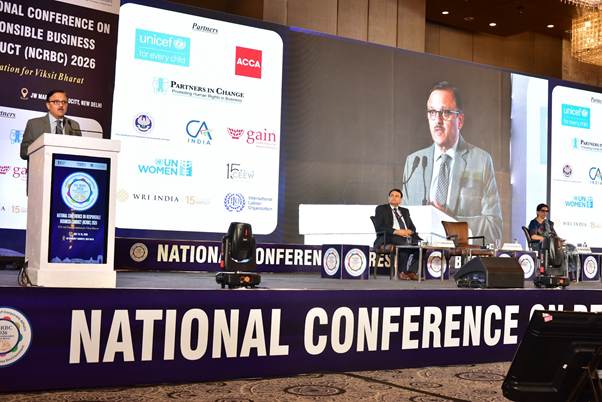
Delivering the Keynote Address, Hon'ble Justice Shri Abhay S. Oka, Former Judge, Supreme Court of India, opened his remarks by asserting that the right to live in a pollution-free environment is an intrinsic part of the fundamental right to life guaranteed under Article 21 of the Constitution of India. Hon’ble Justice Oka emphasised that the meaning of Viksit Bharat must itself be understood through the constitutional vision of India, particularly the Fundamental Rights, the Directive Principles of State Policy and the Fundamental Duties.

He observed, that development can be truly transformative only when it protects human dignity, advances social justice and safeguards the environment for present and future generations. Hon’ble Justice Oka traced the evolution of this jurisprudence to the enactment of the Environment (Protection) Act, 1986, which was brought into force in the aftermath of the Bhopal gas tragedy, one of the most devastating industrial disasters in the country's history. He observed that the tragedy had served as a turning point in India's environmental jurisprudence, compelling the state to institutionalise a comprehensive legal framework for environmental protection.

Hon’ble Justice Oka remarked that a nation's true progress cannot be measured by economic indicators alone, and that environmental well-being must be treated as an equally critical marker of national development. He called upon corporates, regulators and civil society to internalise the constitutional and legal obligation towards environmental protection, social equity and justice, rather than treating it as a discretionary or peripheral concern. Hon’ble Justice congratulated IICA for hosting a Conference to deliberate on the importance of responsible conduct by businesses which is aligned with the Constitutional ethos of social equity, and environmental protection. 

Delivering the Valedictory Address, Shri Gyaneshwar Kumar Singh, DG and CEO, Indian Institute of Corporate Affairs, reflected on the two days of deliberations at NCRBC 2026, describing the conference as a significant milestone in India's journey towards ESG-led transformation for a Viksit Bharat. He stated that Environmental, Social and Governance considerations have evolved beyond a compliance checkbox to become a foundation for business resilience, effective risk management, investment attraction and sustainable innovation. Responsible business is ultimately driven by responsible individuals and courageous leadership, rather than by regulation alone. He noted that the conference had brought together regulators, policymakers, industry leaders and civil society on a shared platform to deliberate on the future of responsible business conduct in India. Reflecting on the breadth of discussions held over the two days, spanning board-level disclosures, climate finance, sector-specific guidelines, responsible value chains, MSME competitiveness and environmental reporting metrics, he said the conference had reaffirmed the interconnectedness of India's sustainability agenda across regulators, industry and civil society.

He emphasised that the Indian Institute of Corporate Affairs, through its School of Business Environment, remains committed to serving as a national knowledge and capacity-building hub for advancing responsible business conduct across India's corporate ecosystem. He noted that the insights and recommendations generated through the conference's High-Level Panels would inform the Institute's continuing policy research and capacity-building initiatives in the years ahead. He called upon India's businesses, regulators and civil society institutions to continue working in close partnership to strengthen the credibility, comparability and reliability of ESG disclosures.

He reaffirmed that India's responsible business conduct framework, rooted in the country's own philosophical and legislative traditions, should continue to evolve in step with global best practice while remaining anchored in India's specific developmental priorities. He observed that the growing participation of India's Micro, Small and Medium Enterprises in the ESG ecosystem would be central to ensuring that the benefits of responsible business conduct are inclusive and widely shared. He concluded by expressing appreciation for the active participation of all delegates, speakers and partner organisations over the two days.

Earlier in the day, the Conference featured five High-Level Panels addressing sectoral reporting, responsible value chains, MSME integration and environmental metrics. The first high-Level Panel discussion titled “Sector-Specific Guidelines for Strengthening ESG Integration,” featured Smt. Surabhi Gupta, Chief General Manager, SEBI, who noted that the BRSR framework was initially designed as a simple, sector-agnostic baseline, but must continue to evolve as materiality concerns and sector-specific data gaps emerge. She also highlighted SEBI’s ongoing efforts to strengthen the ESG ratings ecosystem through more granular data and sustained stakeholder engagement. Ms. Robin Hodess, Chief Executive Officer, Global Reporting Initiative, stressed the need to align India’s sectoral metrics with globally recognised standards to reduce the compliance burden on companies operating across jurisdictions.

The second Panel discussion titled “Responsible Value Chains across Global and Domestic Supply Networks,” examined the global move towards mandatory due diligence and the continuing gap between corporate commitments and implementation on human rights and labour standards. The panel emphasised capacity-building for MSME suppliers, partnership-based compliance and the growing role of technology and artificial intelligence in improving supply-chain traceability.

The third High-Level Panel of the day titled “Mainstreaming ESG in MSMEs for Competitive and Inclusive Growth,” opened with a keynote address by Shri Sivasubramanian Ramann, Chairperson, PFRDA. Shri Devendra Kumar Singh, Chairperson, Cooperative Election Authority, highlighted the potential of Udyam-linked data to support targeted policy interventions, while cautioning that policy design must reflect the predominance of micro enterprises. The representative of the Ministry of MSME underlined the need to combine compliance with a clear business case, supported by incentives for energy, water and waste management.
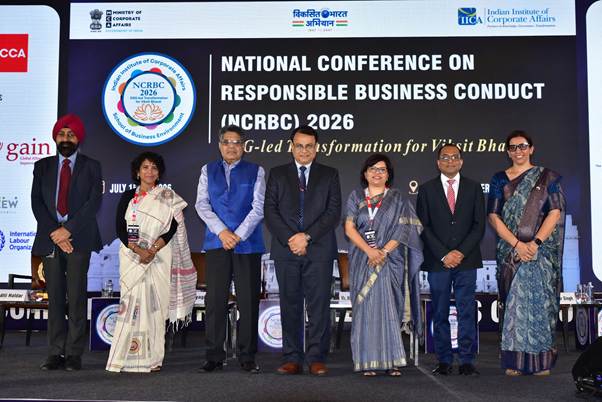
Then the fourth High-Level Panel  titled “Beyond BRSR: Strengthening Sectoral ESG Adoption and Integration,” featured Shri Ajay Tyagi, Former Chairman, SEBI, who called for a gradual transition from a common reporting baseline to sector-specific frameworks developed through multi-stakeholder consultation. The panel also emphasised greater interoperability across global standards and a shift from backward-looking compliance reporting to forward-looking sustainability planning, supported by credible assurance. The last High-Level Panel titled, “Re-envisioning Environmental Metrics in ESG Reporting Frameworks,” brought together Dr. Ajay Mathur, Former Director General, International Solar Alliance; Dr. Virinder Sharma, Member (Technical), Commission for Air Quality Management; and Shri R.R. Rashmi, Former Special Secretary, Ministry of Environment, Forest and Climate Change. The panel examined measures to improve the rigour, reliability and comparability of environmental metrics within India’s sustainability reporting architecture.
Following the High-Level Panels, Professor Garima Dadhich, Head, School of Business Environment, Indian Institute of Corporate Affairs, proposed the Vote of Thanks, expressing gratitude to the chief guest, DG & CEO IICA, eminent speakers, delegates, conference partner organisations and to the team of the School of Business Environment- Indian Institute of Corporate Affairs for their invaluable contributions in making NCRBC 2026 a landmark platform for advancing Responsible Business Conduct in India. She emphasised that the true success of the Conference would be reflected not merely in the deliberations held over two days, but in the collective actions and partnerships that emerge to accelerate ESG-led transformation and contribute towards the vision of a sustainable and globally competitive Viksit Bharat by 2047.

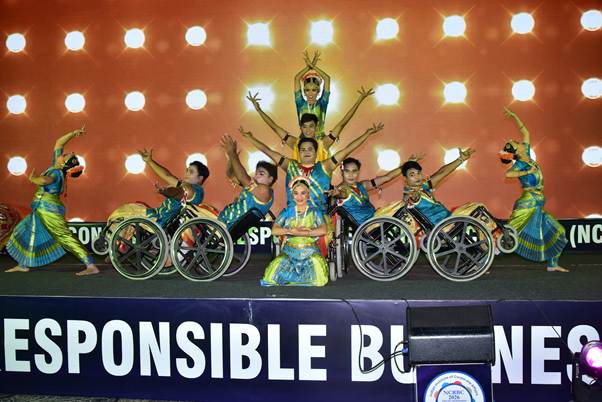
The valedictory session concluded with a cultural performance by "We Are One," an internationally acclaimed dance group of differently-abled artists, followed by the announcement of the winners of the conference hackathon.

With two days of substantive deliberations across the inaugural session and eight High-Level Panels, NCRBC 2026 brought together policymakers, regulators, industry leaders, professional bodies and international partners, reaffirming responsible business conduct as integral to India's journey toward becoming a developed, inclusive and ethically grounded nation by 2047.

Topics

Acts Income Tax
