

Loading...

Top
Help
×

By creating an account you can:

Logo TaxTMI
Call Us / Help / Feedback

Contact Us At :

E-mail: [email protected]

Call / WhatsApp at: +91 99117 96707

For more information, Check Contact Us

FAQs :

To know Frequently Asked Questions, Check FAQs

Most Asked Video Tutorials :

For more tutorials, Check Video Tutorials

Submit Feedback/Suggestion :

Email :
Please provide your email address so we can follow up on your feedback.
Category :
Description :
Min 15 characters 0/2000
Make Most of Text Search
  1. Checkout this video tutorial: How to search effectively on TaxTMI.
  2. Put words in double quotes for exact word search, eg: "income tax"
  3. Avoid noise words such as : 'and, of, the, a'
  4. Sort by Relevance to get the most relevant document.
  5. Press Enter to add multiple terms/multiple phrases, and then click on Search to Search.
  6. Text Search
  7. The system will try to fetch results that contains ALL your words.
  8. Once you add keywords, you'll see a new 'Search In' filter that makes your results even more precise.
  9. Text Search
Add to...
You have not created any category. Kindly create one to bookmark this item!
Create New Category
Hide
Title :
Description :
❮❮ Hide
Default View
Expand ❯❯
Close ✕
🔎 News - Adv. Search
TEXT SEARCH:

Press 'Enter' to add multiple search terms. Rules for Better Search

Search In:
Main Text + AI Text
  • Main Text
  • Main Text + AI Text
  • AI Text
Category: ?
Categorized by AI
---- All Categories ----
  • ---- All Categories ----
  • Income Tax
  • GST
  • Customs, DGFT & SEZ
  • FEMA & RBI
  • Corp. Laws, SEBI & IBC
  • PMLA, Black Money & ED
  • Budget
  • News and Press Release
  • PTI News
Month:
---- All Months ----
  • ---- All Months ----
  • January
  • February
  • March
  • April
  • May
  • June
  • July
  • August
  • September
  • October
  • November
  • December
Year:
---- All Years ----
  • ---- All Years ----
  • 2026
  • 2025
  • 2024
  • 2023
  • 2022
  • 2021
  • 2020
  • 2019
  • 2018
  • 2017
  • 2016
  • 2015
  • 2014
  • 2013
  • 2012
  • 2011
Sort By: ?
In Sort By 'Default', exact matches for text search are shown at the top, followed by the remaining results in their regular order.
Relevance Default Date
    'Not haircut but mundan': Cong on NCLT clearing Subhash Chandra's Rs 6.5 crore payout
    Keralam: Escaped Assam prisoner reaches police station for Aadhaar card, flees again
    Women's Savings Account: Features that make opening one worth it
    Best Pension Plans and Annuity Plans in India 2026: A Full Comparison
    Rupee rises 4 paise to 95.40 against US dollar in early trade
    Minister of State for Commerce and Industry and Electronics & Information Technology Shri Jitin Prasada Concludes Official Visit to Morocco; Co-Chairs...
    Hyderabad police caution citizens against ''Hybrid Cyber Fraud''
    Hoping to work towards further expanding scope of India-Japan trade pact: Goyal
    Bajaj Finance Personal Loan Offers Limited-Time Rewards During Loan Utsav 2026
    Commerce and Industry Minister Shri Piyush Goyal Highlights India’s Growing Startup Ecosystem at India–Japan Startup Roundtable in Tokyo
    Sugar prices rise again by Re 1 per kg to Rs 65 in retail market
    SIDBI organizes a conclave of the Heads of Regional Rural Banks (RRBs) on expanding SIDBI-RRB MSME Co-Lending arrangement
    SC sets aside show cause notice to Tata Steel over input tax credit availed during FY19-23
    HC flags fraudulent use of Aadhaar by infiltrators to get Indian citizenship; calls for action
    IVCA Welcomes Consultative Approach on Draft FEMA NDI Rules
    India to be among top 5 Nestle markets in coming years, a major export hub : Global CEO
    Build Credit Awareness with a Free Credit Score Check from Bajaj Finance
    CARD91 Introduces Five-Point Credit Lifecycle Consistency Framework for Credit Line on UPI
    RBI's Proposed Shift from Revolving Credit to Term Loans: SwiffyLabs Lending Platform Already Supports the New Construct
❯❯
Maximize Maximize Maximize
0 / 200
Expand Note
Add to Folder

No Folders have been created

+

Are you sure you want to delete "My most important" ?

NOTE:

News
Showing Results for :
Reset Filters
Results Found:
Show All Summaries Hide All Summaries
August 27, 2026
Show AI Summary
Personal insolvency repayment plans may be approved despite minimal creditor recovery when requisite voting support and comparative valuation support them.
Personal insolvency repayment plan approval was granted under the Insolvency and Bankruptcy Code, 2016, despite objections that creditor recoveries were negligible and the proposed payment uncertain. The plan received 80.81 per cent voting support, while dissenting creditors held less than 20 per cent voting share. Valuation showed that the debtor's personal estate was materially below the offered amount, and rejection could result in bankruptcy and lower recovery. Assessment of settlement adequacy was treated as a matter of creditor commercial wisdom.
August 27, 2026
Show AI Summary
Prison escape security lapses prompt coordinated tracing measures, transport monitoring, inter-state alerts, and a detailed custodial-security inquiry.
Prison escape and custodial-security lapses arose after a detainee escaped from Aluva Sub Jail, allegedly by using an under-construction structure within the premises to cross the compound wall. Following his later appearance at a police station seeking return of his Aadhaar card, search measures included a lookout circular, information sharing with police stations, railway-security coordination, and alerting police in Assam. A detailed inquiry has been initiated into the prison-security deficiencies enabling the escape.
August 27, 2026
Show AI Summary
Women's savings account selection depends on practical benefits, charges, eligibility, and banking needs rather than the account label.
Women's Savings Accounts may provide standard banking facilities together with additional services or benefits for eligible women. Their suitability depends on practical use of digital banking, transfers, payments, alerts, debit-card facilities, accessibility, security features, charges, and minimum-balance conditions. Since regular Savings Accounts may offer comparable facilities, the additional benefits should be assessed against associated costs and conditions. Selection should be based on comparison of eligibility, facilities, balance requirements, benefits, customer support, and authentication safeguards rather than the account's women-focused label alone.
August 27, 2026
Show AI Summary
Retirement annuity selection prioritises payout structure, taxation, insurer strength and flexibility over brand comparison for informed retirement decisions.
Retirement planning may combine market-linked accumulation during working years, deferred annuities that lock future guaranteed income, and immediate annuities that convert retirement savings into regular payments. Annuity choice depends on whether the priority is higher income, continuation for a surviving spouse, or return of capital on death. Product comparison should consider market-linked growth versus income certainty, taxation of annuity income at applicable slab rates, insurer strength, and flexibility in deferment, payout frequency and policy loans.
August 27, 2026
Show AI Summary
Foreign exchange inflows through deposit and borrowing measures provided near-term rupee support amid lower crude prices.
Reserve Bank special measures relating to FCNR(B) deposits, Overseas Foreign Currency Borrowings and External Commercial Borrowings were identified as attracting foreign-exchange inflows and providing near-term support to the rupee. The Reserve Bank became a net dollar buyer in June after two months of sales to support the rupee. The FCNR(B) window remained open until August 31, while the market outlook anticipated broader rupee depreciation over subsequent weeks.
August 27, 2026
Show AI Summary
Preferential trade agreement exploration advances bilateral market access, pharmaceutical cooperation, investment partnerships, and diversified trade.
India-Morocco economic cooperation is expanded through the seventh Joint Commission framework, targeting deeper and more diversified trade, investment, industrial collaboration and market access across goods and services. An India-Morocco Joint Working Group is to examine bilateral trade opportunities and the feasibility of a preferential trade agreement, including tariff and non-tariff barriers, improved market access and trade facilitation. Cooperation also addresses pharmaceutical market authorisation and approval timelines, food safety, sustainable agriculture, renewable energy, artificial intelligence, healthcare, and phosphates and fertilisers.
August 26, 2026
Show AI Summary
Hybrid cyber fraud exploits stolen smartphones and intercepted verification codes to compromise digital banking and payment accounts.
Hybrid cyber fraud combines physical smartphone theft with digital financial exploitation. Offenders obtain screen-lock credentials, steal devices and use control of the active SIM card to intercept verification codes and reset UPI and digital banking credentials. Preventive measures include withholding PINs, passwords and OTPs; avoiding storage of financial and identity records on phones; and immediately blocking the SIM card and freezing digital banking and UPI services after a theft.
August 26, 2026
Show AI Summary
CEPA review aims to expand bilateral trade engagement, address export barriers, and support regulatory registrations for exporters.
India and Japan are considering a review of the Comprehensive Economic Partnership Agreement to make the bilateral trade framework more contemporary and expand its scope, scale and commercial opportunities. The review is linked to balanced trade and to identifying export barriers arising from procedural requirements, language issues and time involved in market access. Regulatory compliance assistance may support product registrations required for overseas markets, including costly chemical registrations and pharmaceutical registrations.
August 26, 2026
Show AI Summary
Personal loan reward eligibility depends on successful campaign-period disbursal, alongside review of borrowing costs and repayment capacity.
Loan Utsav 2026 provides a limited-period reward bundle to eligible customers whose personal loan is successfully disbursed during the campaign period, subject to applicable terms and conditions. Personal loans are collateral-free and available subject to eligibility, customer profile, documentation and applicable loan terms. Applicants may choose a loan amount and repayment tenure based on their requirements. Extended tenures can reduce monthly EMI obligations but may increase total interest payable. Customers should review interest rates, EMI, processing charges, other loan costs and repayment capacity before accepting a loan offer.
August 26, 2026
Show AI Summary
Deep-tech investment cooperation advances through capital corridors, innovation bridges, manufacturing integration and startup pitching platforms for cross-border growth.
India-Japan startup cooperation is proposed to advance through a deep-tech capital corridor, a two-way innovation bridge, manufacturing and technology integration, and joint startup pitching platforms. Collaboration is directed towards patient capital, early-stage research, deep-tech commercialisation, technology validation, precision manufacturing, investment and market access. The partnership also emphasises MSME integration with startups and global supply chains, co-investment mechanisms, plug-and-play infrastructure, and institutional links among universities, research institutions, incubators and industry.
August 26, 2026
Show AI Summary
Sugar price-control measures combine raw-sugar imports, stockholding limits and export restrictions to curb retail price pressures.
Sugar price-control measures combine authorised raw-sugar imports, stockholding limits for dealers and bulk consumers, and an existing export prohibition to address elevated domestic prices. Imports are permitted within the specified period, while stockholding restrictions seek to curb speculation and hoarding. Retail prices continued to rise despite lower ex-mill prices, and the regulatory approach focuses on augmenting supply, limiting stock accumulation, and preventing export-related pressure on domestic availability.
August 26, 2026
Show AI Summary
Alternative dispute resolution enabled settlement of long-pending disputes, alongside reporting on court administration and regulatory compliance concerns.
Legal developments include resolution of long-pending tenancy, commercial and property disputes through a special Lok Adalat mechanism, including a digitally signed international settlement. Other matters concern a challenge to a riot-related murder conviction, allegations of administrative irregularities and selective case listing, fast-track court pendency, cancellation of a recruitment process following suspected examination malpractice, fraudulent identity documents used to claim citizenship, medical-qualification standards, and opposition to uranium exploration and mining.
August 26, 2026
Show AI Summary
MSME co-lending supports digital paperless credit delivery through rural banks for underserved rural and semi-urban enterprises.
SIDBI-RRB MSME co-lending arrangement is proposed for expansion to increase credit access for micro, small and medium enterprises in rural and semi-urban areas. The arrangement combines SIDBI's understanding of MSME credit requirements with Regional Rural Banks' local reach. SIDBI's Co-Lending Origination Platform provides an end-to-end digital credit process intended to enable faster, paperless loan processing, in-principle sanction communication, documentation and direct account disbursement without branch visits.
August 26, 2026
Show AI Summary
Input tax credit mismatch alone cannot support fraud-based GST demand without an assessing officer's recorded satisfaction of fraud or suppression.
Section 74 GST demand proceedings require the assessing officer's independent satisfaction of fraud, wilful misstatement or suppression of facts. An input tax credit mismatch or alleged short payment alone cannot establish these conditions. Unsupported assertions of suppression for invoking extended limitation are insufficient, and audit objections cannot replace the assessing officer's satisfaction. A show cause-cum-demand notice lacking factual allegations of a deliberate device to evade tax or avail excess input tax credit is vulnerable.
August 26, 2026
Show AI Summary
Fraudulent Aadhaar procurement exposes identity-verification gaps and prompts disclosure, expedited investigation, deportation, and statutory review measures.
Fraudulent procurement of Aadhaar and other identity documents by foreign nationals who infiltrate borders may undermine identity verification, immigration control and national security. Coordinated action is required to trace and deport such persons, prevent re-entry, strengthen document verification, and complete investigations without delay. Amendments to the Aadhaar Act are to be considered to assist investigating agencies, while a dedicated procedure is required to address border infiltration and human trafficking. Aadhaar enrolment records are to be supplied to police, followed by timely deportation proceedings.
August 26, 2026
Show AI Summary
Foreign investment liberalisation proposals receive industry support, subject to preserving AIF treatment, grandfathering, and prospective application.
Proposed foreign-investment liberalisation, including treatment of stakes below 10 per cent and a greater role for market forces in valuation, is welcomed. Preservation of the existing treatment of Alternative Investment Funds under the IOCC framework is emphasised, together with grandfathering of transactions and funds undertaken under the current regulatory position. Newly introduced requirements should operate prospectively to support a simpler, predictable and investment-friendly foreign-investment framework.
August 26, 2026
Show AI Summary
India market expansion guides Nestle 's volume-led growth, export-hub development and long-term investment without compromising product quality.
Nestle 's India strategy focuses on volume-led growth, wider consumer reach, portfolio development, efficiency improvements and sustained long-term investment. Growth is intended to combine increased household penetration with pricing, premiumisation, affordability and value offerings. India is also intended to develop further as a production and export hub for global markets, supported by manufacturing capacity and expanding overseas supplies. Product quality and consumer interests remain constraints on the pace of expansion.
August 26, 2026
Show AI Summary
Credit awareness through regular score and report review supports responsible borrowing, error detection, and informed credit management.
Free online access to the Credit Pulse Report is available through the Bajaj Finance website. Users verify their registered mobile number through OTP authentication, provide identifying particulars including PAN and date of birth, and then view the available credit score. The report may be reviewed and downloaded to examine repayment history, active credit accounts, recent enquiries and other recorded credit information. Periodic review can help identify unfamiliar accounts, inaccurate repayment records, overdue amounts, unupdated information and changes in credit utilisation.
August 26, 2026
Show AI Summary
Credit lifecycle consistency requires facility-specific treatment so UPI-linked credit records, repayments and customer obligations remain aligned.
CARD91's Credit Lifecycle Consistency Framework calls for facility-specific treatment of Credit Line on UPI transactions and continuing credit events. Credit limits, outstanding balances, repayments, refunds, reversals and EMI conversions should be accurately connected to the relevant customer account and applied according to the underlying facility's terms. Bank policy, customer consent, transaction controls and portfolio actions should remain aligned. Customer-facing applications, statements and alerts should consistently reflect available credit, outstanding obligations and repayment schedules, while disputes and manual corrections follow documented, reviewable processes.
August 26, 2026
Show AI Summary
Non-revolving credit lines require term-loan structures supporting multiple drawdowns without replenishing sanctioned limits for NBFC lending products.
Proposed restrictions on revolving credit facilities for most NBFCs would generally require credit products to operate as term loans, rather than facilities in which principal repayment automatically restores the available borrowing limit. Compliance may require technology capable of managing multiple drawdowns within an approved sanction, separate repayment schedules, amortisation and servicing workflows, while preventing repaid principal from replenishing the sanctioned limit.

News

Back

All News

Showing Results for :
Reset Filters
No Records Found

News

Back

All News

Showing Results for : Reset Filters

Prosperous States for a Prosperous India - Speech by Dr. Poonam Gupta, Deputy Governor, Reserve Bank of India, delivered at the ‘Columbia Indian Economy Summit 2026’ at the Raj Centre on Indian Economic Policy at Columbia University on April 11, 2026

May 12, 2026

Contents
Summary
Note

Note

-

Bookmark

Print

Print

It is my pleasure to be here at the Columbia Indian Economy Summit, 2026. I would like to thank Prof. Arvind Panagariya for his kind invitation to me to speak on issues related to India’s growth trajectory, both at the national and at the states’ level.

My talk is in three parts. I will first present select salient features of the trajectory of economic growth of India over the past four decades, and what it bodes for the years to come. Then, I will present key characteristics of the states’ respective growth trajectories. Finally, I will draw some inferences and implications from these observations for our quest to attain the status of a much more prosperous economy by 2047.

1. Salient features of the trajectory of economic growth of India over the past four decades2

India’s economic growth has consistently accelerated since the early 1980s. Average real gross domestic product (GDP) growth has increased from 5.7 per cent in the 1980s to 5.8 per cent in the 1990s, rising further to 6.3 per cent in the 2000s, to 6.6 per cent in the 2010s, and reaching 7.7 per cent in the most recent four-year period (Table 1).

Table 1: GDP growth and per capita income growth
  Annual average real GDP growth
(per cent)
Annual average real per capita income growth
(per cent)
1980-81 to 1989-90 5.7 3.5
1990-91 to 1999-2000 5.8 3.7
2000-01 to 2009-10 6.3 4.6
2010-11 to 2019-20 6.6 5.2
2022-23 to 2025-2026* 7.7 6.7
Note: 1. *: Excluding the COVID years of 2020-21 and 2021-22; 2. Data is for the base year 2011-12.
Source: The Ministry of Statistics and Programme Implementation (MoSPI). Back series with 2011-12 base has been taken from Economic and Political Weekly Research Foundation (EPWRF), https://epwrfits.in/index.aspx (last accessed on April 10, 2026).

The acceleration is even more pronounced in per capita income (Figure 1). From about US$ 274 in 1981 and US$ 306 in 1991, per capita income has risen nearly tenfold to around US$ 2700 in 2024. Importantly, while it took over two decades for per capita income to double initially, it has expanded by almost fivefold in the subsequent two decades, indicating a clear structural shift in growth momentum. As per the forecasts in October 2025 World Economic Outlook (WEO) of the IMF, per capita income is projected to increase to US$ 2818 in 2025, US$ 3051 in 2026 and US$ 4346 in 2030.
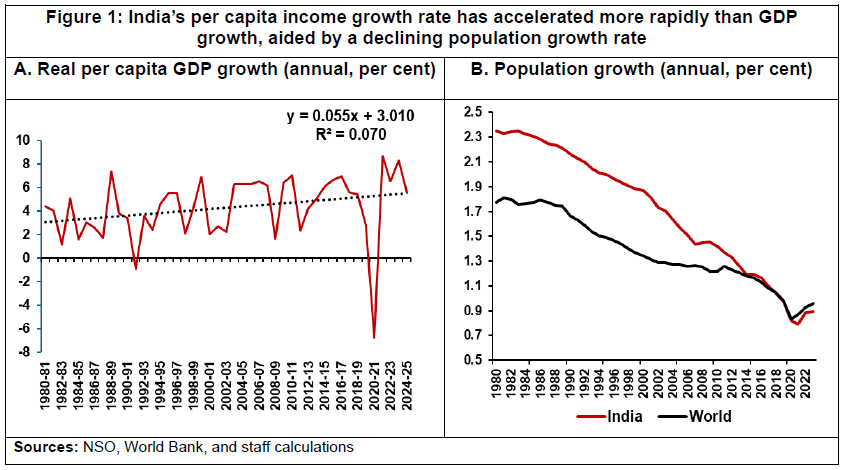
Figure 1: India’s per capita income growth rate has accelerated more rapidly than GDP growth, aided by a declining population growth rate

Decline in population growth, too, has contributed to faster per capita income growth. India’s population growth, once significantly above the global average, has steadily moderated and has converged to global levels since around 2014, amplifying gains in per capita terms.

India has attained a virtuous cycle of accelerated growth and macroeconomic stability. Macroeconomic stability is reflected in sustainable and resilient outcomes across inflation, the current account balance, fiscal position, debt quality, and financial sector health, among others. Key macroeconomic outcomes, especially growth (overall and sectoral) and inflation, are broadly less volatile and move within a narrower, more predictable range.

Inflation has declined at a faster rate than in most economies, resulting in a narrowing of the inflation differential vis-à-vis advanced economies and other emerging and developing economies. India’s decadal average current account deficit has varied within a moderate range of 0.5-2.2 per cent of GDP since 1990 and has remained modest in recent years. The banking sector has undergone a structural turnaround­­–following a decade-long phase of balance sheet repair, banks today are significantly stronger and better capitalized, both historically and relative to their peers.

On the fiscal front, while deficit and debt levels rose during COVID-19, India has retreated to a path of consolidation, with a clear focus on reducing deficits and stabilizing debt over the medium term.3 There has been a distinct focus on enhancing the quality of fiscal outcomes, with a notable shift towards capital expenditure, thereby strengthening the growth potential of the economy (Government of India, 2026).

These improved outcomes are attributed to robust policy frameworks and nimble policy responses. India’s policy frameworks have steadily evolved and today reflect global best practices, while remaining well-anchored in domestic realities. In fiscal policy, the Fiscal Responsibility and Budget Management (FRBM) framework has provided a rule-based path for fiscal management, while retaining flexibility to respond to shocks such as COVID and other external events. In tax policy, reforms such as the Goods and Services Tax (GST) have unified the indirect tax system and improved compliance.

In monetary policy, the Flexible Inflation Targeting (FIT) framework introduced in 2016 has lowered inflation, anchored inflation expectations, reduced macroeconomic volatility, and enhanced policy credibility. In the broader financial sector, stronger banking supervision, improved capital norms, and wide-ranging regulatory reforms across financial markets have reinforced system resilience.

2. Salient features of the trajectory of economic growth across states

States have become more prosperous than before. India’s growth story consists of broad-based prosperity, with every state recording a significant increase in per capita gross state domestic product (GSDP) over the past two decades, indicating that progress has been nationwide rather than confined to a few states or regions.4 This is seen both in US dollar terms as well as in constant rupees terms, adjusted for inflation.

In the last two decades, average per capita incomes across states have surged nearly fivefold in current US dollar terms and more than threefold in constant rupees, underscoring the strength and sustained pace of India’s long-term income gains (Table 2).

Table 2: Ratio of per capita GSDP in 2024-25 to 2003-04
States Constant INR Current USD
Sikkim 6.0 11.4
Telangana 4.5 7.9
Karnataka 3.9 6.7
Tamil Nadu 4.2 6.6
Uttarakhand 3.9 6.1
Andhra Pradesh 3.5 5.9
Arunachal Pradesh 2.7 5.8
Odisha 3.4 5.7
Haryana 3.3 5.6
Goa 3.3 5.5
Gujarat 4.0 5.4
Mizoram 4.3 5.3
Rajasthan 2.7 5.2
Madhya Pradesh 2.9 5.2
Bihar 3.0 5.1
Kerala 3.2 5.0
Tripura 3.9 4.9
Assam 2.8 4.9
Maharashtra 3.3 4.8
Uttar Pradesh 2.7 4.7
Chhattisgarh 2.7 4.7
Nagaland 3.0 4.6
Himachal Pradesh 3.2 4.4
West Bengal 2.5 4.4
Punjab 2.6 3.7
Jharkhand 2.5 3.6
Manipur 2.1 3.5
Meghalaya 2.2 3.3
Average 3.3 5.4
Notes: 1. Due to data unavailability, 2023–24 values are used for 2024–25 for Sikkim, Goa, Gujarat, Mizoram, Nagaland, and Manipur; 2. GSDP at constant prices INR is based on 2011-12 base year; 3. Average is the unweighted average; 4. Data for Telangana from the year 2003-04, including backcasted series, was sourced from EPWRF. 5. Per capita income in USD was computed by dividing the current price per capita income by the respective annual average exchange rate.
Sources: MoSPI (sourced from EPWRF); Database on Indian Economy (DBIE) RBI; and staff calculations.

Yet, the pace of income growth has varied across states. Some states have become five to ten times more prosperous over the last two decades, while others have recorded more modest gains of around three times. One strong correlate of the relative performance is their initial prosperity levels. Per capita income levels in more prosperous states have grown faster than in relatively less prosperous ones. The fact that richer states have experienced greater prosperity than the poorer states in the past, and that this trend has not reversed, implies that income levels across states have not been converging.

Notwithstanding this, the extent of divergence has weakened considerably over time (Figure 2a, 2b, and 2c). In other words, the growth gap between richer and poorer states has narrowed in recent years. The association between initial income and subsequent growth was positive and statistically significant (at 5 per cent level) during the decade of 1990s (Figure 2a). It became numerically smaller and less significant statistically in the subsequent decade (at 10 per cent level, Figure 2b). During the last decade, the coefficient has declined sharply; and the relationship between the initial income and the subsequent decadal growth has become insignificant (Figure 2c). The attrition of divergence can be attributed to the better performance of relatively lower-income states such as Odisha, Assam, and Uttar Pradesh during the past decade, among other factors.
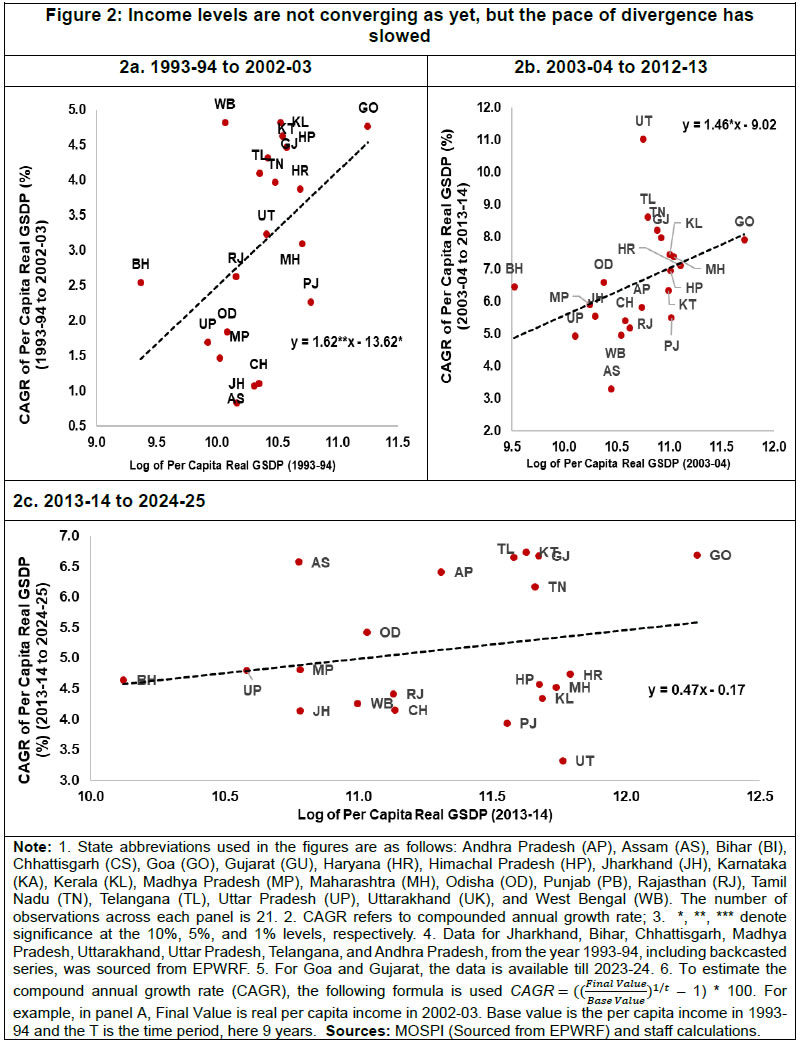
Figure 2: Income levels are not converging as yet, but the pace of divergence has slowed

Overall, the outperformance of the richer states in the past has been driven not only by higher income growth but also by slower population growth (Table 3). States above median income levels have both higher GSDP growth as well as slower population growth, resulting in a faster growth in per capita income.

Table 3: Average GDP growth and population growth across states
(per cent)
  Average annual real GSDP growth from 2003-04 to 2024-25 Average annual population growth from 2003-04 to 2024-25
Below median 6.8 1.4
Above median 7.7 1.1
Notes: 1. Due to data unavailability, 2023–24 values are used for 2024–25 for Sikkim, Goa, Gujarat, Mizoram, Nagaland, and Manipur. 2. Based on real per capita GSDP in 2003–04, states were classified as above or below the median. Above-median states include Andhra Pradesh, Arunachal Pradesh, Goa, Gujarat, Haryana, Himachal Pradesh, Karnataka, Kerala, Maharashtra, Punjab, Sikkim, Tamil Nadu, Telangana and Uttarakhand. Below-median states comprise Assam, Bihar, Chhattisgarh, Jharkhand, Madhya Pradesh, Manipur, Meghalaya, Mizoram, Nagaland, Odisha, Rajasthan, Tripura, Uttar Pradesh, and West Bengal. 3. The unweighted average is presented. 4. Data for Telangana from the year 2003-04, including backcasted series, was sourced from EPWRF.
Source: MoSPI (Sourced from EPWRF) and staff calculations. 

While income convergence across states remains gradual, several other welfare indicators, most notably per capita consumption expenditure, have been converging more decisively. In earlier periods, for example in case of rural consumption expenditure, consumption growth tended to be positively associated with initial consumption levels, meaning richer states showed higher levels of consumption growth (Figures 3a and 3b). However, in the recent period (2011–12 to 2023–24), this relationship has reversed: states with historically lower consumption levels are now recording faster consumption growth, a pattern confirmed by a statistically significant negative coefficient on initial consumption levels (Figure 3c). This marks a meaningful shift toward distributional convergence in living standards across Indian states.
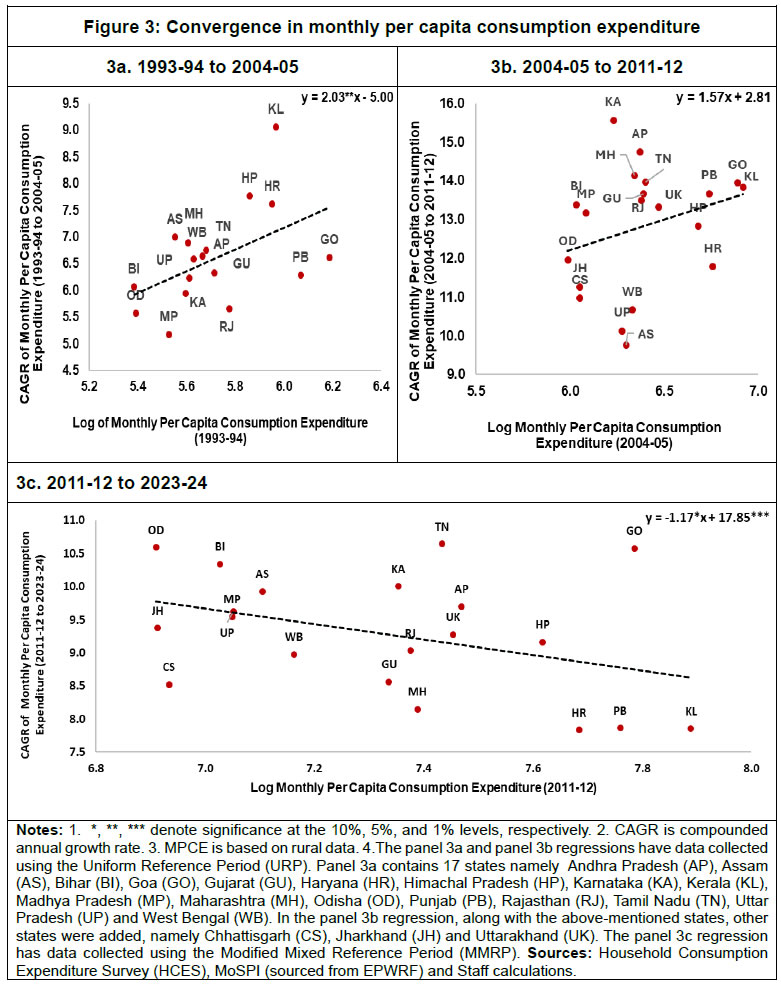
Figure 3: Convergence in monthly per capita consumption expenditure

Beyond consumption expenditure, multiple other dimensions of socio-economic wellbeing have been converging. Indicators spanning health, education, demography, physical infrastructure, access to electricity, safe drinking water, sanitation, clean cooking fuel, and financial inclusion have all trended toward greater parity across states, irrespective of their initial income levels. This broad-based convergence is likely driven by sustained policy efforts, saturation levels in the richer states where further gains are numerically not feasible or are inherently harder to achieve, and rising demand in the poorer states that have been experiencing increases in their income levels.

Figure 4 (4a to 4h) illustrate these trends across a selection of key outcome indicators. Women’s literacy rate (literacy rate per 100 women) has risen steadily over the decades while fertility rate (number of births per female) has declined sequentially (Figures 4a and 4b). Percentage of children who are not underweight has improved meaningfully, increasing from around 62 per cent in 2005-06 to close to 70 per cent in 2019-21 (Figure 4c). Infant survival rate, too, has also improved sequentially over the decades (Figure 4d).

Access to basic services has strengthened considerably across states with an increase in households’ access to electricity, sanitation facilities, improved drinking water facilities (Figures 4e, 4f and 4g). Financial deepening indicators have improved, e.g. per cent of women in India with access to a bank account has jumped to around 80 per cent during 2019-21 from 14 per cent in 2005-06 (Figure 4h). Convergence is also evident in other development indicators like sex ratio (proportion of females to males), vitamin A coverage among children, incidence of anaemia among women and children, stunting (low height for age) and wasting (low weight for height), access to clean fuel, women’s ownership of a phone and house/land; and household health insurance coverage.5 There is significant improvement in each of these indicators, with a narrowing of dispersion across states, reflecting a broad-based improvement in welfare outcomes as well as increasing convergence in living standards across states. What we have depicted here is only a subset of indicators. There are many other indicators where similar phenomenon is prominently visible.
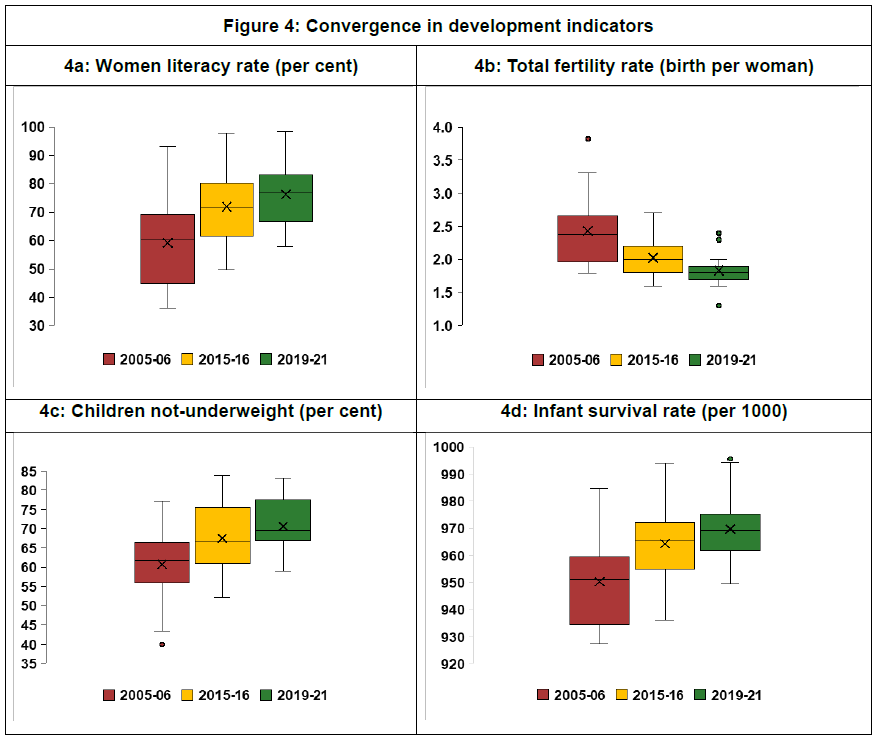
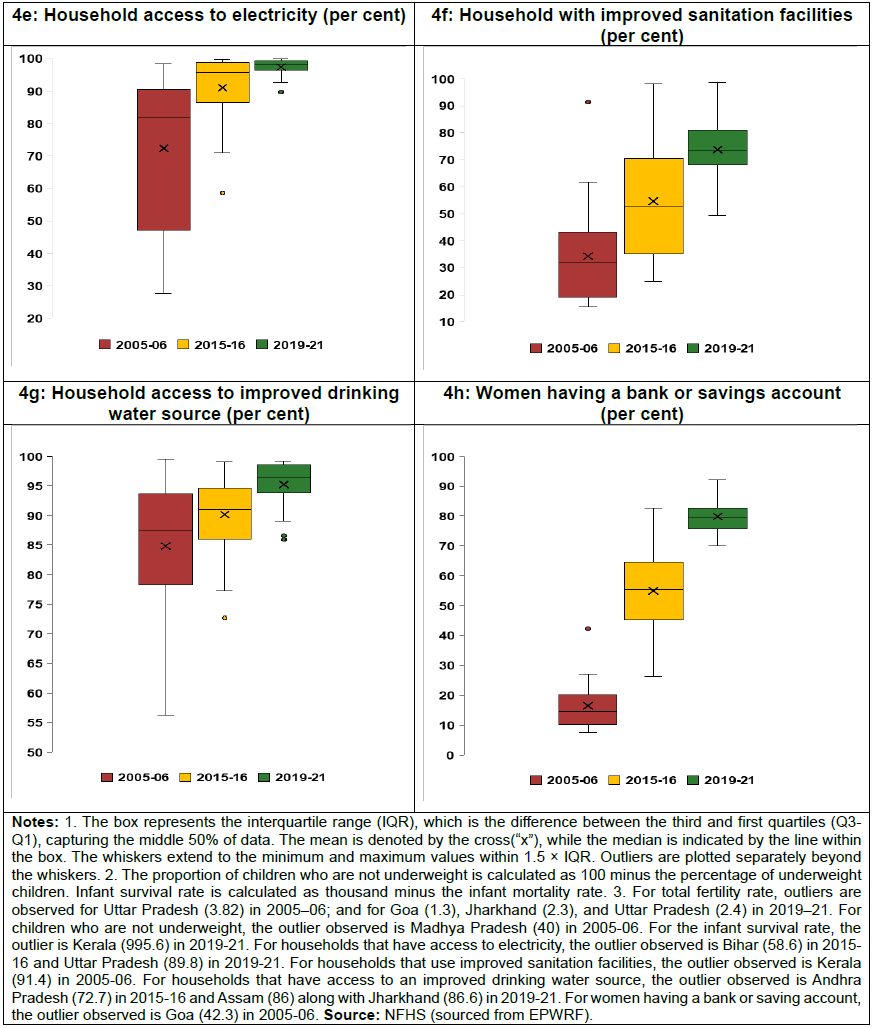
Figure 4: Convergence in development indicators

It is equally important to note that convergence has not been universal across all enablers of growth and development. Data limitations make it difficult to establish this with full empirical precision, but interstate convergence appears limited for some of the structural variables, including the share of agriculture in state economies, the pace of movement out of agriculture, productivity growth, capital formation, FDI inflows, and bank credit growth. As per the patterns in these indicators, some of the drivers or correlates of growth are still showing divergence across states.

If the past rates of growth are maintained, many states will become or come close to becoming “rich” by 2047 (as per the prevailing international thresholds of prosperity). As a simple thought experiment, we calculate each state's average annual growth rate in per capita GSDP (in USD terms and again in constant INR) over the past decade (2013-14 to 2024-25); and use these to project income levels in 2046-47 assuming that the same rate of growth would prevail over the next two decades.6

On this basis, India's per capita income is projected to grow by 4 times in USD terms by 2046-47. This expansion is expected to be broad-based: both above-median and below-median states are projected to record substantial gains, with below-median states contributing considerable momentum, reinforcing the inclusive nature of India's growth trajectory (Figure 5).
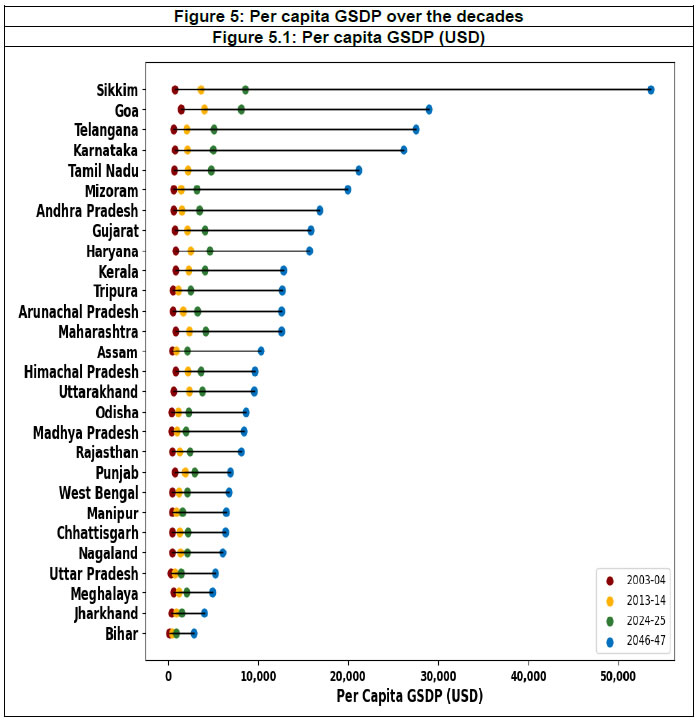
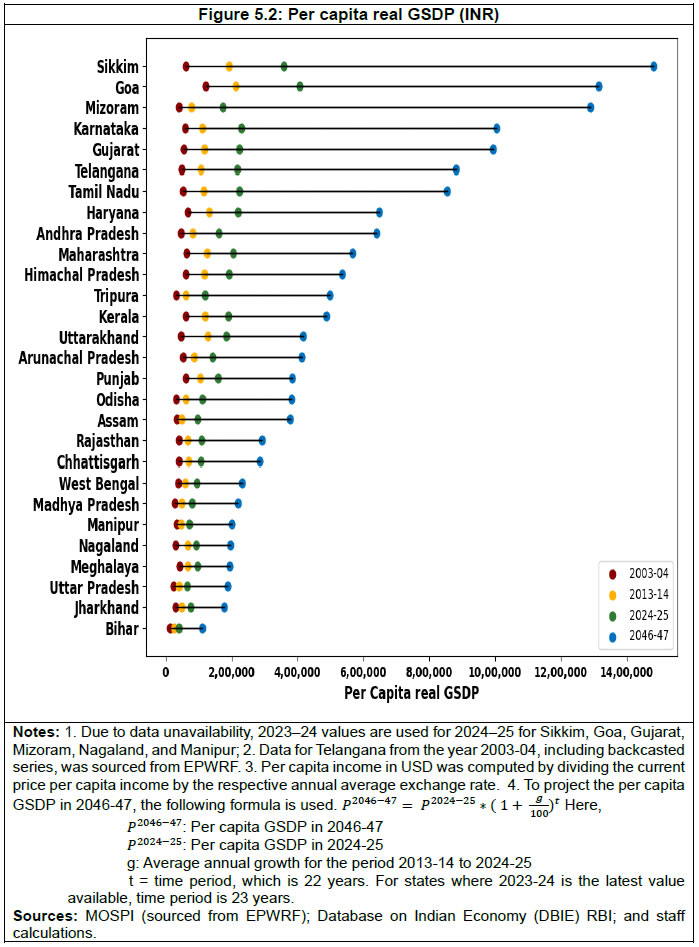
Figure 5: Per capita GSDP over the decades

Figure 5: Per capita GSDP over the decades

3. Inferences and implications of the above observations for our quest to attain the status of a much more prosperous economy by 2047

Sustaining or exceeding recent growth trajectories to reach an even higher level of prosperity by 2047 will require extending our growth frameworks at the subnational levels. Policy priorities will naturally differ across the spectrum of states. For above-median states, the focus ought to be on innovation and scale, planned urbanization, attracting global and domestic talent, expanding market share both domestically and internationally, and actively taking part in shaping national frameworks on trade, FDI, and finance. For below-median states, priorities could include unlocking productivity in agriculture and reimagining the sector; building skills; integrating more in the national and international labour markets, complementing more advanced states, particularly in labour-intensive activities, emulating proven best practices nationally and internationally while developing niche strengths, and strengthening fiscal capacity to support faster growth.

Accelerating growth would require a clearer acknowledgement and more effective use of the distinct policy roles available to the centre and the states respectively.

Many macro policies are formulated at the national level. These include monetary policy; financial sector regulation covering banks, non-bank financial institutions; development of equity and debt markets, and private equity; policies related to the external sector including for trade, exchange rate and capital account openness; and industrial and competition policy among others.

At the state level, the policy space and levers available are different, though no less consequential. State governments shape the ease of doing business environment; determine land and labour market conditions; quality and reach of education and health services; delivery of public services; and enhancing the quality of public finances including allocation of their budgets into recurrent and capital expenditure and between merit and non-merit activities. Strengthening all of these in a holistic framework would be important to accelerate the rate of growth of prosperity for each one of the states and thereby the national average.

Conclusion

Prosperity is both India’s ambition and its destiny. The central question is no longer whether India will prosper, but how quickly, how broadly, and how equitably that prosperity would be shared across its states and its people.

The pace of income divergence has weakened considerably with the growth gap between richer and poorer states narrowing over successive decades. Meanwhile convergence has been faster and more decisive across a wide set of welfare and development indicators: per capita consumption expenditure, literacy, nutrition, access to basic services, financial inclusion, and a range of health and gender outcomes. Lagging states are catching up, and the distribution of wellbeing across India is becoming more equal.

Looking ahead, if growth trajectories of the past two decades are sustained, the average state per capita income could approach high-income thresholds by 2046-47. Crucially, below-median states are projected to contribute substantially to this expansion, reinforcing the broad-based nature of India’s growth story. Realising and accelerating the path to this potential, however, would require moving towards state-specific growth strategies that are anchored in local strengths, structural realities, and their respective stages of development.

This calls for holistic assessments, richer dialogues, greater awareness, specific actions across states, alongside learning from each other, to fully leverage their existing strengths and building new comparative advantages.

References

Eichengreen, Barry, Gupta, Poonam, and Ahmed, Ayesha. (2024). India's debt dilemma, India Policy Forum, vol. 20(1), pages 1-62.

Government of India (2026). Fiscal developments - Anchoring stability through credible consolidation, Chapter 2, Economic Survey 2025-26, Ministry of Finance.

Gupta, Poonam (2025). Policy frameworks for economic resilience: The case of emerging markets and India (Address at the Business Standard BFSI Insight Summit, Mumbai).

Gupta, Poonam (2026). Perspectives on India’s growth: Last four decades to the present (14th Foundation Day Lecture, Centre for Development Studies).

International Monetary Fund (2025). World Economic Outlook, October.

Panagariya, Arvind (2010). India on the growth turnpike: No state left behind, Columbia Program on Indian Economic Policies Working Paper No. 2010-1.

Reserve Bank of India (2025). Financial Stability Report, December.

----

1 Speech by Dr. Poonam Gupta, Deputy Governor, Reserve Bank of India, delivered at the ‘Columbia Indian Economy Summit 2026’ at the Raj Centre on Indian Economic Policy at Columbia University on April 11, 2026. Inputs provided by Asish Thomas George, Somnath Sharma, and Shivam are gratefully acknowledged.

2 This section draws on Gupta (2026).

3 India’s public debt remains sustainable. As noted by Eichengreen, Gupta, and Ahmed (2024), its structure–predominantly domestic, long-term, and rupee-denominated–mitigates rollover and currency risks, and under most assumptions, the debt-to-GDP ratio is expected to decline gradually.

4 See Panagariya (2010) for evidence to this effect in the earlier decades.

5 Households with at least one family member covered by health insurance.

6 This simple approach is agnostic about the sources of growth or the respective trajectories of population growth rates, nominal GSDP growth rates; or that of the deflators.

Topics

Acts Income Tax