Loading...

Top
Help
×

By creating an account you can:

Logo TaxTMI
Call Us / Help / Feedback

Contact Us At :

E-mail: [email protected]

Call / WhatsApp at: +91 99117 96707

For more information, Check Contact Us

FAQs :

To know Frequently Asked Questions, Check FAQs

Most Asked Video Tutorials :

For more tutorials, Check Video Tutorials

Submit Feedback/Suggestion :

Email :
Please provide your email address so we can follow up on your feedback.
Category :
Description :
Min 15 characters 0/2000
Make Most of Text Search
  1. Checkout this video tutorial: How to search effectively on TaxTMI.
  2. Put words in double quotes for exact word search, eg: "income tax"
  3. Avoid noise words such as : 'and, of, the, a'
  4. Sort by Relevance to get the most relevant document.
  5. Press Enter to add multiple terms/multiple phrases, and then click on Search to Search.
  6. Text Search
  7. The system will try to fetch results that contains ALL your words.
  8. Once you add keywords, you'll see a new 'Search In' filter that makes your results even more precise.
  9. Text Search
Add to...
You have not created any category. Kindly create one to bookmark this item!
Create New Category
Hide
Title :
Description :
❮❮ Hide
Default View
Expand ❯❯
Close ✕
🔎 News - Adv. Search
TEXT SEARCH:

Press 'Enter' to add multiple search terms. Rules for Better Search

Search In:
Main Text + AI Text
  • Main Text
  • Main Text + AI Text
  • AI Text
Category: ?
Categorized by AI
---- All Categories ----
  • ---- All Categories ----
  • Income Tax
  • GST
  • Customs, DGFT & SEZ
  • FEMA & RBI
  • Corp. Laws, SEBI & IBC
  • PMLA, Black Money & ED
  • Budget
  • News and Press Release
  • PTI News
Month:
---- All Months ----
  • ---- All Months ----
  • January
  • February
  • March
  • April
  • May
  • June
  • July
  • August
  • September
  • October
  • November
  • December
Year:
---- All Years ----
  • ---- All Years ----
  • 2026
  • 2025
  • 2024
  • 2023
  • 2022
  • 2021
  • 2020
  • 2019
  • 2018
  • 2017
  • 2016
  • 2015
  • 2014
  • 2013
  • 2012
  • 2011
Sort By: ?
In Sort By 'Default', exact matches for text search are shown at the top, followed by the remaining results in their regular order.
Relevance Default Date
    Central Bureau of Narcotics (CBN) and PHARMEXCIL Sign Memorandum of Understanding to Boost Legitimate Pharmaceutical Exports and Strengthen Regulatory...
    RBI's USD-INR Swap Facility Sparks Unprecedented Forex Inflows into India, Banks Raise USD 73 Billion in eleven weeks
    Rupee falls 4 paise to 95.74 against US dollar in early trade
    Former cop Waze files fresh plea in Mumbai court, wants PMLA case against him dropped
    Rupee settles 1 paisa higher at 95.70 against US dollar
    Ontario's premier: Canada should be ready to cut electricity, critical minerals as trade woes worsen
    UIDAI, Army launch Aadhaar biometric update camps for students in Assam's Tamulpur
    J&K PCC chief opposes electricity tariff hike, demands immediate rollback
    Govt lifts ban on wheat exports to protect farmers interest amid depressed local prices
    FDA suspends licences of five food outlets on Mumbai Cricket Association premises
    Govt appoints ex-diplomat Akbaruddin, 2 other new members to RBI central board
    'Only 6.83 per cent after 4 years': Omar Abdullah defends J&K power tariff hike
    No sugar shortage in India, prices to ease in coming days following govt's measures: ISMA
    Govt lifts export ban on wheat and its products
    ED raids several places in UP, Haryana in GST fraud case; over Rs 1 crore cash seized
    From Syrup Diversion to Sugar Production: SED's Integrated Process House Solution for Shivshakti Sugars' 7,500 TCD Plant
    Chandigarh University Provides In-House Training for Civil Services, Defence, Management, Banking & PSUs
    ICSI inaugurates new Chapter Office in Hyderabad
    Curis Lifesciences Charts a New Growth Path with Uninova, Export Markets and Branded Pharma Expansion
    IBC @ Crossroads: A Decade of Evolution, The Road Ahead
❯❯
Maximize Maximize Maximize
0 / 200
Expand Note
Add to Folder

No Folders have been created

+

Are you sure you want to delete "My most important" ?

NOTE:

News
Showing Results for :
Reset Filters
Results Found:
Show All Summaries Hide All Summaries
August 25, 2026
Show AI Summary
Voluntary pharmaceutical export compliance framework promotes legitimate trade while safeguarding controlled substances through information sharing and coordinated capacity building.
The Memorandum of Understanding creates a cooperative framework for legitimate pharmaceutical exports and safeguards against diversion of narcotic drugs, psychotropic substances and controlled precursors. A voluntary, non-binding code of conduct will recommend industry practices without imposing obligations beyond applicable law. Cooperation includes identifying export bottlenecks, streamlining procedures for compliant exporters, capacity-building programmes, lawful and confidential information sharing, and nomination of company contact persons to coordinate voluntary compliance measures.
August 25, 2026
Show AI Summary
USD-INR forex swap facility accelerates foreign-currency mobilisation through non-resident deposits and institutional borrowing, strengthening India's external buffers.
USD-INR forex swap facility for FCNR(B) deposits, overseas foreign-currency borrowings and external commercial borrowings enabled banks to access foreign-currency funding through a special swap window. FCNR(B) deposits formed the principal component of the reported foreign-exchange inflows, reflecting participation by non-resident Indians. The FCNR(B) window was scheduled for early closure after the stated mobilisation objective was achieved ahead of schedule, and the inflows were presented as strengthening external buffers through long-term non-resident deposits and institutional funding.
August 25, 2026
Show AI Summary
Foreign-exchange intervention moderated rupee depreciation as crude prices, importer dollar demand and geopolitical uncertainty sustained currency-market pressure.
Foreign-exchange conditions reflected a marginal weakening of the rupee against the US dollar, influenced by elevated crude-oil prices, importer demand for dollars, weaker Asian equities and geopolitical uncertainty. The currency remained within a narrow trading band, with RBI dollar sales described as moderating sharper depreciation. The RBI's special USD-INR forex swap facility for FCNR(B) deposits, Overseas Foreign Currency Borrowings and External Commercial Borrowings mobilised substantial foreign-exchange inflows, indicating support from non-resident Indian participants.
August 24, 2026
Show AI Summary
Prior government sanction for public servants is contested as essential before money-laundering proceedings may validly proceed for official-duty acts.
Prior prosecution sanction is asserted to be a jurisdictional precondition for money-laundering proceedings against a public servant for acts connected with official duty. A former police officer challenges cognizance and process for want of sanction under the criminal procedure framework and the Maharashtra Police Act, relying on sanctions subsequently granted for co-accused public servants. The allegations concern collection of funds through the officer and their alleged laundering through an educational trust.
August 24, 2026
Show AI Summary
Rupee exchange-rate movement gained marginal support from foreign equity inflows despite crude oil, importer demand and geopolitical pressures.
Rupee exchange-rate movement against the US dollar reflected a marginal appreciation, supported by foreign fund inflows into domestic equities. Trading remained within a narrow range amid pressures from higher crude oil prices, continuing importer demand, and geopolitical concerns. Market conditions also included a stronger dollar index, lower Brent crude futures, domestic equity declines, and net foreign institutional investment. Elevated oil prices and geopolitical uncertainty indicated a slight negative bias, while possible US dollar weakness could support the rupee.
August 24, 2026
Show AI Summary
Retaliatory trade measures may target electricity, critical minerals and integrated automotive supply chains amid escalating cross-border tariff disputes.
Canada-United States trade relations involve escalating tariffs and contemplated reciprocal restrictions affecting goods, automotive production, electricity exports and critical-mineral supplies. Potential Canadian countermeasures include limiting or increasing the price of Ontario electricity exports and restricting supplies of critical minerals, with oil and potash also identified as possible leverage. The automotive sector faces particular exposure because Ontario production and supply chains are integrated with United States manufacturing. Negotiations also raised concern over limits on Canada's ability to conclude trade agreements with other countries without United States approval.
August 24, 2026
Show AI Summary
Mandatory biometric updates for students support continued Aadhaar authentication and access to education, scholarship and benefit-related services.
Mandatory Biometric Update camps have been launched in schools across Tamulpur district, Assam, for eligible students aged 5 to 17 years to update Aadhaar biometrics. Aadhaar biometrics require updating on attaining five years of age and again on attaining fifteen years. Timely updating supports continued Aadhaar authentication and helps avoid difficulties in accessing services where authentication is applicable, including school admissions, entrance-examination registration, scholarships and Direct Benefit Transfer schemes.
August 24, 2026
Show AI Summary
Electricity tariff affordability requires immediate review, withdrawal of higher consumer charges, and relief measures for economically weaker households.
Electricity tariff increase in Jammu and Kashmir has been opposed as imposing an unjustified and unaffordable financial burden on domestic consumers amid rising household costs. Immediate review and withdrawal of the increase are sought, together with measures to reduce electricity costs for domestic consumers, particularly economically weaker sections, and ensure affordable, reliable power supply.
August 24, 2026
Show AI Summary
Wheat export liberalisation replaces prohibitions to support farm prices while domestic stocks are expected to protect consumer supply.
Wheat and wheat-product exports are liberalised with immediate effect by revising their export policy from prohibited to free. The change covers wheat, wheat flour, maida, semolina and wholemeal atta, replacing the earlier export-ban framework and simplifying exports previously permitted through licences. The measure aims to support farmers amid depressed domestic prices, while adequate domestic availability and buffer stocks are expected to meet demand and moderate consumer prices.
August 24, 2026
Show AI Summary
Food safety compliance failures trigger licence suspensions for deficient hygiene, storage, refrigeration, sanitation and valid licensing practices.
Food safety enforcement measures resulted in suspension of food licences or registrations where establishments failed hygiene, food handling, storage, refrigeration, sanitation and licensing requirements. Deficiencies included unsafe temperature control, unclean refrigeration equipment, improper food storage and thawing, inadequate sanitisation, deteriorated or expired materials, deficient oil-quality checks, artificial colouring, pest infestation, cross-contamination risks and inadequate drainage. One outlet was also found to be operating under the name of an establishment without a valid food licence, resulting in suspension of its registration certificate.
August 24, 2026
Show AI Summary
Central Board Governance expands through appointments of part-time non-official directors for defined terms, alongside central bank and government representatives.
Appointments to the Reserve Bank of India's Central Board expand its part-time, non-official director membership. Syed Akbaruddin, Annie George Mathew and Janmejaya Kumar Sinha have been appointed for four years from 24 August 2026, or until further orders, whichever occurs earlier. The Central Board also includes the Governor, deputy governors, the economic affairs secretary and the financial services secretary.
August 24, 2026
Show AI Summary
Electricity tariff adjustment is linked to inflation and transmission losses, while free household units remain separately implemented.
Electricity tariff increase of 6.83 per cent after four years is presented as necessary in light of inflation and rising costs. Reducing transmission and distribution losses is identified as a means of limiting future tariff increases. Provision of 200 units of free electricity for poor and needy households through solar panels under the Muft Bijli Yojana is treated as distinct from tariff revisions.
August 24, 2026
Show AI Summary
Sugar supply management measures target speculative stockpiling through imports, stockholding limits and earlier crushing to moderate prices.
Sugar supply is characterised as adequate, and higher prices are attributed principally to speculative buying and advance stockpiling, alongside lower output, seasonal demand and global price pressures rather than an actual shortage. Duty-free raw sugar imports and stockholding limits are intended to augment availability, curb speculative accumulation and stabilise market sentiment. Imports, existing stocks, special crushing and an earlier crushing season are expected to moderate prices and improve festive-period supply. Ethanol diversion is not identified as a cause of the price movement.
August 24, 2026
Show AI Summary
Wheat export policy shifts to free trade, lifting restrictions on wheat flour, maida, semolina and wholemeal atta exports.
Wheat export policy has been revised from prohibited to free with immediate effect, lifting the export ban on wheat and related wheat products. The liberalised export treatment extends to wheat flour, maida, semolina and wholemeal atta. The restriction had been imposed to address rising domestic prices, and its removal is expected to improve international wheat availability.
August 24, 2026
Show AI Summary
Bogus input tax credit fraud investigation examines fabricated invoices, circular transactions, layered funds and alleged proceeds of crime.
Investigation into alleged bogus input tax credit fraud involved searches under the anti-money-laundering framework. The alleged scheme involved fabricated invoices and e-way bills without actual movement of goods, circular transactions, layered funds, cash withdrawals and bogus or non-existent entities. GST authorities identified fraudulent availment of input tax credit causing wrongful loss to the government exchequer. The investigation focused on tracing alleged proceeds of crime, identifying beneficiaries, and securing documentary and digital evidence.
August 24, 2026
Show AI Summary
Sugar crystallization process integration combines evaporator upgrades, continuous boiling, heat recovery and automation for efficient plantation white sugar production.
Sugar manufacturing process integration is proposed through strengthening an existing evaporator station and adding a sugar crystallization section to convert syrup production into plantation white sugar production. The scope covers design, engineering, equipment supply, erection and commissioning of condensate heaters, falling film evaporators, heat-recovery systems, continuous pans, vacuum systems and crystallizers. Continuous massecuite boiling will use chamber-specific control, while evaporator recirculation and online chemical-cleaning provisions support process control and low-grade vapour utilisation.
August 24, 2026
Show AI Summary
Competitive examination preparation supports career pathways in civil services, public employment, management, defence, research and international higher education.
Career-development and competitive-examination preparation is offered alongside academic programmes for civil services, government and public-sector employment, banking, engineering higher education, management, defence, teaching, research and overseas education. UPSC, SSC-CGL, Bank PO, GATE, CAT, CDS, UGC-NET, GRE, GMAT and IELTS preparation includes courses, workshops, mentorship, expert guidance and examination-specific resources. Access to examinations, admissions and career opportunities remains subject to applicable eligibility, selection and institutional criteria.
August 24, 2026
Show AI Summary
Corporate governance professionals gain expanded training infrastructure as Hyderabad's new Chapter Office supports Company Secretaries and students.
Institute of Company Secretaries of India has inaugurated a Chapter Office in Hyderabad to expand infrastructure for professional education, training, examinations, meetings, capacity-building programmes and stakeholder engagement. The facility is intended to support Company Secretaries and students and enable wider professional and educational activities. Company Secretaries are identified as corporate governance professionals, with expanding regulatory requirements and the formalisation and listing of micro, small and medium enterprises creating potential demand for qualified professionals.
August 24, 2026
Show AI Summary
Diversified pharmaceutical growth combines branded portfolio expansion, contract manufacturing, merchant exports, and regulatory registrations for international market development.
Curis Lifesciences Limited plans a diversified pharmaceutical strategy spanning domestic branded products, contract manufacturing and international market development. Its majority acquisition of Uninova Lifesciences is intended to strengthen own-brand marketing, distribution and portfolio expansion, including injectable products through third-party manufacturing. International initiatives include merchant exports in Kenya and a Nigerian joint venture pursuing own-brand regulatory registrations alongside contract-manufacturing and export opportunities. Commercial development in Nigeria remains contingent on relevant licences and purchase orders, while projections are subject to regulatory, market and other business factors.
August 24, 2026
Show AI Summary
Insolvency framework reform prioritises efficient resolution, value maximisation, stakeholder coordination, institutional strengthening and technology-enabled asset recovery.
Insolvency and Bankruptcy Code, 2016, entered its tenth year amid deliberations on legislative amendments, resolution timelines, stakeholder interests and value maximisation. Key areas included resolution plans and tax implications, liquidation processes, recent judicial developments, stakeholder coordination, and the roles of insolvency professionals, regulators, banking institutions and adjudicatory processes. Technological innovation, including artificial intelligence for asset tracing and recovery, alongside regulatory strengthening, capacity building and stakeholder collaboration, was emphasised for the future development of the insolvency ecosystem.

News

Back

All News

Showing Results for :
Reset Filters
No Records Found

News

Back

All News

Showing Results for : Reset Filters
News and Press Release

Annual Survey of Unincorporated Sector Enterprises (ASUSE) Results for 2025 (Survey period: January 2025 to December 2025)

March 24, 2026

Contents
Summary
Note

Note

-

Bookmark

Print

Print

Snapshot:

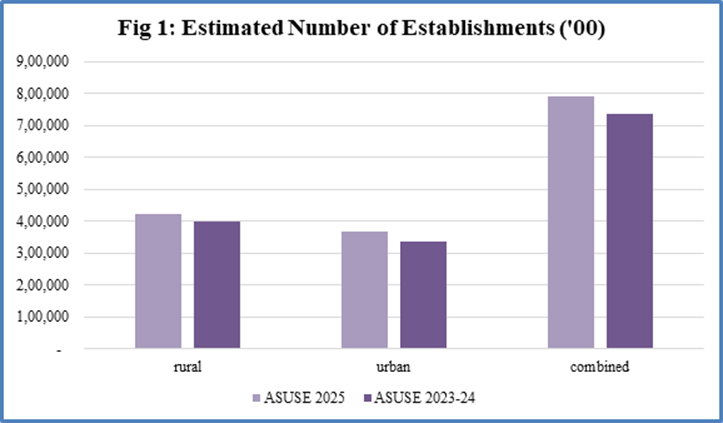
  • The estimated number of establishments increased from 7.34 crore in ASUSE 2023–24 (October 2023–September 2024) to 7.92 crore during in ASUSE 2025 (January–December 2025), reflecting a growth of about 7.97 per cent during the period.
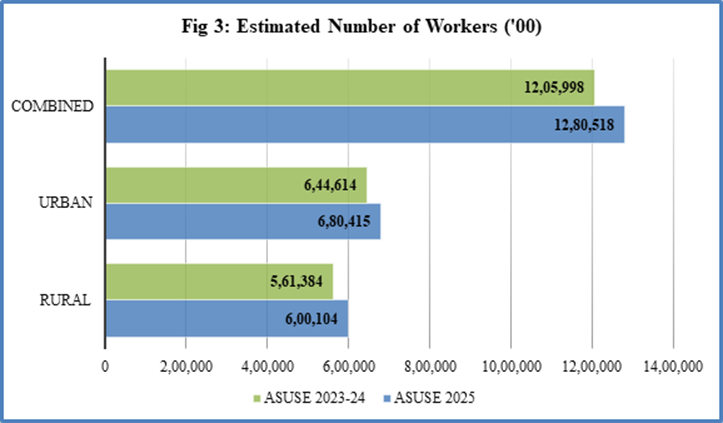
  • Employment in the sector grew by 6.18%, with more than 74.52 lakh new jobs being added during the period.
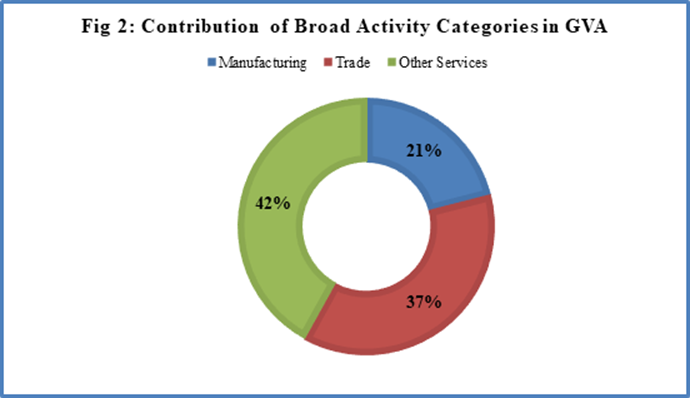
  • Gross value Added (GVA) also grew by 10.87% (at current price) during this period over ASUSE 2023-24. This growth has been primarily driven by 16.77% growth in trade sector followed by 8.52% growth in manufacturing and 7.36% growth in other services sectors.
  •  The emolument per hired worker increased by 3.88% in 2025 compared to the previous ASUSE 2023-24, signalling improvements in wage levels.
  • Women-owned proprietary establishments remained substantial at 27%, up from 26.2% in the previous round (ASUSE 2023-24).
  • The share of establishments using internet increased significantly from 26.7% in ASUSE 2023–24 to 39.4% in ASUSE 2025, highlighting the growing digital integration of the sector.

The Ministry of Statistics and Programme Implementation (MoSPI) has released the results of Annual Survey of Unincorporated Sector Enterprises (ASUSE) for 2025 for the reference period January, 2025 - December, 2025 referred to as ASUSE 2025 in this press note. A brief overview of the survey in terms of coverage, sampling strategy, data collection mechanism, etc., is provided in the Endnote.

The unincorporated non-agricultural sector is an important pillar of the Indian economy, contributing significantly to employment generation and Gross Domestic Product (GDP). The sector sustains livelihoods for millions of people and supports the production and distribution of goods and services across the country. By complementing the activities of the incorporated sector and strengthening domestic value chains, it plays a crucial role in the overall socio-economic development of the country.

The Annual Survey of Unincorporated Sector Enterprises (ASUSE) is conducted with the primary objective of measuring the economic and operational characteristics of unincorporated non-agricultural establishments engaged in manufacturing, trade and other services sectors (excluding construction). The survey collects information on key economic indicators such as number of workers, Gross Value Added (GVA), emoluments paid, fixed assets owned and outstanding loans, along with operational characteristics such as type of ownership, nature of operation, registration status and use of Information and Communication Technology (ICT).

The survey data serves as an important input for policymaking, supporting compilation of National Accounts Statistics, and meets the information needs of Ministries such as Micro, Small and Medium Enterprises (MSME), Textiles, etc., while enabling stakeholders to make informed decisions.

Key highlights from the ASUSE 2025 results:

The ASUSE 2025 results highlight a steady expansion of the unincorporated non-agricultural sector reflected in growth in establishments, employment, and productivity, indicating the sector's resilience and sustained momentum.

Growth in Establishments, Gross Value Added and Productivity Metrics:

The total number of establishments in the sector increased substantially from 7.34 crore in ASUSE 2023-24 (Oct 23 – Sept 24) to 7.92 crore in ASUSE 2025 (Jan 25 -Dec 25), representing a healthy 7.97% growth. Among the broad sectors covered, the number of establishments in the "Other Services’ sector recorded a robust growth of 10.29% followed by a 6.48% increase witnessed by the Manufacturing sector and 6.18% by Trade sector. This increase reflects broad-based expansion across sectors and highlights the steady growth of the unincorporated non-agricultural sector.
During the same period, the Gross Value Added (GVA) which is a key indicator of economic performance rose by 10.87% driven by 16.77% growth in trade sector followed by 8.52% growth in manufacturing and 7.36% growth in other services sectors. Among the broad sectors, however, other services sector had the highest share in GVA (42%) followed by trade (37%) and manufacturing (21%).
Gross Value Added (GVA) per worker which is a measure of labour productivity of the sector, rose to Rs. 1,56,539 in 2025 from. Rs. 1,49,742 in 2023-24 in current prices showing a 4.54% increase. During the same period, the Gross Value Added (GVA) per establishment also increased from Rs. 2,45,687 to  Rs. 2,52,699.

Strong Labour Market Performance

The sector employed about 12.81 crore workers during January-December 2025, adding more than 74.52 lakh jobs from 2023-24 (Oct 23 – Sept 24) reflecting robust labour market expansion. Among the broad activities, "Other Services" sector showed the highest growth of 7.40% generating about 35 lakh new employment.
Women-Led Enterprises Rise as Worker Earnings Improve

The percentage of female-owned proprietary establishments increased marginally from 26.2 per cent in 2023–24 to 27.0 per cent in ASUSE 2025 pointing to an encouraging trend in women-led enterprises.

The emolument per hired worker increased by 3.88% in 2025 compared to the previous ASUSE 2023-24, signalling improvements in wage levels. The highest increase in this metric was observed in trade sector which recorded a growth of about 8.5%.

Better Digital Penetration

Percentage of establishments using internet has also grown significantly from 26.7% in 2023-24 to 39.4% in ASUSE 2025. This substantial growth reflects a strong trend toward digital adoption among establishments, highlighting the increasing reliance on the internet for business operations.

Fig 4: Key Operational Indicators

Percentage of Establishments using Internet

ASUSE 2023-24

ASUSE 2025

Percentage of Female Owned Proprietary Establishments

ASUSE 2023-24

ASUSE 2025

Annual estimates of key indicators (value figures in current price), of ASUSE 2022-23, ASUSE 2023-24 and ASUSE 2025 are given in Table 1 below. The annual estimates for ASUSE 2025 for the broad activity categories are provided in the factsheet which is available in the website of the Ministry (https://www.mospi.gov.in). Further, interactive tables and visualizations on ASUSE results may be accessed on the Data Catalogue section of https://esankhyiki.mospi.gov.in/. Report of ASUSE 2025 as well as unit level data will be released in April, 2026 with detailed insights from the survey.

Table 1: Key indicators of ASUSE 2022-23, ASUSE 2023-24 and ASUSE 2025

all-India

Indicator

ASUSE 2022-23

(October,2022 – September, 2023)

ASUSE 2023-24

(October,2023 – September, 2024)

ASUSE 2025 (January, 2025 – December, 2025)

(1)

(2)

(3)

(4)

Number of Establishments (in ’00)

6,50,484

7,33,995

7,92,465

Number of Workers (in ’00)

10,96,260

12,05,998

12,80,518

Gross Value Added (Rs. Crore)*

15,42,409

17,97,278

19,92,577

GVA per establishment*(Rs.)

2,38,168

2,45,687

       2,52,699

GVA per worker* (Rs.)

1,41,769

1,49,742

       1,56,539

Emolument per Hired Worker (Rs.)

         1,24,842

1,41,071

       1,46,550

           *pertaining to market establishments

Endnote: A brief about the coverage, sampling scheme, sample size and data collection mechanism in the Annual Survey of Unincorporated Sector Enterprises (ASUSE):

A. Coverage of ASUSE:

A.1. Geographically, ASUSE covers the rural and urban areas of whole of India (except the villages in Andaman and Nicobar Islands, which are difficult to access).

A.2. Sector-wise, this survey captures unincorporated non-agricultural establishments belonging to three sectors viz., Manufacturing, Trade and Other Services.

A.3. Ownership-wise, unincorporated non-agricultural establishments pertaining to proprietorship, partnership (excluding Limited Liability Partnerships), co-operatives, societies/trusts etc. have been covered in ASUSE.

B. Sampling Scheme:

The survey has been conducted following a multi-stage stratified sampling scheme, where first stage units (FSUs) are census villages in rural area (except for rural Kerala, where Panchayat wards have been taken as FSUs) and UFS (Urban Frame Survey) blocks in urban areas.  The ultimate stage units (USUs) are establishments for both the sectors. In the case of large FSUs, one intermediate stage of sampling has been done in the form of hamlet groups in rural and sub-blocks in urban. 

The sampling design of ASUSE 2025 has been revised to enable quarterly selection of sample units. To facilitate this shift, the sample size has been increased by approximately 1.5 times over the previous survey. This improvement also makes it possible to produce quarterly estimates in addition to annual results. By adopting districts within a state as the basic strata, the design also allows participating states to generate annual estimates at the district level.

C. Sample Size:

In ASUSE 2025, data were collected from a total of 6,70,289 establishments (2,94,144 in rural and 3,76,145 in urban) pertaining to 24,153 surveyed FSUs (10,219 in rural and 13,934 in urban).

D. Data Collection Mechanism:

ASUSE 2025 has been conducted based on area frame and establishments have been listed in the selected FSUs of both rural and urban sector. Mostly, data were collected from the selected establishments through oral enquiry pertaining to the ‘monthly’ reference period barring a few big establishments, which had provided annual data from their audited Books of Accounts. The data for the survey were collected in tablet using Computer Assisted Personal Interviewing (CAPI).

E. Know your Survey- ASUSE:

The Factsheet of ASUSE 2025 (January, 2025 – December, 2025) is available on the website of the Ministry (https://www.mospi.gov.in)

Scan QR code to access MoSPI Publications/ Reports


For more detailed understanding of the objectives, coverage, concepts, methodology and data quality practices of ASUSE in a simple, transparent, user-friendly language, one may refer to the Know Your Survey: A User Guide to the Annual Survey of Unincorporated Sector Enterprises (ASUSE) published by NSO, MOSPI and available on the website of the ministry (https://www.mospi.gov.in).

****

Topics

Acts Income Tax