

Loading...

Top
Help
×

By creating an account you can:

Logo TaxTMI
Call Us / Help / Feedback

Contact Us At :

E-mail: [email protected]

Call / WhatsApp at: +91 99117 96707

For more information, Check Contact Us

FAQs :

To know Frequently Asked Questions, Check FAQs

Most Asked Video Tutorials :

For more tutorials, Check Video Tutorials

Submit Feedback/Suggestion :

Email :
Please provide your email address so we can follow up on your feedback.
Category :
Description :
Min 15 characters 0/2000
Make Most of Text Search
  1. Checkout this video tutorial: How to search effectively on TaxTMI.
  2. Put words in double quotes for exact word search, eg: "income tax"
  3. Avoid noise words such as : 'and, of, the, a'
  4. Sort by Relevance to get the most relevant document.
  5. Press Enter to add multiple terms/multiple phrases, and then click on Search to Search.
  6. Text Search
  7. The system will try to fetch results that contains ALL your words.
  8. Once you add keywords, you'll see a new 'Search In' filter that makes your results even more precise.
  9. Text Search
Add to...
You have not created any category. Kindly create one to bookmark this item!
Create New Category
Hide
Title :
Description :
❮❮ Hide
Default View
Expand ❯❯
Close ✕
🔎 News - Adv. Search
TEXT SEARCH:

Press 'Enter' to add multiple search terms. Rules for Better Search

Search In:
Main Text + AI Text
  • Main Text
  • Main Text + AI Text
  • AI Text
Category: ?
Categorized by AI
---- All Categories ----
  • ---- All Categories ----
  • Income Tax
  • GST
  • Customs, DGFT & SEZ
  • FEMA & RBI
  • Corp. Laws, SEBI & IBC
  • PMLA, Black Money & ED
  • Budget
  • News and Press Release
  • PTI News
Month:
---- All Months ----
  • ---- All Months ----
  • January
  • February
  • March
  • April
  • May
  • June
  • July
  • August
  • September
  • October
  • November
  • December
Year:
---- All Years ----
  • ---- All Years ----
  • 2026
  • 2025
  • 2024
  • 2023
  • 2022
  • 2021
  • 2020
  • 2019
  • 2018
  • 2017
  • 2016
  • 2015
  • 2014
  • 2013
  • 2012
  • 2011
Sort By: ?
In Sort By 'Default', exact matches for text search are shown at the top, followed by the remaining results in their regular order.
Relevance Default Date
❯❯
Maximize Maximize Maximize
0 / 200
Expand Note
Add to Folder

No Folders have been created

+

Are you sure you want to delete "My most important" ?

NOTE:

News
Showing Results for :
Reset Filters
Results Found:
Show All Summaries Hide All Summaries
March 27, 2026
Show AI Summary
Excise duty cut on petrol and diesel eases fuel cost pressure amid rising global crude prices.
Excise duty on petrol has been reduced and diesel has been exempted from the levy with immediate effect to cushion consumers and fuel retailers from the impact of rising global crude prices. The notification lowers the duty on petrol and brings the diesel duty to nil, reflecting a policy response to volatility in international oil markets and the strain created by unchanged retail pump prices. The duty reduction is intended to provide headroom to fuel retailers by easing input-cost pressure and supporting price stability in the domestic market.
March 27, 2026
Show AI Summary
Energy security and import dependence drive debate as fuel supply assurances counter claims of shortages and misinformation
Rising dependence on crude oil, LPG and natural gas imports is presented as an energy-security concern, alongside criticism that the promised push toward self-reliance has not been realised. The discussion also refers to earlier claims about a major gas discovery in the Krishna-Godavari basin and allegations that later audit reports treated the episode as a large-scale irregularity. Government and oil marketing companies, however, state that petrol, diesel and LPG supplies remain stable and adequately stocked.
March 27, 2026
Show AI Summary
Excise duty cut on petrol and diesel aims to ease pressure on fuel retailers amid rising global crude prices.
Excise duty on petrol has been reduced to Rs 3 a litre from Rs 13 a litre, while excise duty on diesel has been reduced to nil from Rs 10 a litre, with immediate effect. The duty cuts are intended to ease pressure on oil marketing companies facing elevated global crude prices and frozen retail fuel prices amid geopolitical disruption in oil markets.
March 26, 2026
Show AI Summary
WTO dispute settlement and e-commerce duty moratorium face renewed calls for reform and careful reconsideration.
A dysfunctional WTO dispute settlement system is described as having deprived members of effective redressal, and restoration of an automatic and binding dispute settlement mechanism is called for. Careful reconsideration of the continued extension of the moratorium on customs duties on electronic transmissions is urged because its scope remains unsettled and may have significant revenue implications. WTO reform is presented as needing to be transparent, inclusive and member-driven, anchored in development, non-discrimination, consensus-based decision-making, equity and effective special and differential treatment.
March 26, 2026
Show AI Summary
Transatlantic trade safeguards shape EU approval of the US deal, allowing suspension if the agreement is undermined.
European lawmakers approved the transatlantic trade agreement with safeguard amendments that permit suspension if the United States undermines the deal, discriminates against EU economic operators, threatens territorial integrity or foreign and defence policies, or engages in economic coercion. The agreement retains a 15 per cent tariff on most goods and proceeds to further negotiation between EU and US trade representatives, with the added language intended to preserve European interests and provide greater certainty for businesses.
March 26, 2026
Show AI Summary
Accountant certificate filing for international and specified domestic transactions must follow the prescribed online process and timeline.
Form No. 47 is the accountant's certificate for international transactions or specified domestic transactions meeting the conditions in rule 82(5). It is to be furnished with Form No. 46 within the prescribed filing window, beginning from the end of the third tax year and ending on 30 June following that year. The form can be submitted only online through the Income Tax e-Filing portal, and no supporting documents are required.
March 26, 2026
Show AI Summary
Arm's length price option filing through Forms 46 and 47 under rule 82 for multiple-year determination.
Rule 82 prescribes Form No. 46 and Form No. 47 for exercise of the option for determination of arm's length price under section 166(9) of the Income-tax Act, 2025. Form No. 46 is furnished by an assessee for determining arm's length price in respect of international transactions or specified domestic transactions for multiple years in a single proceeding, covering the second and third tax years immediately following the first tax year in which reference has been made under section 166. Form No. 47 is the accompanying accountant's certificate.
March 26, 2026
Show AI Summary
Arm's length price option through Form No. 46 covers multiple years, online filing, and accountant certification.
Exercise of option for determination of arm's length price under section 166(9) is made through Form No. 46 for international transactions or specified domestic transactions for multiple years in a single proceeding. The option covers the second and third tax years immediately following the first tax year in which a reference has been made under section 166. Form No. 46 must be filed between the end of the third tax year and 30 June following that year, only online through the Income Tax e-Filing portal, and accompanied by the accountant's certificate in Form No. 47.
March 26, 2026
Show AI Summary
Foreign tax credit filing rules for Form 44 require resident assessees to report foreign income, refunds, and supporting documents.
Form No. 44 is required for a resident assessee claiming foreign tax credit under Rule 76 or intimating refund of foreign tax arising from carry backward of loss, revision of return, or similar changes. It must generally be filed within 12 months from the end of the relevant tax year, or by the date of furnishing an updated return where applicable. The form covers particulars of the person, foreign income and credit claimed, and any refund of foreign tax, and must be supported by documents on income, foreign tax paid, disputes, and refund particulars. Filing is made through the e-filing portal with e-verification, and accountant verification applies in specified cases.
March 26, 2026
Show AI Summary
Digital housing loan access expands through a unified marketplace for defence and government personnel.
The Gruh Sugam Portal streamlines digital housing loan access for Defence personnel, members of paramilitary forces, and State and Central Government employees through their administrative units. It functions as a unified digital marketplace that relays minimal loan requests to registered lending institutions, enables comparison of competing offers, and supports seamless digital integration, online query resolution, grievance redressal, and consumer protection. The initiative is aimed at improving transparency, efficiency, financial inclusion, and affordable home ownership.
March 26, 2026
Show AI Summary
Foreign tax credit filing requires Form 44, with online submission, supporting documents, and accountant verification in specified cases.
Form No. 44 is the prescribed electronic statement for a resident assessee claiming foreign tax credit on income from a country or specified territory outside India. It is mandatory where foreign income is involved and credit is sought for foreign tax paid, and it also applies where a refund of foreign tax arises after credit has already been claimed. The form must be filed online through the e-filing portal within the specified time, and it includes particulars of the person, foreign income and credit details, and refund-related details. Supporting certificates, proof of payment or deduction, and accountant verification in specified cases are required.
March 26, 2026
Show AI Summary
Cashless health insurance claims timelines and fair pricing measures aim to improve settlement efficiency and policyholder trust.
IRDAI has prescribed timelines for cashless health insurance claims, requiring pre-authorisation within one hour and final authorisation within three hours to reduce delays and support timely medical care. The sector has also seen strong growth in premiums, while fair pricing under 2024 regulations is linked to relevant risk factors, periodic actuarial review, credible data and customer feedback. Claims settlement data, grievance disposal figures and common grounds for disallowance or repudiation are also noted.
March 26, 2026
Show AI Summary
Tax residency certificate enables DTAA benefits and is issued by the Assessing Officer on application with supporting documents.
Form 43 is the tax residency certificate issued by the Assessing Officer for the purposes of section 159 of the Income-tax Act, 2025. It certifies that a person is resident in India for a stated period and enables the taxpayer to claim benefits under a Double Taxation Avoidance Agreement. The certificate is issued on an application made in Form 42 with the supporting documents required by the Assessing Officer and is not subject to statutory due dates or an ordinary taxpayer filing process.
March 26, 2026
Show AI Summary
Tax Residency Certificate issued on request supports residence proof for DTAA benefits and section 159 purposes.
Form 43 is the Tax Residency Certificate issued by the Assessing Officer to certify residence in India for the purposes of section 159 and Double Taxation Avoidance Agreement benefits. It is not filed by the taxpayer; it is issued on request when Form 42 is submitted with the required documents. The certificate is generated through the ITBA and made available on the e-filing portal, and no specific statutory limit is stated on the number of certificates that may be issued in a year for distinct valid periods.
March 26, 2026
Show AI Summary
Tax residency certificate application streamlined through Form 42, with electronic filing, document upload, and issuance of Form 43.
Form 42 is the application for a tax residency certificate in India for the purposes of section 159 of the Income-tax Act, 2025 and treaty benefits under a Double Taxation Avoidance Agreement. It is filed electronically by a resident claiming Indian tax residency, with supporting identity, incorporation, and other documents, and may be verified through electronic verification code, Aadhaar OTP, net banking, bank or demat account mechanisms, or digital signature. Processing of the form results in issue of Form 43.
March 26, 2026
Show AI Summary
Tax Residency Certificate application Form 42 governs online filing, supporting documents, and DTAA benefit access.
Form 42 is the prescribed application for obtaining a Tax Residency Certificate in India for the purposes of claiming benefits under Double Taxation Avoidance Agreements. It is filed online through the e-filing portal, requires a valid PAN, and is not mandatory in every case. The form cannot be edited after submission, though withdrawal may be enabled, and supporting documents such as passport, incorporation records, and proof of stay in India may be required.
March 26, 2026
Show AI Summary
Petroleum and LPG supply security remains intact as the government rejects shortage claims and cites ample stock cover.
India's petroleum and LPG supply position is described as secure, with about 60 days of fuel stock cover and no rationing or shortage at retail outlets. The government says crude supplies for the next 60 days have been tied up from multiple international sources, refinery utilisation is above full capacity, and alternative imports have offset disruption linked to tensions around the Strait of Hormuz. It also states that 800,000 tonnes of LPG cargoes have been secured, about one month of LPG supply is arranged, and measures have been taken to prevent hoarding and keep deliveries steady.
March 26, 2026
Show AI Summary
DTAA self-declaration for non-residents enables treaty tax benefits through electronic filing and residency verification.
Form 41 is a self-declaration for non-resident taxpayers seeking Double Taxation Avoidance Agreement benefits on income from India. It is filed once in a tax year, requires a valid Tax Residency Certificate and Tax Identification Number, and is submitted electronically through the income-tax e-filing portal. Treaty benefits depend on valid filing, supported by the required documents and electronic verification.
March 26, 2026
Show AI Summary
DTAA compliance through Form 41 governs non-resident tax relief, online filing, and supporting residency documentation requirements.
Form 41 is a self-declaration under section 159(8) of the Income-tax Act, 2025 for non-resident taxpayers seeking DTAA benefits with India. It is mandatory, filed annually through the Income Tax e-filing portal, and requires a valid Tax Residency Certificate and tax identification number. The form cannot be edited after submission, no proof of tax payment is required, and the DTAA benefit is unavailable without a valid electronically filed form and supporting documents.
March 26, 2026
Show AI Summary
Tax deferral for foreign retirement accounts through Form 40 applies to resident Indians with irrevocable relief option.
Form 40 is the prescribed electronic form for a resident Indian to exercise the option under Section 159 of the Income Tax Act, 2025, read with Rule 74, to claim tax relief in respect of income accrued in a foreign retirement account maintained in a notified country. The option is intended to prevent double taxation by deferring taxation in India until withdrawal or redemption of the income in the foreign country. The option may be exercised only once, is irrevocable, and applies to all future years and all specified accounts.

News

Back

All News

Showing Results for :
Reset Filters
No Records Found

News

Showing Results for : Reset Filters
Corp. Laws, SEBI & IBC

CCI Organises 11th Edition of National Conference on Economics of Competition Law

March 17, 2026

Contents
Summary
Note

Note

-

Bookmark

Print

Print

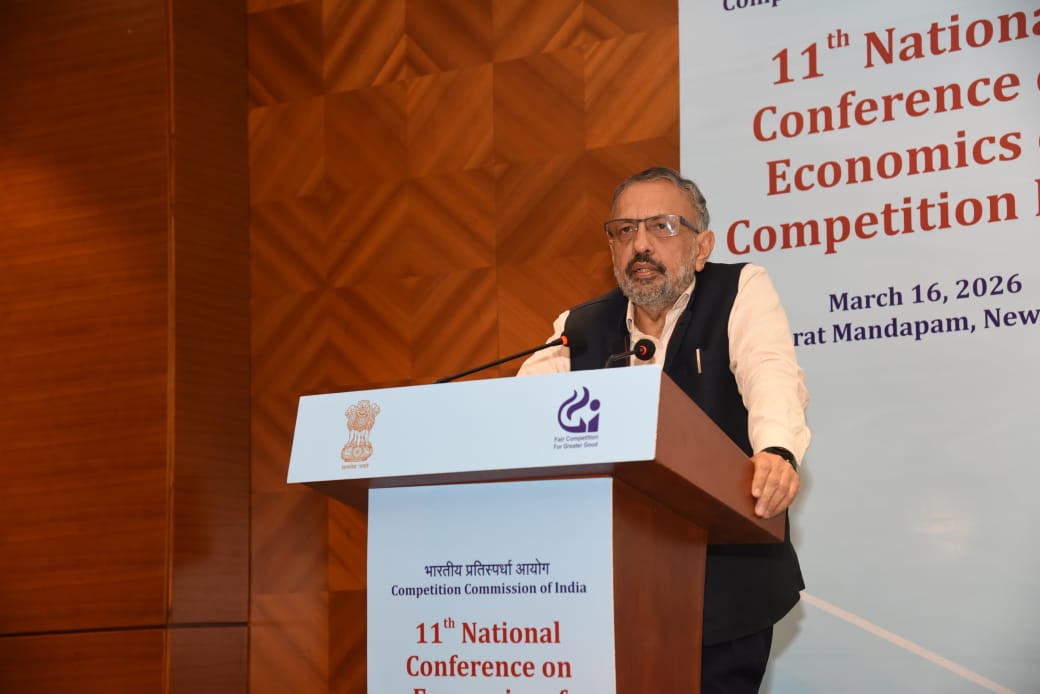
Shri Rajiv Gauba, Member, NITI Aayog delivers the Keynote address at the CCI Conference

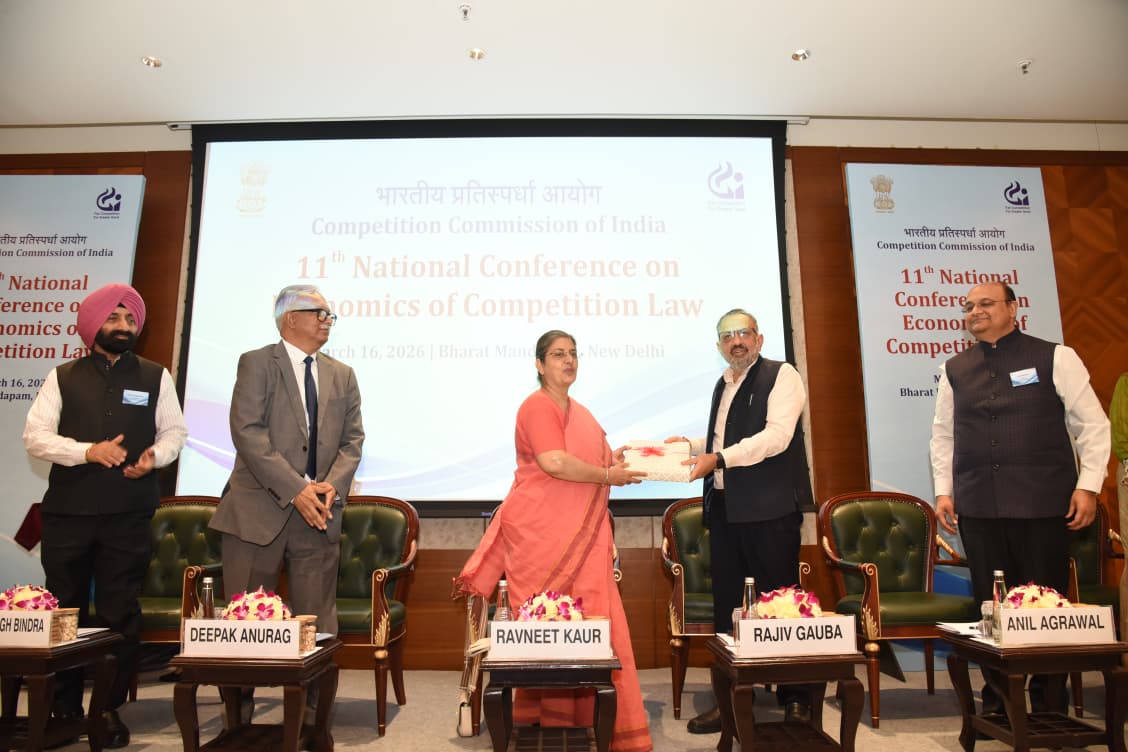
The Competition Commission of India (CCI) organised the 11th National Conference on Economics of Competition Law in New Delhi today. Shri Rajiv Gauba, Member, NITI Aayog was the Keynote Speaker at the Conference, while Smt. Ravneet Kaur, Chairperson, CCI delivered the Special Address at the Inaugural Session of the Conference.

The Conference, which brings together scholars, practitioners, and experts working in the area of economics of competition law, has been organised by the CCI every year since 2016.

Shri Rajiv Gauba, Hon'ble Member, NITI Aayog, in his Keynote Address referred to competition as one of the most potent engines of human progress. Left to their own devices without robust policy and oversight, markets can breed concentration, collusion and exclusion, he said.
He added that well designed competition laws create moral architecture of markets. He noted that in an emerging economy like India, competition law and regulations serve multiple development and governance goals, by preventing entrenched monopolies, promoting open entry and opportunities for small businesses and by helping integrate the economy into global value chains.

Tracing the evolution of the competition paradigm in India in the context of the structural transformation that the Indian economy underwent over decades post-independence, he underscored the importance of optimal regulation through actions and forbearance, to benefit from the invigorating push of competition.
Referring to the Prime Minister's vision of Viksit Bharat 2047, he said that it would entail ensuring markets are truly competitive, both domestically and globally. In this context, he highlighted four institutional pillars for well-functioning markets, viz.,  contestability - firms must be able to enter and exit without prohibitive regulatory or practical obstacles; information symmetry - buyers, sellers and regulators need timely access to reliable market data so that choices are meaningful and markets are receptive; non-discriminatory access to all infrastructure including physical, digital & financial infrastructure; and independent and predictable dispute resolution and enforcement institutions.

Referring to the rise of digital economy as a structural break in market dynamics and given the features of digital economy that create winner-takes-most scenarios, he commended the Competition Commission of India for establishing a dedicated Digital Markets Division.

Shri Gauba stated that India is aligning its regulatory posture with global peers with the aim to ensure that the Digital Highway remains open to all, not just the few who built the road. With the emergence of the new frontier of AI, he stressed on the need for our competition toolkit to evolve to address the novel risks posed by AI. “We must guard against ecosystem entrenchment and ensure data portability and interoperability,” he added. 

Smt. Ravneet Kaur, Chairperson, CCI, in her Special Address, highlighted that the Competition Act is an interdisciplinary Act with economic principles embedded in it. Economics is therefore placed at the centre of Commission’ work and the Commission’s analysis and decisions are based on rigorous economic analysis in order to establish any potential appreciable adverse effects on competition. The aim is to ensure that competition and business success is based on merit and not on exclusionary, exploitative or anti-competitive conduct.

Chairperson, CCI highlighted that over the course of the last year, CCI has notified and implemented all regulations for operationalising the 2023 amendment to the Competition Act, 2023. She said, in 2025, a revised regulation on cost of production was brought in with a view to provide a consistent and transparent framework on determination of predatory pricing.

Referring to the first settlement proposal in the Android Smart TV ecosystem processed by the CCI in 2025, she highlighted that settlement mechanism allows to enforce quick market correction while closing the chapter for further litigation.

She further mentioned that the Commission throughout the past one year has dealt with antitrust matters across various sectors including cartelisation and bid rigging cases in the sectors of defence procurement, liquor and solid waste management. During the past one year, based on the Informations and investigations undertaken, matters were decided across multiple sectors, leading to cease and desist orders, penalties and other suitable remedies.

On the combinations front, the Commission has followed a proactive and systematic consistent approach with a disposal rate of more than 99%. The Commission’s approach has been positive and solution oriented, she added

Referring to the CCI market study on AI and competition completed in October 2025, Chairperson CCI said that there are huge benefits of AI, including efficiency gains, greater market access for MSMEs, but the potential anti-competitive actions also need to be watched.

She mentioned that CCI has issued a guidance note which provides self-audit mechanism by the stakeholders, by the boards, management and the decision makers in the organisations as to how they can ensure that at the stage of development, deployment, monitoring of AI applications, there are not any hidden anti-competitive outcomes which may be happening.

Shri Deepak Anurag, Member, CCI made the welcome remarks and Shri Anil Agrawal, Member, CCI proposed the vote of thanks during the Inaugural Session.

The Conference, in addition to the Inaugural Session, featured two technical sessions on ‘Competition and Firm Conduct: Evidence and Policy Implications’ and ‘Ownership, Market Power, and Consumer Welfare’, where researchers presented papers on the economics of competition law. The first session was chaired by Dr. Saptarshi Mukherjee, Professor, Humanities and Social Science, IIT Delhi. Dr. Biswajit Dhar, Vice President, Council for Social Development, chaired the second session.

The National Conference concluded with a Plenary Session on ‘Competition and AI: Technical Developments, Regulatory Experience, and Business Impact’ which was chaired by Ms. Sweta Kakkad, Member, CCI, and moderated by Ms. Shweta Rajpal Kohli, President and CEO, Startup Policy Forum.

Topics

Acts Income Tax
