

Loading...

Top
Help
×

By creating an account you can:

Logo TaxTMI
Call Us / Help / Feedback

Contact Us At :

E-mail: [email protected]

Call / WhatsApp at: +91 99117 96707

For more information, Check Contact Us

FAQs :

To know Frequently Asked Questions, Check FAQs

Most Asked Video Tutorials :

For more tutorials, Check Video Tutorials

Submit Feedback/Suggestion :

Email :
Please provide your email address so we can follow up on your feedback.
Category :
Description :
Min 15 characters 0/2000
Make Most of Text Search
  1. Checkout this video tutorial: How to search effectively on TaxTMI.
  2. Put words in double quotes for exact word search, eg: "income tax"
  3. Avoid noise words such as : 'and, of, the, a'
  4. Sort by Relevance to get the most relevant document.
  5. Press Enter to add multiple terms/multiple phrases, and then click on Search to Search.
  6. Text Search
  7. The system will try to fetch results that contains ALL your words.
  8. Once you add keywords, you'll see a new 'Search In' filter that makes your results even more precise.
  9. Text Search
Add to...
You have not created any category. Kindly create one to bookmark this item!
Create New Category
Hide
Title :
Description :
❮❮ Hide
Default View
Expand ❯❯
Close ✕
🔎 News - Adv. Search
TEXT SEARCH:

Press 'Enter' to add multiple search terms. Rules for Better Search

Search In:
Main Text + AI Text
  • Main Text
  • Main Text + AI Text
  • AI Text
Category: ?
Categorized by AI
---- All Categories ----
  • ---- All Categories ----
  • Income Tax
  • GST
  • Customs, DGFT & SEZ
  • FEMA & RBI
  • Corp. Laws, SEBI & IBC
  • PMLA, Black Money & ED
  • Budget
  • News and Press Release
  • PTI News
Month:
---- All Months ----
  • ---- All Months ----
  • January
  • February
  • March
  • April
  • May
  • June
  • July
  • August
  • September
  • October
  • November
  • December
Year:
---- All Years ----
  • ---- All Years ----
  • 2026
  • 2025
  • 2024
  • 2023
  • 2022
  • 2021
  • 2020
  • 2019
  • 2018
  • 2017
  • 2016
  • 2015
  • 2014
  • 2013
  • 2012
  • 2011
Sort By: ?
In Sort By 'Default', exact matches for text search are shown at the top, followed by the remaining results in their regular order.
Relevance Default Date
❯❯
Maximize Maximize Maximize
0 / 200
Expand Note
Add to Folder

No Folders have been created

+

Are you sure you want to delete "My most important" ?

NOTE:

News
Showing Results for :
Reset Filters
Results Found:
Show All Summaries Hide All Summaries
March 25, 2026
Show AI Summary
Statutory reporting for approved scientific research programmes under FORM 10 strengthens tax oversight and compliance monitoring.
Proposed FORM 10 is the statutory reporting form furnished by the prescribed authority to the Income-tax Department for approved scientific research programmes under section 45(3)(c) of the Income-tax Act, 2025. It functions as the oversight stage after FORM 7 and FORM 8, linking approvals with departmental monitoring of payments, utilisation and deduction claims. The form is furnished electronically to the jurisdictional Chief Commissioner within the prescribed time and records the essential particulars of the approved programme, while not conferring any entitlement on the sponsor or replacing the approval order.
March 25, 2026
Show AI Summary
Scientific research programme approval reporting under tax law supports compliance monitoring, deduction verification, and administrative recordkeeping.
FORM 10 is a statutory report furnished by the prescribed authority in relation to a scientific research programme approved under section 45(3)(c) read with Rule 30. It is a post-approval monitoring instrument, furnished to the Chief Commissioner of Income-tax having jurisdiction over the sponsor within the prescribed time. The form records approval details, programme particulars, conditions of approval, and supports administrative monitoring, compliance verification, and cross-checking of deduction claims. It does not alter or substitute the approval granted under FORM 8.
March 25, 2026
Show AI Summary
Scientific research deduction claims depend on programme-specific Form 9 receipts, approval linkage, and statutory compliance requirements.
Form 9 is a statutory receipt for payments made towards an approved scientific research programme and links the payment stage with the approval granted in Form 8 and the sponsor's deduction claim under section 45(3)(c) of the Income-tax Act, 2025. It is issued by the designated executing institution, records sponsor details, payment particulars, programme information, approved cost, tax years and cumulative receipts, and is programme-specific. The receipt supports but does not itself establish entitlement to deduction, which remains subject to statutory compliance and verification.
March 25, 2026
Show AI Summary
Form 9 receipt for approved scientific research payments supports deduction claims and compliance tracking.
Form 9 is the prescribed receipt for payments received towards an approved scientific research programme under section 45(3)(c) read with Rule 30. It is issued to the sponsor by the executing institution, records the payment against the approved programme in FORM 8, and supports the sponsor's deduction claim subject to compliance with the Act and Rules. The form is programme-specific, may be issued for each payment or tranche including advance payments, and captures the sponsor details, payment particulars, approved cost, approved tax years, and cumulative receipts. It is not filed with the tax department but retained as supporting evidence.
March 25, 2026
Show AI Summary
Scientific research programme approval under tax law requires Form 8, with defined scope, cost, compliance and monitoring conditions.
Form 8 is the statutory approval order for a scientific research programme under section 45(3)(c) of the Income-tax Act, 2025 and Rule 30. It is issued after examination of a sponsor's Form 7 application, records the approved scope, duration, cost, tax years and conditions of the programme, and is signed by the designated authority. The approval is programme-specific, cost-specific and time-bound, while post-approval compliance includes separate books, audit, reporting, asset restrictions and final completion reporting.
March 25, 2026
Show AI Summary
Energy Star ratings shape window air conditioner pricing by raising upfront cost while lowering electricity bills and maintenance.
Energy Star ratings for window air conditioners reflect Bureau of Energy Efficiency standards and indicate how much cooling an AC delivers per unit of electricity consumed. Higher-rated units generally cost more upfront because they use advanced components, smarter controls, and more efficient motors and compressors, but they can lower electricity bills, reduce maintenance, and extend service life. Choosing the right star rating depends on usage patterns, room size, budget, and local electricity tariffs, with energy efficiency affecting both purchase price and long-term ownership cost.
March 25, 2026
Show AI Summary
Scientific research programme approval in FORM 8 governs tax deduction eligibility, compliance conditions, and programme-specific approval limits.
Approval in FORM 8 records the prescribed authority's sanction of a scientific research programme under section 45(3)(c) read with Rule 30, following an application in FORM 7. It is a statutory approval order, not a filing by the sponsor, and identifies the programme, approved tax years, approved total cost, and any attached conditions. FORM 8 is programme-specific and cost-specific, and deduction depends on compliance with the Act, the Rules, and post-approval obligations.
March 25, 2026
Show AI Summary
Scientific research approval through Form 7 creates a programme-specific gateway for deduction eligibility and post-approval compliance.
Prior approval for a sponsored scientific research programme is obtained through Form 7, which is the programme-specific application for approval of expenditure on scientific research carried out through a National Laboratory, University, Indian Institute of Technology or specified person. The prescribed authority examines the programme's feasibility and scientific merit, communicates approval or rejection in Form 8, and the approval is cost-specific and only a pre-condition for deduction. Post-approval compliance requires separate accounts, periodic reporting, restricted use of funds and completion reports.
March 25, 2026
Show AI Summary
Prior approval for scientific research deduction requires FORM 7 before commencement, with strict programme-specific compliance conditions.
A sponsor seeking deduction for expenditure on a scientific research programme must furnish FORM 7 as the prescribed application for prior approval before commencement. Separate applications are required for each programme, and the form calls for details of the sponsor, the proposed research programme, its duration and estimated cost, and the executing institution. Approval may be granted only for eligible programmes carried out through specified institutions, while market research, sales promotion, routine quality control, commercial production, and routine data collection are excluded.
March 25, 2026
Show AI Summary
Rupee weakness amid foreign fund outflows, lower crude prices and expectations of RBI dollar support.
The rupee weakened in early trade against the US dollar amid sustained foreign fund outflows and market uncertainty linked to the West Asia crisis. The decline was partly cushioned by lower global crude oil prices, a weaker dollar and a firm opening in domestic equity markets. Market participants also expected RBI intervention through dollar sales, while exporters were hedging and importers buying on dips.
March 25, 2026
Show AI Summary
Audit report compliance for deduction claims under income-tax law requires Form 6, UDIN, and electronic verification.
Form 6 is the prescribed income-tax audit report for an assessee claiming deduction under Section 44 or Section 51 of the Income-tax Act, 2025, and must be certified by an accountant. It is to be filed electronically through the Income-tax e-Filing Portal, verified by Digital Signature Certificate, and furnished one month before the due date for the return of income for the relevant Tax Year. The form requires audit confirmation, supporting records, UDIN generation, and assessee verification for claims under both deduction provisions.
March 25, 2026
Show AI Summary
Audit-certified deduction reporting requires electronic Form 6 filing, accountant certification, UDIN, and digital verification for qualifying expenditure claims.
Form 6 is the prescribed audit report for an eligible assessee claiming deductions under section 44 for preliminary or project-related expenditure or under section 51 for mineral prospecting and development expenditure. It must be certified by an accountant and furnished electronically through the Income-tax e-Filing Portal. The form is filed once in the first tax year in which the deduction is claimed, at least one month before the due date for furnishing the return of income, with UDIN generation and digital verification required.
March 25, 2026
Show AI Summary
Money laundering bail refusal highlights serious economic offences, sufficient PMLA material, and unresolved double mortgage allegations.
Bail was refused in a money laundering prosecution under the Prevention of Money Laundering Act where the court found sufficient material linking the accused to the offence and treated the recorded PMLA statements as forming a formidable case. The court observed that economic offences pose a serious threat to the financial health of the country and that the gravity, seriousness and magnitude of the alleged conduct, along with the accused's major role, weighed against release on bail. Partial repayment did not discharge criminal liability, and the absence of an explanation for the alleged double mortgage remained relevant at the bail stage.
March 24, 2026
Show AI Summary
Money laundering bail disputes hinge on fraudulent credit facilities, double mortgaging, and the gravity of economic offences.
Bail in a money laundering prosecution was opposed on the basis that the accused was linked to allegedly fraudulent borrowing and diversion of bank credit facilities, including mortgage and alleged double sale of secured properties. The prosecution relied on statements under the Prevention of Money Laundering Act and other material to contend that sufficient evidence connected the accused to the offence and that the matter involved a serious economic offence affecting the financial system.
March 24, 2026
Show AI Summary
Scheduled Caste status and religious conversion: membership ends immediately on conversion to a non-specified faith.
A person belonging to a Scheduled Caste loses that status on conversion to a religion other than Hinduism, Sikhism or Buddhism, and the loss is immediate and complete from the moment of conversion. The bar in the Scheduled Castes Order, 1950 is categorical, so a person who professes and practices a non-specified religion cannot claim Scheduled Caste membership for statutory benefits, protections, reservations or other entitlements flowing from that status.
March 24, 2026
Show AI Summary
Green budget drives welfare schemes, electric mobility, disaster readiness and sectoral infrastructure spending across Delhi.
Delhi's FY27 budget sets out a broad fiscal and welfare programme with major allocations for environmental protection, education, health, transport, urban development, social welfare and water supply. It introduces measures such as free diagnostic tests for newborn babies, bicycles for girl students, free LPG cylinders for ration card-holding families on Holi and Diwali, the Mahila Samriddhi Yojna, electric auto-rickshaw permits for women and transgender persons, and expanded Ayushman Bharat Health coverage. It also provides for electric buses, a semiconductor policy, disaster management infrastructure, firefighting upgrades and water and sewage projects.
March 24, 2026
Show AI Summary
Preliminary expense disclosure in Form 5 requires electronic filing, detailed reporting, and strict compliance for income-tax deduction claims.
Form 5 is a mandatory electronic statement for an assessee claiming deduction for preliminary expenses under the Income-tax Act, 2025, to be furnished in accordance with Rule 27 and one month prior to the due date for filing the return of income. It requires disclosure of assessee particulars and transaction-level details of qualifying preliminary expenses, including feasibility reports, project reports, market or business surveys, and engineering services, with related PAN, TDS, and payment particulars.
March 24, 2026
Show AI Summary
Preliminary expenses deduction reporting requires electronic Form 5, with item-wise disclosure, verification, and timely portal filing.
Electronic Form 5 is the prescribed statement for reporting preliminary expenses claimed as a deduction under Section 44 of the Income-tax Act, 2025. It applies to eligible expenditure connected with setting up or extension of a business, including feasibility reports, project reports, market or business surveys, and engineering services related to business, and must be filed for each tax year through the income-tax portal using digital signature or electronic verification. The form requires disclosure of assessee particulars, item-wise expense details, service-provider information, payment particulars, and TDS data where applicable.
March 24, 2026
Show AI Summary
Functional cooperatives survey training set to standardise nationwide data collection and measure economic contribution.
Preparatory training was organised for the Rapid Survey of Functional Cooperatives before six months of field work beginning in April 2026. The workshop brought together senior officers and field functionaries who will serve as Master Trainers for subsequent regional training, with the aim of standardising nationwide survey operations. The survey will assess the contribution of functional cooperatives to employment generation and economic activity across rural and urban areas, and will estimate indicators such as Gross Value Added, Gross Value of Output and employment generated by cooperatives.
March 24, 2026
Show AI Summary
Unincorporated sector survey shows stronger employment, higher value added, rising wages and wider internet adoption across establishments.
Annual Survey of Unincorporated Sector Enterprises (ASUSE) 2025 covers unincorporated non-agricultural establishments in manufacturing, trade and other services, and collects data on workers, Gross Value Added, emoluments, fixed assets, loans, ownership, registration status and use of information and communication technology for policymaking and national accounts. The survey reports growth in establishments, employment, Gross Value Added, labour productivity, female-owned proprietary establishments, emolument per hired worker and internet use, and notes a revised sampling design enabling quarterly selection and district-level annual estimates.

News

Back

All News

Showing Results for :
Reset Filters
No Records Found

News

Showing Results for : Reset Filters
Corp. Laws, SEBI & IBC

IICA Convenes Fifth Inter-Ministerial Consultation on Responsible Business Conduct and Social Dimension of ESG

March 16, 2026

Contents
Acts
Summary
Note

Note

-

Bookmark

Print

Print

The Indian Institute of Corporate Affairs (IICA), under Ministry of Corporate Affairs, Government of India, convened the Fifth Inter-Ministerial Consultation on Responsible Business Conduct (RBC) and the Social Dimension of Environmental, Social and Governance (ESG) recently in New Delhi.

The consultation was organised by the School of Business Environment (SoBE), IICA, in collaboration with the International Labour Organisation (ILO) to strengthen policy coherence and institutional coordination on responsible business conduct and sustainability governance in India.

The Workshop commenced under the chairmanship of Shri Gyaneshwar Kumar Singh, Director General and CEO, Indian Institute of Corporate Affairs, who highlighted the growing significance of responsible business conduct in the context of evolving global supply chains and sustainability expectations. Mr Singh noted that responsible business practices today extend beyond corporate reporting frameworks and are increasingly linked to economic competitiveness, sustainable development, and international trade integration. 

Shri Shantanu Mitra, Senior Economic Advisor, Ministry of Corporate Affairs, delivered an address that highlighted the policy significance of responsible business conduct within India’s corporate governance ecosystem and its growing relevance for businesses operating within global value chains. Shri. Mitra concluded that the mandate of responsible business is inbuilt in various provisions of the Companies Act 2013 and Ministry of Corporate Affairs is steadfast in ensuring that the statutory framework remains conducive for new age businesses and serves as a global benchmark for statutory and regulatory compliance.
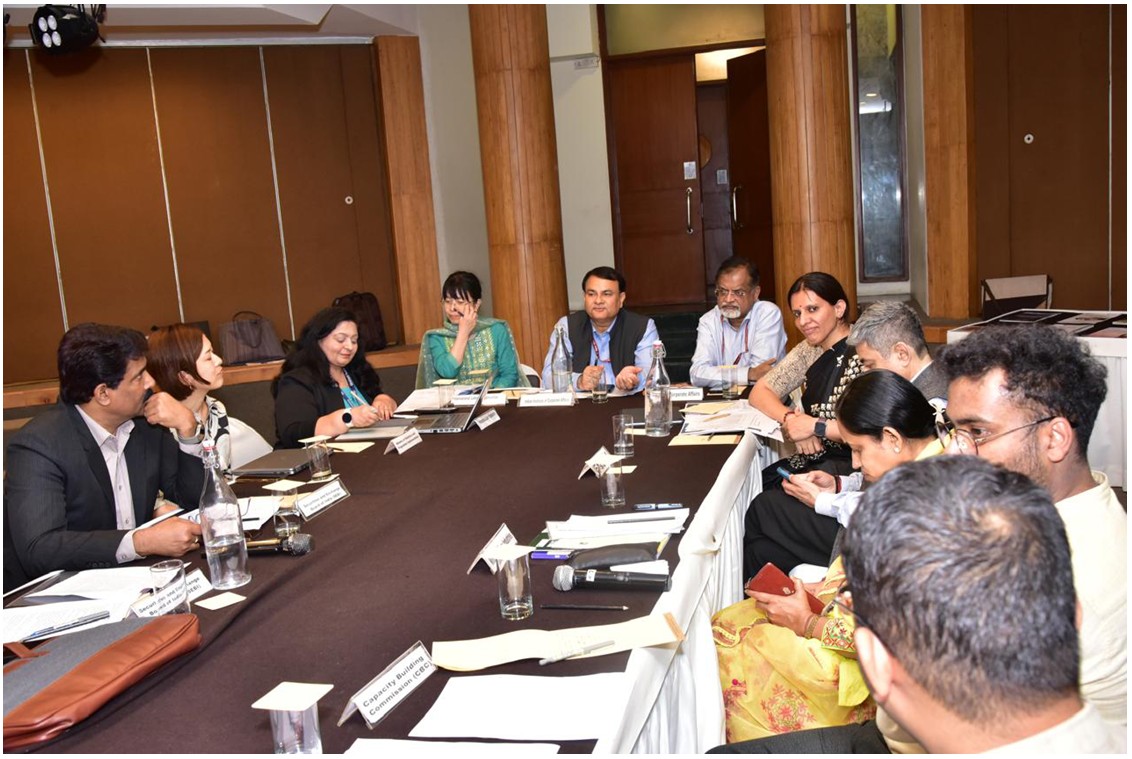
The consultation also featured a special address by Ms. Michiko Miyamoto, Director, International Labour Organisation (ILO) Decent Work Technical Support Team for South Asia and Country Office for India, he shared global perspectives and laid emphasis on India’s championing progress in responsible business conduct. Ms. Miyamoto’s address further elucidated the importance of promoting decent work, labour standards, and inclusive growth within evolving corporate sustainability frameworks.

Prof. Garima Dadhich, Head, School of Business Environment, IICA, in her presentation outlined the evolution of India’s Responsible Business Conduct (RBC) journey, highlighting key policy milestones and regulatory developments that have shaped the country’s responsible business framework. She also shared insights from IICA’s ongoing research mapping national initiatives and policy measures to the nine principles of the National Guidelines on Responsible Business Conduct (NGRBC).

The participating representatives highlighted key initiatives of the their respective ministries and governmental bodies in the deliberations:

CEO of FSSAI, Shri Ranjit Punhani, drew attention to the parallel challenges faced by the food sector in balancing responsible product standards with compliance burden, particularly around front-of-pack nutrition labelling regulations.

Shri. Rajesh Dangeti, the Chief General Manager of SEBI, noted that the BRSR Core has rationalised disclosures to the most essential social, environmental and governance indicators, and underscored that as India aspires toward a USD 30 trillion economy, sustainability disclosures may be positioned not as a compliance burden but as a tool for market differentiation and access to capital.

Further, Shri. Shiv Anant Shanker, Chief General Manager of IBBI, highlighted the unique feature of the IBC that prioritises employee wage dues in liquidation, and proposed exploring how ESG considerations can be embedded into the resolution framework to incentivise responsible business conduct.

Shri. Prashant Baijal, Joint Director, Ministry of Labour and Employment highlighted the significant structural changes being introduced through the four Labour Codes, particularly on minimum wages, appointment letters, and social security coverage. He noted that the Social Security Code abolishes the area-specific notification system for ESIC, extending coverage on a PAN India basis, and making ESIC applicable to hazardous industries regardless of workforce size.

Dr. Renuka Mishra, Economic Advisor to the Ministry of Heavy Industries, indicated that a rolling review on global supply chains for auto components is already in pipeline, and that sector-specific guidelines under the PLI scheme can play an important role in embedding responsible business standards progressively across the auto and advanced manufacturing sector.

Secretary of the Capacity Building Commission, Shri. Jaydeep Gupta, flagged that public sector entities, given their scale and visibility, can serve as important early adopters and demonstration cases for responsible business practices, creating demonstration effects for private sector supply chains.

Shri. Arvind Kumar, Senior Consultant at Ministry of MSME, Shri. Jeevan Kumar Jethani, Scientist at Ministry of New and Renewable Energy, Shri. Arindam, Director at Ministry of External Affairs, Shri. Chinnaraja Naidu, Additional Legislative Counsel at Ministry of Law and Justice, Shri. Vinod Kumar, Deputy Secretary at Ministry of Home Affairs and Shri. Samir Kumar, Joint Secretary, National Human Rights Commission collectively reflected on the cross-sectoral nature of responsible business and sustainability governance, and identified key areas for follow-up action.

Like, including the embedment of social safeguards within PLI and sectoral policy design, integration of labour data from PLFS, ESIC, and EPFO with SEBI’s BRSR disclosure framework, development of tiered and voluntary RBC compliance mechanisms for micro and small enterprises, strengthening of access to remedy mechanisms for informal and migrant workers, and the incorporation of ESG considerations into insolvency and restructuring proceedings under the IBC.

It was noted that India has made significant progress in building a robust framework for responsible business conduct through initiatives such as the National Guidelines on Responsible Business Conduct (NGRBC), SEBI’s Business Responsibility and Sustainability Reporting (BRSR) framework, the Labour Codes, and evolving sustainable finance and due-diligence mechanisms.

Insights emerging from the consultation will contribute to ongoing research and policy work being undertaken by IICA on responsible business conduct and decent work, aimed at strengthening India’s responsible business ecosystem and supporting the continued evolution of sustainability governance frameworks.

Topics

Acts Income Tax
