TaxTMI
 Login
 TaxTMI
Login
Loading...
Press 'Enter' to add multiple search terms. Rules for Better Search
 of 3381
Press 'Enter' after typing page number.
of 3381 Press 'Enter' after typing page number.


No Folders have been created
Are you sure you want to delete "My most important" ?
NOTE:
of 3381 Press 'Enter' after typing page number.
of 3381 Press 'Enter' after typing page number.

All News
of 3381 Press 'Enter' after typing page number.
All News

Note

Bookmark

Share


The Department of Financial Services (DFS) continued its trajectory of momentous reforms in 2025, building on the robust and firm foundation established through initiatives like Your Money, Your Right Campaign, the Banking Laws (Amendment) Act, 2025, EASE 8.0 rechristened as EASE₹ise, ‘Credit Line on UPI’, ‘Hello! UPI’- an AI-voice-enabled payment feature, NPA management, financial inclusion, customer service enhancement, digital transformation among others.
The EASE agenda, overseen by the EASE Steering Committee of the Indian Banks' Association, comprising Whole-Time Directors of all PSBs have brought a transformative shift across all PSBs. As an outcome of PSB Manthan 2.0, held in April 2022, EASENext program was evolved with a significantly bigger, bolder and broader scope having three Pillars: Pillar1-EASE 5.0 (Common Reform Agenda), Pillar2 with a 3-Year Bank Specific Strategic roadmap and Pillar 3- a collaborative effort among PSBs-Identifying areas of collaborations amongst them.
During EASE 5.0 and EASE 6.0, PSBs pursued emerging business enablement such as digitization, data enabled capability building, customer services with journey enablement, Big Data Analytics, Cybersecurity, Data Aggregations & Collaborations with various players including e-Commerce giants, Fin-techs, Startups, NBFCs and co-lending.
DFS’s strategic interventions has improved the financial health and robustness of banking sector significantly with Gross NPA ratio of SCBs declining to 2.22% and that of PSBs declining to 2.58%. Furthermore, the Provision coverage ratio (PCR) of SCBs increased from 49.31% in Mar-15 to a healthy 93.14% in Mar-25.
In digital payments, the DFS has strengthened its leadership role, driving consistent growth through the DIGIDHAN Mission. The total digital payment transactions volume increased to 22,831 Crore in FY 2024-25 at CAGR of 41% from 2,071 crore in FY 2017-18. The value of transactions has grown from ₹ 1962 lakh crore to ₹ 3,509 lakh crore.
Financial inclusion remains a top priority, with initiatives like the Pradhan Mantri Jan Dhan Yojana (PMJDY), Pradhan Mantri Jeevan Jyoti Bima Yojana, Pradhan Mantri Suraksha Bima Yojana, MUDRA, Stand Up India, and Atal Pension Yojana, NPS Vatsalya making significant progress. As of 2025, these schemes and policy initiatives have expanded their reach, ensuring that millions of citizens, especially from marginalized communities, gain access to essential banking, insurance, and pension services.
The Department of Financial Services has been instrumental in shaping a resilient and progressive financial landscape in 2025, contributing significantly towards India’s economic growth and social well-being.
Following are some of the major achievements & policy initiatives of the Department of Financial Services, Ministry of Finance, in 2025.
Performance of Banking Sector:
As a result of Government’s overarching policy response to recognition of stress, resolution of stressed accounts, recapitalization and reforms in banks, the financial health and robustness of banking sector has improved significantly.
As per RBI’s provisional data and PSBs’ data:
| Parameters | Scheduled Commercial Banks | Public Sector Banks | ||||||||||
| Mar 15 | Mar 18 | Mar 23 | Mar 24 | Mar 25 | Mar 25 | Mar 15 | Mar 18 | Mar 23 | Mar 24 | Mar 25 | *Sep 25 | |
| Gross NPA (in ₹ lakh crore) | 3.23 | 10.36 | 5.71 | 4.81 | 4.31 | 4.18 | 2.79 | 8.96 | 4.28 | 3.40 | 2.84 | 2.65 |
| Gross NPA (%) | 4.28 | 11.18 | 3.87 | 2.75 | 2.22 | 2.05 | 4.97 | 14.58 | 4.97 | 3.47 | 2.58 | 2.30 |
| Net NPA (in ₹ lakh crore) | 2.31 | 5.19 | 1.35 | 1.07 | 0.95 | 0.94 | 2.15 | 4.54 | 1.02 | 0.73 | 0.55 | 0.51 |
| Net NPA (%) | 3.13 | 5.94 | 0.95 | 0.62 | 0.50 | 0.48 | 3.92 | 7.97 | 1.24 | 0.76 | 0.52 | 0.45 |
| PCR (%) | 49.31 | 62.96 | 90.94 | 92.50 | 93.14 | 93.24 | 46.04 | 62.71 | 90.73 | 93.00 | 94.31 | 94.63 |
| CRAR (%) | 12.94 | 13.85 | 17.24 | 16.84 | 17.36 | 17.24 | 11.45 | 11.66 | 15.53 | 15.55 | 16.10 | 15.96 |
The growth cycle of Indian banking system is on upwards trajectory across all parameters.
Credit flow to productive sectors of economy is growing at a good pace. The asset quality of scheduled commercial banks (SCBs) has continued to improve, with gross non-performing assets (GNPA) ratio and net non-performing assets (NNPA) ratio declining.
The provisioning coverage ratio (PCR) of SCBs has steadily increased. The low slippage ratio, coupled with raising of capital from the market and net capital accretion through profits has helped banks to bolster their capital adequacy levels.
The brief financial position of SCBS/PSBs are as under:
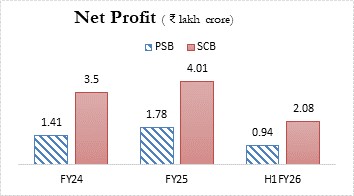
During FY 2024-25, SCBs have recorded highest ever aggregate net profit of ₹4.01 lakh crore. PSBs have also recorded highest ever aggregate net profit of ₹1.78 lakh crore during FY 2024-25. Further, the net profit of PSBs during the first half of FY 2025-26 was ₹0.94 lakh crore.
Global Deposits and Global Advances of PSBs increased from 71.95 lakh crore and 56.16 lakh crore in Mar-15 to 146.27 lakh crore and 114.85 lakh crore, respectively in Sep-25.
Asset quality has improved significantly with—
GNPA ratio of SCBs declined to 2.05% (₹4.18 lakh crore) in Sep-25 (provisional data) from 4.28% (₹3.23 lakh crore) in Mar-15, and from a peak of 11.18% (₹10.36 lakh crore) in Mar-18.
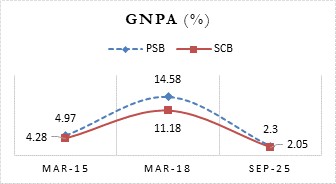
GNPA ratio of PSBs declining to 2.30% (₹2.65 lakh crore) in Sep-25 (provisional data) from 4.97% (₹2.79 lakh crore) in Mar-15, and from a peak of 14.58% (₹8.96 lakh crore) in Mar-18.
NNPAs of SCBs declined to ₹0.94 lakh crore (0.47%) in Sep-25 (provisional data) from ₹2.31 lakh crore (3.13%) in Mar-15, and from a peak of ₹5.20 lakh crore (5.94%) in Mar-18.
NNPAs of PSBs declined to ₹0.51 lakh crore (0.45%) in Sep-25 (provisional data) from ₹2.15 lakh crore (3.92%) in Mar-15, and from a peak of ₹4.54 lakh crore (7.97%) in Mar-18.
Resilience has increased with—
PCR of SCBs increasing from 49.31% in Mar-15 to a healthy 93.23% in Sep-25 (provisional data).
PCR of PSBs increasing from 46.04% in Mar-15 to a healthy 94.63% in Sep-25 (provisional data).
Capital adequacy has improved significantly with—
CRAR of SCBs improving by 430 bps to reach 17.24% in Sep-25 from 12.94% in Mar-15.
CRAR of PSBs improving by 451 bps to reach 15.96% in Sep-25 from 11.45% in Mar-15.
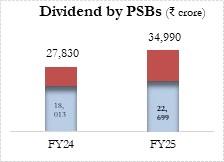
PSBs declared dividend of ₹34,990 crore (Gol share ₹22,699 crore) in FY 2024-25 against total dividend of ₹27,830 crore to shareholders (GoI share ₹18,013 crore) in FY 2023-24.
Enabled by implementation of comprehensive reforms, the financial health of PSBs has improved significantly, enhancing their ability to raise capital (in the form of both equity and bonds) from the market. PSBs have mobilised capital of 24.86 lakh crore from the market from FY 2014-15 to FY 2024-25.
The Government of India has successfully mobilised resources through divestment of its shareholding in select PSBs. Amount of ₹2,627.52 crore and ₹1,419.36 was realised through the Offer for Sale (OFS) of Government of India’s shares in Bank of Maharashtra and Indian Overseas Bank, respectively.
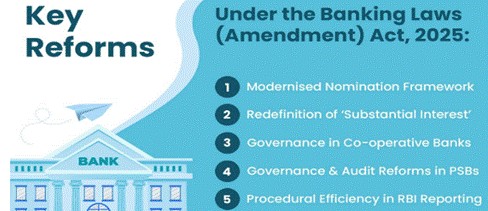
The Banking Laws (Amendment) Act, 2025 enhanced governance standards, strengthened protection for depositors and investors, has improved audit quality in PSBs. Further it has shifted statutory reporting by banks to the RBI, and streamlined nomination processes for customer convenience.
Furthering the cause of banking reforms, the government implemented a three month nationwide awareness campaign (Oct-25 to Dec-25) on unclaimed financial assets titled “आपकी पूँजी, आपका अिधकार” (Your Money, Your Right). The campaign launched by the Finance Minister, led to restitution of claims worth 4500 Cr. to their rightful owners. It aims to empower citizens through Awareness, Accessibility and Action.

The aim of this campaign has been to facilitate citizens in claiming their unclaimed bank deposits, shares, dividends, mutual funds, insurance proceeds and other such financial assets. The Standard Operating Procedures (SOPs) and Frequently Asked Questions (FAQs) developed by the respective fund regulators has made the claim process simple, transparent and citizen friendly.
State Bank of India (SBI), the largest Public Sector Bank, successfully executed India’s largest-ever Qualified Institutional Placement (QIP), raising ₹25,000 crore. Further it has also raised USD500 million-dollar denominated bonds from overseas market at competitive coupon rate of 4.5% payable semi-annually, indicating the value proposition of the SBI in the global market.
Strong participation from both domestic institutional investors and foreign investors indicates buoyancy and strong fundamentals of Indian Economy and its constituents. It also indicates robust investor confidence in India’s banking sector and economic trajectory.
PSB Manthan
DFS organised PSBs Manthan 2025, 12-13 September 2025, a two-day programme attended by senior leadership of Public Sector Banks along with regulators, industry experts, academicians, technologists, and banking practitioners.
The programme covered themes such as customer experience, governance, purposeful innovation, credit growth, risk management, workforce readiness, technology modernisation, and national priorities.
Deliberations focused on reimagining customer journeys in a digital era, embedding governance and operational excellence, fostering purposeful innovation, ensuring sustainable credit growth, strengthening risk management frameworks, and developing an inclusive and future-ready workforce.
PSBs officially released report of PSB Manthan 2025 on 12th November 2025, outlining the Public Sector Banks' collective vision and roadmap towards Viksit Bharat @2047.
The Department of Financial Services (DFS), Ministry of Finance undertook several key initiatives towards good governance as below:
Use of Aadhar Authentication by IBPS for Candidate Verification in Examinations:
DFS notified the Institute of Banking Personnel Selection to use Aadhaar authentication (Yes/No and/or e-KYC), on a voluntary basis, for identity verification during its examinations and recruitment processes.
The initiative aims to enhance good governance, ensure fairness and transparency, prevent impersonation and malpractices, simplify identity verification, and strengthen trust in the Banking, Financial Services and Insurance Sector recruitment system.
Streamlining Declaration of Results in Banking Recruitments:
Key initiative aimed at streamlining the timelines for recruitment examinations and declaration of their results, includes recruitment to State Bank of India (SBI), Nationalised Banks (NBs) and Regional Rural Banks (RRBs). This approach is meant to enhance predictability for candidates, improve recruitment stability, substantially reduce industry attrition and enable more effective workforce planning across the banking sector.
Enhanced Transparency in Banking Recruitment Examinations:
This Department took steps to enhance transparency in recruitment examinations. From the 2026–27 Common Recruitment Process cycle onwards, candidates appearing in examinations conducted by IBPS will be provided with login-based access to their response sheets and correct answer keys.

This initiative aligns recruitment practices in the banking sector with those followed by other major public recruitment agencies and strengthens transparency and fairness in the examination process. It will boost public confidence in banking recruitment systems.
Streamlining the promotion and transfer process in Public Sector Banks
The Department of Financial Services reviewed the promotion process followed by the Public Sector Banks (PSBs) and observed that the timelines vary across the banks Hence, the Department has advised all PSBs to ensure completion of their respective promotion processes & declaration of the final results on or before 31st March of the selection year and to ensure that transfer exercise be completed before June every year. Further, banks have also confirmed the compliance of the same.
Performance of Regional Rural Banks (RRBs):
The Government’s overarching policy measures in recent years, particularly for recapitalization and reforms, the financial health and robustness of RRBs have improved significantly.
As per NABARD’s data:
Asset quality has improved significantly with—
Gross NPA ratio of RRBs declining to 5.4% in Mar-25 from 6.8% in Mar-16 and from a peak of 10.8% in Mar-19.
Resilience has increased with—
Provision coverage ratio (PCR) of RRBs increasing to 65.1% in Mar-25 from 40% in March-19.
Capital adequacy has improved significantly with—
RRBs have recorded highest ever CRAR i.e. 14.4% as on Mar-25.
During FY2024-25, RRBs have recorded Second highest ever aggregate net profit of ₹6820 crore.
The amalgamation of Regional Rural Banks envisioning Government’s “One State, One RRB” vision, consolidated 43 RRBs into 28 enabling scale efficiency and cost rationalization. Further a common logo for all 28 RRBs has been crafted enhancing visibility and acceptance among public.
Technological Upgradation: To meet the demand of customers, RRBs have been technologically upgraded to offer increasing number of services through Digital Channels.
RRB (Employees) Pension Amendment Regulations: DFS amended Pension Regulations in October-2024, under which the pension and arrears amounting to Rs. 3,159.38 crore have been disbursed to 34,641 retired employees and family pensioners as on 31.03.2025.
Nomination of officers of Central Government in Board of RRBs: In order to strengthen governance and compliance in Regional Rural Banks, officers of Central Government have been nominated as Directors in the Board of RRBs
Priority Sector Lending (PSL):
Revision in Priority Sector Lending (PSL) Norms: The latest revision enhances credit flow to key sectors such as Renewable Energy, Social Infrastructure, Education, and MSMEs, and strengthens support for vulnerable groups.
During FY 2024–25, loan outstanding under the Priority Sector Lending (PSL) category of Regional Rural Banks stood at 88.44% of Adjusted Net Bank Credit, exceeding the target of 75%.
During FY2024-25, Commercial Banks have also achieved priority sector lending of 42.10% of Adjusted Net Bank Credit, exceeding the target of 40%.
Sabka Bima Sabki Raskha -Amendment of Insurance Laws
The Sabka Bima Sabki Raksha (Amendment of Insurance Laws) Act, 2025 enhances citizens protection, deepen insurance penetration, accelerate growth and development of the insurance sector furthering the cause of ease of doing business.
Important provisions are as below:
1. Increased FDI limit: Raised Foreign Direct Investment limit in Indian Insurance Companies from 74% to 100%. This will help in attracting stable and sustainable investment, facilitate technology transfer, enhance insurance penetration & social protection.
2. Promote Ease of Doing Business: ensures uninterrupted service and support to policyholders and promote ease of doing business, one-time registration of insurance intermediaries.
3. Further, the limit for seeking IRDAI approval for transfer of shares of paid up equity capital, has been raised from the current 1% to 5% for insurance companies.
4. The requirement of Net Owned Funds for foreign re-insurers is reduced from Rs. 5,000 crores to Rs. 1,000 crores to facilitate entry of more re-insurers helping build greater re-insurance capacities in the country.
5. Creation of Insurance Awareness: The amendment also provides for creation of a Policyholders’ Education and Protection Fund, to increase citizens’ awareness towards risk protection and promote education for policyholders.
Further, Indian Insurance Companies (Foreign Investment) Amendment Rules, 2025 have also been notified on 30.12.2025 to facilitate ease of doing business by rationalising the conditions for Indian insurance companies and insurance intermediaries.
Enhanced Access and Service Excellence (EASE) Reforms
In current financial year, EASE 8.0 was rechristened as EASE₹ise with focus on Risk & Resilience, Innovation, Socio-economic Impact and Excellence. It put more emphasis on business adoption with digital enablement, setting up Business Intelligence unit and looking into banking needs of Gig and platform workers.
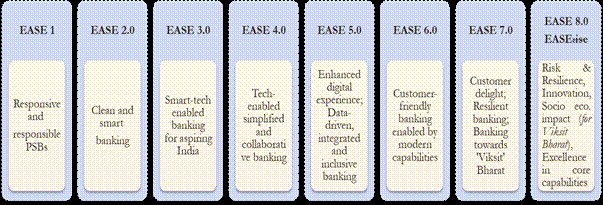
Driving Innovation for Business Process Re-Engineering & Customer Excellence, EASE 8.0 is anchored on four reform themes under the acronym R.IS.E.- Risk & Resilience, Innovation, Socio-economic Impact (Viksit Bharat), and Excellence comprising 16 reform indicators.
Adding to it, a strong digital collection mechanism, inclusive banking attending needs of PWDs, Use-cases of Agentic AI, sustainability, customer experience and operational excellence with objective to prepare PSBs as future-ready, resilient and customer-centric institutions were areas of emphasis.
Under Pillar 2, EASE Reforms Agenda - Public Sector Banks (PSBs) submit 3-Year Bank-Specific Strategic Roadmap -including strategic initiatives. These initiatives reviewed by DFS identify unique projects that can be scaled and replicated across other PBs to drive operational efficiency.
In the first phase three distinct initiatives have been identified for replicating across PSBs through collaborative banking. These pertain to domain of Digital co-lending, Targeted business sourcing and a helpline for employee welfare.
PSBs continues to play a pivotal role in enabling the vision of Viksit Bharat @2047.
National Asset Reconstruction Company Limited (NARCL)
An Asset Reconstruction Company Limited (NARCL) and Asset Management Company (IDRCL) had been set up to consolidate and take over the existing stressed debt and then manage and resolve the accounts by implementation of various resolution strategies including disposing of the assets to Alternate Investment Funds and other potential investors for eventual value realization.
NARCL is intended to resolve both fully and partially provided stressed assets amounting to about Rs 2 lakh crore.
Government has approved guarantee of up to Rs 30,600 crores for Security Receipts to be issued by NARCL. The said guarantee will be valid for five years from the date of issuance of SRs or till the date of final settlement of loan accounts, whichever is earlier.
As on 03.12.2025, NARCL has already acquired 30 borrower entities, with an aggregate debt exposure of Rs. 1,63,289 crore. (Out of these 30 accounts, NARCL is acting as Resolution Applicant in 2 cases with total debt exposure of Rs. 32,815 crore).
NARCL has informed that they have recovered Rs. 4,570 crores in 20 accounts, with Rs. 2,588 crore being recovered in FY 2025-26.
(Amounts in crore Rs.)
| Stage | No. of a/c | Amount involved | Purchase Amount | Govt. Guarantee issued |
| Acquired* | 30 | 1,63,289 | 31,379 | 21,922 |
| Offer made | 4 | 7,530 | - | - |
| Under evaluation (Due Diligence) | 3 | 32,259 | - | - |
| Total | 37 | 2,03,078 | 31,379 | 21,922.74 |
2 accounts acquired as Resolution Applicant having total exposure of Rs. 32,815 crore at an acquisition amount of Rs. 5,555 crore.
Consolidation and revision of ACC guidelines:
On 08.10.2025, the Department has issued revised consolidated ACC guidelines for appointment of Whole-Time Directors (WTD) of Public Sector Banks, so as to have uniform sequencing of eligibility criteria and to align the same with the changing banking industry.
It aims to increase transparency, clarity, consistency, and speed in the appointment process of WTDs further aligning the guidelines with the needs of changing and evolving banking industry.
Opening of MD & CEO positions in all nationalised banks, and one ED position in the nationalised banks having business volume more than Rs. 10 lakh crore and one MD position in SBI, for private candidates, will attract top market talent and infuse professional expertise at the highest management level in Public Sector Banks.
Revised scheme for Performance Linked Incentive:
On 19.11.2024, with the approval of the Finance Minister, the Department issued a revised scheme for Performance Linked Incentive for Whole-Time Directors (WTDs) and senior Executives of Public Sector Banks (PSBs). The Scheme is effective from FY 2023-24. The earlier scheme was applicable to Whole-Time Directors of the banks only.
The scheme is framed with the objective to suitably reward and motivate employees for significant value creation for various stakeholders. The revised scheme has a holistic approach as it considers officers' performance and banks' overall performance including the performance in respect of Government sponsored schemes.
For greater inclusivity, the revised Scheme has been extended to senior executives in the scale-IV to scale - VIII duly recognising the leadership role played by the officers from scale IV to scale VIII in efficient steering of the bank's performance. The revised Scheme will foster a sense of accomplishment, encourage continuous learning and innovation and promote competitive atmospheres that will boost the productivity.
IBC Performance
Till September 2025, 8,659 corporate insolvency resolution process (CIRPs) were admitted at NCLT, out of which, CD was rescued in 3,865 cases.
Out of this, resolution plans were approved in 1300 cases wherein creditors have realised an aggregate amount of Rs. 3.99 lakh crore.
The fair value and liquidation value of the assets available with these CDs, when they entered the CIRP, was estimated at Rs. 3.58 lakh crore and Rs. 2.35 lakh crore, respectively, as against the total claims of the creditors worth Rs. 12.31 lakh crore.
The creditors have realised 170.09% of the liquidation value and 93.79% of the fair value (based on 1177 cases where fair value has been estimated). The resolved CDs resulted in realisation of more than 32.44% as against the admitted claims.
The haircut for creditors relative to the fair value of assets was around 6%, while relative to their admitted claims is around 67%.
Furthermore, this realisation does not include the CIRP cost, and many probable future realisations such as equity, realisation from corporate and personal guarantees, funds infused into the CD including capital expenditure by the resolution applicants, and recovery from avoidance applications.
The Insolvency and Bankruptcy Code (Amendment) Bill, 2025 introduced in Lok Sabha on 12.08.2025, has proposed several amendments to address the delay in admission, resolution and liquidation, value maximization for creditors and improving efficiency & transparency.
Achievements in NBFC Sector
As per RBI data, June 2025, GNPA of NBFC (upper layer and middle layer) stood at 3.08% which has reduced from 3.30% in March 2025 .
First ever NBFC laid out the vision for Vikshit Bharat as under:
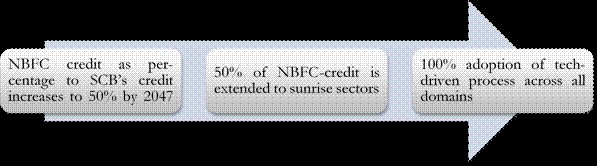
(a) NBFCs share to rise from present 24% of credit disbursed by Scheduled Commercial Banks, to at least 50%, to effectively serve the credit-unserved and underserved segments of society.
(b) 100% technology adoption throughout the loan lifecycle
(c) channeling 50% of credit towards high-growth sectors such as green initiatives, affordable housing, and MSMEs by 2047
Digital Payments:
a) Progress of Digital Payments
Digital Payments have significantly increased in recent years as a result of coordinated efforts of the Government with all stakeholders.
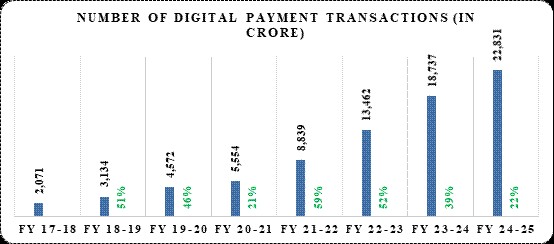
The total digital payment transactions volume increased from 2,071 crore in FY 2017-18 to 22,831 crore in FY 2024-25 at CAGR of 41%.
During the same period, the value of transactions has grown from ₹ 1962 lakh crore to ₹ 3,509 lakh crore. During the current financial year FY 2025-26 (till 31 st Dec’25), volume of digital transactions stands at 20,343 crore and value stands at ₹ 2,357 lakh crore.
Citizens of the country have access to numerous easy and convenient digital payment modes such as BHIM-UPI, debit/credit cards, IMPS, NEFT, RTGS, AePS, NETC, PPIs which have registered substantial growth, transforming the digital payment ecosystem increasing person-to-person (P2P) and person-to-merchant (P2M) payment.
BHIM-UPI Achievement
Unified Payment Interface (UPI) has emerged as the most popular and preferred payment mode pioneering Person to Person (P2P) as well as Person to Merchant (P2M) transactions.
81% by volume of the total retail payment transactions in the country are processed on UPI rails.
UPI powers linking of multiple bank accounts into a single mobile application of any participating bank / third party application provider (TPAP).
UPI has seen exponential growth, processing trillions of rupees in transactions annually, and has made India one of the largest digital payment markets globally.
As per ACI Worldwide Report 2024, around 49% of the global real-time payment transactions is happening in India.
Progression of UPI
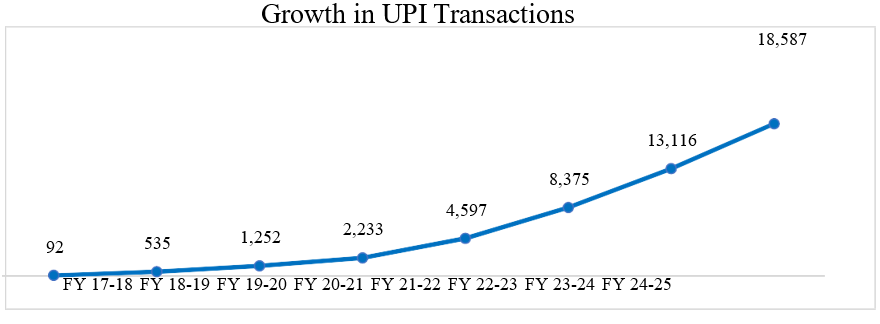
'UPI LITE X' addresses challenges of remote areas by enabling offline UPI payments and making digital transactions accessible even in low-connectivity regions
The Reserve Bank has been facilitating the linkage of UPI with Fast Payment Systems (FPSs) of other countries on a bilateral basis, enabling both inward and outward remittance payments. Currently, such linkage is live with Singapore since February 2023 and implementation of similar projects with UAE and Nepal are in progress.
The Acceptance of India’s UPI apps via QR Code has been operationalised in Bhutan, France, Mauritius, Nepal, Singapore, Sri Lanka, the UAE and Qatar which enables Indian tourists, students, and business travelers in other countries to make payments to merchants using their Indian UPI apps.
Indian RuPay (domestic) cards acceptance is presently live in Nepal, Bhutan, Mauritius, Singapore, UAE and Maldives. Furthermore, the issuance of RuPay cards is live in Bhutan as well as Mauritius. The arrangements enable acceptance of Mauritius and Bhutan RuPay cards in India as well.
Availability of the post of Chief General Managers (CGMs) in all Public Sector Banks (PSBs)
To strengthen leadership in Banks, the finance minister, in the year 2024, has approved creation of Chief General Manager (CGM) post in the remaining five Nationalised Banks (i.e.) Bank of Maharashtra, Central Bank of India, Indian Overseas Bank, Punjab & Sind Bank and UCO Bank, ensuring presence of this key layer post across all Public Sector Banks.
While creating the said post, the Finance Minister also approved increase in the existing number of CGMs in those banks that already have CGM level posts.
This step will enhance the capability of banks to better monitor critical positions such as digitalisation, cyber security, fin-tech, risk, compliance, rural banking, financial inclusion etc., and sub-domains like retail Credit, Agri-credit, MSME Credit etc., thereby leading to more targeted strategies and improved overall performance.
Staff Welfare Fund in Public Sector Banks (PSBs)
The ceiling of the Staff welfare fund (SWF), a fund allocated by PSBs for the welfare-related in respect of their working and retired employees, has been thoroughly revised in the year 2024, after taking into consideration the number of employees and retirees in PSBs as of 2024 and the change in the business mix of the PSBs. This increase will benefit 15 lakh staff including the retired employees of all the 12 PSBs.
These welfare initiatives shall boost the workforce morale and help create a supportive environment, essential for continued growth in India's banking sector.
Crisis Management Plan (CMP)
The CMP, invoked for an industry-wide strike in Banking Industry for three or more day has been revisited in the Department in the year 2024 and accordingly, the CMP-2024 has been circulated to all PSBs and other stakeholders to make their respective Standard Operating Procedures (SOP) on the lines of the provisions contained therein.
The CMP provides a comprehensive framework for handling potential industry-wide strikes in the banking sector, ensuring minimal disruption to services. Further, it also ensures that customers are informed about strike timelines and have access to essential services through alternative channels such as mobile & internet banking.
Credit Guarantee Scheme for Exporters
Credit Guarantee Scheme for Exporters (CGSE) made operational on 01.12.2025 enables banks and financial institutions (Member Lending Institutions – MLIs) to extend additional financial assistance to Indian exporters during a period of certain headwinds which shall diversify their markets and enhance their global competitiveness.
It incentivises MLIs to enhance credit flow and ensure timely liquidity to exporter-borrowers — particularly MSMEs.
Features of the Scheme
Credit Support: Up to ₹20,000 crore in additional collateral-free working capital to eligible exporters
Guarantee Coverage: 100% coverage through NCGTC to Member Lending Institutions
Eligibility: Direct and indirect exporters, including MSME and non-MSME units
Guarantee Fee: Nil
Validity: Till 31 March 2026 or until ₹20,000 crore of guarantees are issued.
Progress as on 2.01.2026 -
Applications worth Rs. 8,764.81 crore (1,840 applications) received, out of which Rs. 3,361.83 crore (774 applications) sanctioned by the lenders.
Mutual Credit Guarantee Scheme for MSMEs (MCGS-MSME)
This scheme offers a credit guarantee, to provide an incentive to Member Lending Institutions (MLIs) to enable availability of additional credit facility up to Rs. 100 crores to MSME borrowers for purchase of equipment / Plant & Machinery
Further it aims to give a boost to manufacturing by facilitating the availability of credit for purchase of Plant and Machinery / Equipment.
SIDBI branches in MSME clusters
New assessment model for MSME credit
Performance of Grievance Redressal Mechanism in Department of Financial Services
Strengthening the grievance redressal mechanism in the BFSI sector, following specific interventions have been undertaken by DFS
1. Secretary (FS) has been personally reviewing twenty (20) grievances selected on random basis every month, wherein, the citizens are given an opportunity to raise their concerns against BFSI sector in the presence of Chairman/ MD& CEOs/Senior managements of Organisations concerned.
2. During the year 2025, ten (10) such meetings have been held and 200 grievances have been analysed.
3. 17 conferences/ workshops on Effective Grievance Redressal Mechanism with the regulators of the BFSI sector and their respective regulated entities were held in 2025 .
4. To ensure that branch staff of Public Sector Banks provide the highest levels of service to the customers and visitors, all the banks were advised to devise a mechanism to collect feedback on customer services through the help of technology. Most PSBs are furnishing such facilities through voice chat and QR codes for the purpose.
5. In order to create competition amongst the institutions, DFS has started ranking of Banks(Public and Private Sector Banks) and Public Sector Insurance Companies (PSICs) on certain predefined criteria based on their performance.
6. DFS has started interaction programs with NBFCs on the basis of grievances received in Centralized Public Grievance Redress and Monitoring System (CPGRAMS) portal. First such interaction was held in December 2025.
7. The above measures have helped in improving the monthly ranking of Department of Financial Services (DFS) as given by Department of Administrative Reforms & Public Grievances (DARPG).
8. The ranking of Banking Division has improved from 16 th position in January 2025 to 7 th position in November 2025. On the other hand, the ranking of Insurance Division has improved from 10 th Position in January 2025 to 6 th position in November 2025.
BAANKNET
In view of evolving user needs, technological advancements, and feedback from stakeholders regarding ease of transaction, user experience, and the need to enhance the portal's outreach, it was decided to revamp the existing platform.
The upgraded portal is aimed at expanding the pool of potential buyers, thereby resulting in higher recoveries for banks. The revamped platform, now renamed as "BAANKNET", was formally launched on 3rd January 2025. This revamped portal significantly enhanced transparency. accessibility, and efficiency in property auctions conducted by Public Sector Banks.
Mediation Training Programme for POS of DRTs
DFS in collaboration with the Mediation and Conciliation Project Committee (MCMP), Supreme Court of India had organized a 40 hours mediation training programme for the presiding officers of Debts Recovery Tribunals and senior executives of Public Sector Banks from 24th September, 2025 to 28th September, 2025.
The training was organised considering the importance of dispute resolution mechanisms in the present times. It also covered the role of various stakeholders viz referral judges, lawyers and parties in mediation with special focus on the cases tried and entertained by the Presiding Officers of DRTs under the Recovery of Debts and Bankruptcy (RDB) Act 1993 and the SARFAESI Act, 2002.
Participation at Expo 2025 Osaka, Unlocking the secrets of India's Fintech Transformation:
India participated in the World Expo 2025, Osaka, Japan, held from 13.04.2025 to 13.10.2025. The DFS, participated in a "FinTech Transformation event at the India Pavilion during the allocated period (31.08.2025 to 06.09.2025) at the Expo 2025 Osaka, showcasing India's Financial Inclusion, Digital payment advancements and new Fintech products to a global audience. The DFS showcased India's success story on Unified Payments Interface (UPI), Fintech, and Financial inclusion at the EXPO..
Signing of cooperation agreements between Indian Financial Sector Regulators and their foreign counterparts:
The Reserve Bank of India (RBI) sent a proposal for signing of a Memorandum of Understanding (MOU) with State Bank of Vietnam (SBV) for cooperation on financial innovations and digital payments. The said MOU was signed on 03.09.2025 between RBI and MAS.
Constitution of Payments Regulatory Board (PRB): The recent amendments to Section 3 of the Payment and Settlement Systems Act, 2007 (PSS Act, 2007) carried out, vide the Finance Act, 2017 came into effect from 09.05.2025, with issue of the Gazette Notification dated 06.05.2025, by this Department.
Key amendments in PFRDA (Exits and Withdrawals under the NPS) Regulations, 2015
The Pension Fund Regulatory and Development Authority (PFRDA) notified amendments to the PFRDA (Exits and Withdrawals under the National Pension System) Regulations, 2015, on 19 Dec, 2025.
These measures aim to provide subscribers greater flexibility, choice and autonomy in investment decisions and managing their accumulated pension wealth, recognizing that non-government NPS participation is voluntary.
The amendments reflect evolving subscriber needs and seeks to make the NPS more inclusive, responsive and subscriber-friendly, while safeguarding long-term retirement income security.
Financial Inclusion Schemes
1. Pradhan Mantri Jan Dhan Yojana (PMJDY)
Pradhan Mantri Jan Dhan Yojana (PMJDY), continues to ensure comprehensive financial inclusion of all by providing universal access to banking facilities. The scheme completed ten years in August, 2024.
Progress under PMJDY (as on 31.12.25):
PMJDY Accounts: 57.33 crores
Deposit in accounts: Rs. 2,81,918 crores
Women accounts: 31.98 crores
Accounts in Rural/Semi urban: 44.84 crores
RuPay cards issued: 39.59 crores
2. Pradhan Mantri Suraksha Bima Yojana (PMSBY)
The Pradhan Mantri Suraksha Bima Yojana (PMSBY), a one-year personal accident insurance Scheme offering accidental coverage for death/disability with an annual premium of Rs 20 per year simplifies claim settlement with minimum documentation. The scheme completed ten years in May 2025.
Progress under PMSBY (as on 31.12.25):
3. Pradhan Mantri Jeevan Jyoti Bima Yojana (PMJJBY)
The Pradhan Mantri Jeevan Jyoti Bima Yojana (PMJJBY), a one-year life insurance scheme, renewable from year to year, offers coverage of Rs. Two lacs for death due to any reason for the age group of 18 to 50 years. The scheme completed ten years in May 2025.
Progress under PMJJBY (as on 31.12.25):
Cumulative enrolment: 26.24 crore
Cumulative No. of Claims received: 10,55,092
Cumulative No. of Claims disbursed: 10,21,678 for Rs. 20,433.56 crore
4. Pradhan Mantri MUDRA Yojana (PMMY)
The Pradhan Mantri MUDRA Yojana (PMMY) completed in April 2025 the 10 years of its providing access to institutional collateral free credit to micro enterprises upto Rs.20 lakh.
Progress under MUDRA (as on 02.01.26 since launch of scheme)
5. Stand Up India Scheme (SUPI)
The Stand-up India Scheme, launched in 2016 promotes entrepreneurship among the Scheduled Caste/ Scheduled tribe and Women.
Progress under Stand-Up India (as on 31. 03 .25 (Disbursement as on 31.10.2025) since launch of scheme)
6. Atal Pension Yojana (APY):
The Atal Pension Yojana (APY) completed a decade of providing universal social security for the poor, underprivileged, and unorganised sector workers. The scheme completed ten years in May 2025.
Progress under APY during last 18 years:
7. NPS Vatsalya:
NPS Vatsalya, a contributory pension scheme for minors (below 18 years), regulated by Pension Fund Regulatory and Development Authority, aims at promoting early pension planning and long-term financial security.
Other Initiatives to Promote NPS in the Private Sector (FY 2024-25):
Launch of NPS Vatsalya: Announced in the Union Budget 2024-25 and launched on 18th September 2024 to encourage early pension planning for minors. Accounts are operated by guardians and available through PoPs, India Post, Pension Funds, and e-NPS.
Several initiatives have been taken to promote the scheme.
Awareness and Outreach Campaigns: Nationwide campaign across print, TV, outdoor, OTT, and social media to enhance NPS awareness among corporates and individuals.
Corporate Engagement Programs: Seven large-scale Corporate Awareness Programs and seven roundtables held in Tier-l and Tier-Il cities, engaging ~1,000 delegates from 500 corporates for direct interaction with HR and finance professionals.
Point of Presence Motivation and Incentives: Targeted campaigns to strengthen PoP commitment and improve subscriber onboarding effectiveness.
Engagement of Pension Agents: Allowed Pension Agents (including corporate insurance agents and business correspondents) as additional distribution channels to expand outreach in semi- urban and rural areas.
8. Policy Initiative/scheme: KCC
Progress in KCC:
From 1 January 2025, the collateral-free loan limit has been enhanced from ₹1.60 lakh to ₹2.00 lakh per borrower, improving access to credit for small and marginal farmers (who constitute over 86% of the sector).
The average loan size under KCC has increased from ₹1.02 lakh (2020–21) to ₹1.32 lakh (2024– 25).
As on 30 September 2025, there are 7.81 crore operative KCC accounts with a total outstanding amount of ₹10.39 lakh crore.
43% of the KCC accounts are held with Cooperative Banks, 38% with Scheduled Commercial Banks, and 19% with Regional Rural Banks (RRBs).
KCC Progress during last 5 years including current FY
(No of Operative KCCs in actuals & Amount O/s in Rs. Crore)
| As on Date | Total Operative Accounts | |
| No. of total operative accounts (In Actuals) | Amount outstanding in operative accounts (In Crore) | |
| 31st March 2021 | 73,769,951 | 7,53,133 |
| 31st March 2022 | 71,490,107 | 8,13,945 |
| 31st March 2023 | 73,469,021 | 8,85,464 |
| 31st March 2024 | 77,504,234 | 9,81,761 |
| 31st March 2025 | 77,210,538 | 10,20,072 |
| 30th September 2025* | 78,098,269 | 10,39,348 |
*: Source: RBI for Scheduled Commercial Banks and NABARD for Regional Rural Banks and Rural Cooperative Banks (RCBs)
*: Data for 30 September 2025 is provisional
KCC Progress for animal husbandry and fisheries
| As on Date | KCC to Animal Husbandry and Fisheries | |
|
| No. of total operative accounts (In Actuals) | Amount outstanding in operative accounts (In Crore) |
| 31st March 2022 | 15,68,545 | 16,747 |
| 31st March 2023 | 23,32,375 | 25,216 |
| 31st March 2024 | 41,26,724 | 50,262 |
| 31st March 2025 | 48,57,033 | 56,594 |
| 30th September | 47,80,225 | 56,174 |
9. Policy Initiative/ scheme: Ground Level Credit (GLC) Target for Agriculture
In order to boost the credit to the rural sector with the help of effective and hassle-free agriculture credit, the Government has been fixing annual targets for Ground Level Agriculture Credit (GLC).
Progress under Ground Level Credit (GLC) Target for Agriculture
Target vs achievement in GLC during last 5 years including current FY thus far
| Year | Target (in Cr) | Achievement (in Cr) |
| 2021-22 | 16,50,000 | 18,63,363 |
| 2022-23 | 18,50,000 | 21,55,163 |
| 2023-24 | 20,00,000 | 25,48,634 |
| 2024-25 | 27,50,000 | 28,66,879 |
| 2025-26 | 32,50,000 | 16,96,055 |
*: GLC data for 2025-2026 is as on 31 October 2025
Creation of an additional Deputy Managing Director (DMD) post in NABARD: The creation of an additional post of Deputy Managing Director (DMD) was approved to expand the scale of NABARD operations, thereby strengthening capacity to effectively oversee critical areas such as Climate Finance Sustainability, Green Climate Fund, Digital Transformation and Fintech Engagement, Cooperative Sector Development etc.
Strengthening of the Cooperative Sector-Amendment in Banking Regulation Act 1949: To align director tenures in cooperative banks with the 97th Constitutional Amendment and to safeguard depositors’ interests, the tenure of directors in co-operative banks (excluding the Chairperson and whole-time directors) has been enhanced from eight years to ten years.
Progress of Loans under PM Surya Ghar Muft Bijlee Yojana:
PM Surya Ghar Muft Bijlee Yojana launched in February,2024 aims to solarize one crore households by providing free electricity up to 300 units every month.
Latest progress under the scheme is as under: