

Loading...

Top
Help
×

By creating an account you can:

Logo TaxTMI
Call Us / Help / Feedback

Contact Us At :

E-mail: [email protected]

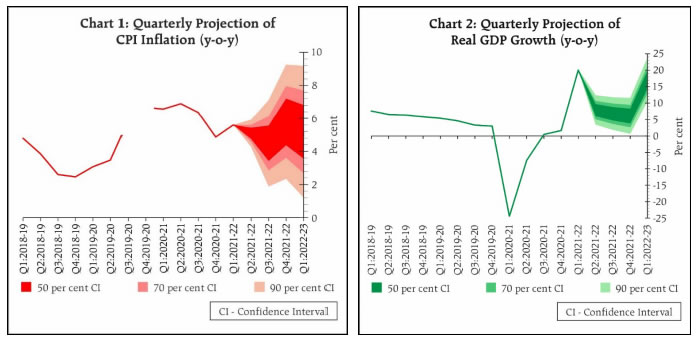
Call / WhatsApp at: +91 99117 96707

For more information, Check Contact Us

FAQs :

To know Frequently Asked Questions, Check FAQs

Most Asked Video Tutorials :

For more tutorials, Check Video Tutorials

Submit Feedback/Suggestion :

Email :
Please provide your email address so we can follow up on your feedback.
Category :
Description :
Min 15 characters 0/2000
Make Most of Text Search
  1. Checkout this video tutorial: How to search effectively on TaxTMI.
  2. Put words in double quotes for exact word search, eg: "income tax"
  3. Avoid noise words such as : 'and, of, the, a'
  4. Sort by Relevance to get the most relevant document.
  5. Press Enter to add multiple terms/multiple phrases, and then click on Search to Search.
  6. Text Search
  7. The system will try to fetch results that contains ALL your words.
  8. Once you add keywords, you'll see a new 'Search In' filter that makes your results even more precise.
  9. Text Search
Add to...
You have not created any category. Kindly create one to bookmark this item!
Create New Category
Hide
Title :
Description :
❮❮ Hide
Default View
Expand ❯❯
Close ✕
🔎 News - Adv. Search
TEXT SEARCH:

Press 'Enter' to add multiple search terms. Rules for Better Search

Search In:
Main Text + AI Text
  • Main Text
  • Main Text + AI Text
  • AI Text
Category: ?
Categorized by AI
---- All Categories ----
  • ---- All Categories ----
  • Income Tax
  • GST
  • Customs, DGFT & SEZ
  • FEMA & RBI
  • Corp. Laws, SEBI & IBC
  • PMLA, Black Money & ED
  • Budget
  • News and Press Release
  • PTI News
Month:
---- All Months ----
  • ---- All Months ----
  • January
  • February
  • March
  • April
  • May
  • June
  • July
  • August
  • September
  • October
  • November
  • December
Year:
---- All Years ----
  • ---- All Years ----
  • 2026
  • 2025
  • 2024
  • 2023
  • 2022
  • 2021
  • 2020
  • 2019
  • 2018
  • 2017
  • 2016
  • 2015
  • 2014
  • 2013
  • 2012
  • 2011
Sort By: ?
In Sort By 'Default', exact matches for text search are shown at the top, followed by the remaining results in their regular order.
Relevance Default Date
    Lok Sabha passes Bankers' Books Evidence Bill to replace colonial-era law
    Sensex gains 152 pts in volatile session as RBI keeps policy rates unchanged
    DRI seizes 364 metric tonne (MT) banned Pakistan-origin dry dates imports worth Rs. 3 crore
    Rupee gains 13 paise to close at 95.15 against US dollar post-RBI policy decision
    ED raids premises linked to ex-Andhra MLA Malla Vijaya Prasad in chit fund scam
    'Gungi gudiya' remark against Sunetra shows Cong's 'ideological bankruptcy': NCP leader Tatkare
    RBI holds interest rates for fourth straight meeting, awaits clearer inflation outlook
    Highlights of RBI's August monetary policy
    RBI targeting polymer currency notes launch in early FY28: Guv Malhotra
    Two women held at Delhi airport with 1 kg gold concealed as silver-coated armlet
    Sensex trades higher, Nifty flat post RBI policy
    India's services sector growth hits four-and-a-half-year low in July on weak demand: PMI
    SC grants interim bail to businessman Anwar Dhebar in manpower commission 'scam' case
    The Taxation and Other Laws Amendment Bill 2026 - Introduced in Lok Sabha on 4th August 2026
    RBI marginally raises FY27 GDP growth projection to 6.7 pc, lowers inflation forecast
    Collaboration, Inclusion and Entrepreneurship: How SIDBI MSME Samvaad Is Shaping the Future of India’s MSME Ecosystem
    RBI keeps policy rate unchanged for third time in row in FY27 amid West Asia crisis
    RBI keeps policy rate unchanged for third time in row amid West Asia crisis
    Markets climb in early trade on falling crude oil prices; RBI monetary policy decision awaited
    Rupee jumps 39 paise to 94.89 against US dollar ahead of RBI monetary policy decision
❯❯
Maximize Maximize Maximize
0 / 200
Expand Note
Add to Folder

No Folders have been created

+

Are you sure you want to delete "My most important" ?

NOTE:

News
Showing Results for :
Reset Filters
Results Found:
Show All Summaries Hide All Summaries
August 5, 2026
Show AI Summary
Digital bank-record evidence gains a technology-neutral framework through expanded admissibility, certified authentication, and regulated production of bankers' books.
The Bankers' Books Evidence Bill, 2026, modernises the evidentiary treatment of banking records by extending "bankers' books" to physical, electronic, digital, virtual and cloud-based records. It recognises electronic bank records as admissible evidence, allows production in physical or electronic form, and provides for standardised certificates authenticated by manual, digital or electronic signatures. The Bill also defines "special cause" for compelling bank officers to produce records or testify where the bank is not a party, and permits extension to specified financial-sector entities subject to conditions.
August 5, 2026
Show AI Summary
Closing auction price discovery and unchanged policy rates shaped volatile equity trading amid inflation and geopolitical uncertainty.
The Monetary Policy Committee retained the policy repo rate and neutral policy stance while seeking greater clarity on inflation risks from higher energy costs. Stock exchanges introduced the Closing Auction Session for eligible futures and options shares in the equity cash segment to determine closing prices through a more transparent and robust auction-based price-discovery mechanism. Equity markets showed volatile, limited gains amid geopolitical uncertainty, energy-price concerns, profit booking and the new mechanism's introduction.
August 5, 2026
Show AI Summary
Pakistan-origin import prohibition covers third-country routing, false origin declarations, forged documents, and trans-shipment arrangements used to evade restrictions.
The prohibition on direct or indirect import or transit of goods originating in or exported from Pakistan extends to goods routed through third countries and falsely declared as having another origin. Misdeclaration of country of origin, false descriptions, forged documentation, and trans-shipment arrangements may contravene that prohibition and invite action under the Customs Act, 1962. Dry dates declared as UAE-origin and Guggul resin declared as Somalia-origin were investigated as goods of Pakistan origin routed through Dubai.
August 5, 2026
Show AI Summary
Foreign exchange stability measures support the rupee as policy continuity, capital inflows and global risk sentiment shape currency expectations.
Foreign exchange market movement reflected a rupee appreciation against the US dollar following the monetary policy decision to retain the repo rate and neutral stance. Market sentiment was supported by softer crude oil prices, weakness in the US dollar, lower US Treasury yields and foreign equity inflows. The monetary policy framework sought to support capital inflows and maintain an orderly rupee trajectory, with geopolitical developments and US economic data remaining relevant to near-term exchange-rate expectations.
August 5, 2026
Show AI Summary
Money-laundering investigation examines alleged proceeds from chit fund operations following searches linked to a former company managing director.
A money-laundering investigation concerns alleged proceeds of crime arising from a multi-state chit fund operation associated with Welfare Building and Estates Pvt Ltd. The company is alleged to have collected investor deposits through investment schemes promising high returns before defaulting. Searches at premises linked to its former managing director form part of the inquiry into alleged laundering. The underlying alleged fraud had previously resulted in a CBI case and multiple police FIRs.
August 5, 2026
Show AI Summary
Political restraint in public communications was urged, alongside adherence to principal-speaker protocol during press conferences and media interactions.
Political restraint in public communications was urged after a social-media remark directed at Sunetra Pawar was criticised as ideologically irresponsible. It was stated that regret alone was insufficient and that leaders should exercise care in public comments. Press-conference protocol was also emphasised: the principal dignitary should respond to media questions, and those seated alongside should not participate in the interaction. Party colleagues were expected to act more responsibly in future media engagements.
August 5, 2026
Show AI Summary
Neutral monetary policy stance continues as inflation clarity is awaited, alongside cooperative banking and lending-rate transparency measures.
Monetary policy maintained the benchmark policy repo rate and a neutral stance pending clearer evidence that energy-cost pressures will generate broad-based inflation. Inflation is expected to rise temporarily due principally to food and fuel prices before moderating, while core inflation remains benign. The approach remains data-dependent, supported by two-way liquidity operations. Proposed measures include resuming urban cooperative bank licensing, revising rural cooperative bank credit-monitoring directions, and harmonising interest-rate regulation on advances across regulated entities to improve transparency and consumer protection.
August 5, 2026
Show AI Summary
Repo rate stability preserves the policy stance amid lower inflation projections, stronger growth expectations and external-sector resilience.
Monetary policy maintained the repo rate at 5.25 per cent following a unanimous policy committee decision. The growth forecast for FY27 was marginally increased, while the inflation projection was lowered. Inflation conditions remain uncertain because of monsoon, El Nino and geopolitical developments. Liquidity remained in surplus, and external-sector indicators reflected a current-account surplus, buoyant foreign direct investment inflows, renewed foreign portfolio investment inflows, and adequate foreign-exchange reserves.
August 5, 2026
Show AI Summary
Polymer currency notes target improved durability as monetary policy remains data-dependent and rupee management pursues an orderly trajectory.
Polymer currency notes are targeted for circulation at the beginning of the next financial year, subject to implementation proceeding as planned. They are intended to improve durability, especially for lower-denomination notes with high circulation velocity. Monetary policy decisions will remain data-dependent and focused on aligning headline inflation with its medium-term target. Foreign Currency Non-Resident (Bank) scheme inflows are expected to remain healthy until closure, with no proposal for premature termination. Rupee management aims to maintain an orderly exchange-rate trajectory.
August 5, 2026
Show AI Summary
Customs anti-smuggling enforcement targets gold concealed as silver-coated armlets following passenger profiling and personal search at airport.
Customs officers intercepted two passengers arriving from Istanbul after Advance Passenger Information System profiling and their activation of the Door Frame Metal Detector. A personal search recovered approximately one kilogram of gold, silver-coated and concealed as traditional armlets worn on the upper arms. The gold was seized under the Customs Act, a smuggling case was registered, and investigation was initiated into the source and any wider smuggling network.
August 5, 2026
Show AI Summary
Closing auction price discovery for eligible derivatives shares begins as monetary policy retains the repo rate and neutral stance.
The Reserve Bank retained the repo rate with a neutral stance amid uncertainty over energy prices and supply disruptions. Stock exchanges introduced the Closing Auction Session in the equity cash segment for eligible shares with futures and options contracts. This auction-based mechanism determines closing prices of eligible stocks and aims to make price discovery more transparent and robust.
August 5, 2026
Show AI Summary
Services-sector growth slowed as weaker demand, competition and postponed orders moderated business activity, while employment improved modestly.
Services-sector growth slowed as domestic and export orders moderated amid weaker demand, competitive pressures, softer market conditions and postponed orders. Output continued to expand, but at its weakest pace in more than four years. Employment growth improved modestly, while input costs rose and firms increased selling prices. Business confidence remained positive but declined, and the composite output indicator weakened due principally to the sharp slowdown in services activity.
August 5, 2026
Show AI Summary
Interim bail conditions require residence outside the state and trial attendance in alleged manpower commission corruption proceedings.
Interim bail was granted to Anwar Dhebar in a matter involving alleged corruption and an illegal commission mechanism linked to a state marketing corporation. Conditions require him to remain outside Chhattisgarh, attend the trial court, and provide his residential address. The allegations concern manpower supply agencies allegedly being compelled to pay commissions for clearance of legitimate bills, with proceeds routed through intermediaries. The case was registered under the Indian Penal Code and the Prevention of Corruption Act.
August 5, 2026
Show AI Summary
Tax certainty measures revise fund-management safe harbours, electronic-payment charges, sectoral exemptions, business-trust treatment, and excess expenditure appropriation.
The Taxation and Other Laws (Amendment) Bill, 2026 proposes to replace the Income-tax (Amendment) Ordinance, 2026 and amend payment-system and tax laws. It would prohibit charges on notified electronic payments, revise safe-harbour conditions for eligible investment funds and fund managers, and expand tax exemptions for Government securities, qualifying rough-diamond sales and bonded-warehouse component storage. It also modifies exemptions concerning electronic-goods contract manufacturing, data centres and business-trust dividends, while imposing a differentiated surcharge on qualifying special purpose vehicles. A separately included appropriation bill authorises excess expenditure from the Consolidated Fund of India.
August 5, 2026
Show AI Summary
Growth and inflation projections reflect resilient domestic activity while energy volatility, supply disruptions, and food prices sustain inflation risks.
Monetary policy projections for fiscal 2026-27 revise real GDP growth upward to 6.7 per cent and Consumer Price Index inflation downward to 5 per cent. Domestic activity is described as resilient amid global uncertainty, but inflationary risks persist from rainfall disruption, energy-price volatility, supply-chain uncertainty, and second-round effects of higher food, fuel and input costs. Core inflation is projected at 4.3 per cent for the fiscal year.
August 5, 2026
Show AI Summary
Industry collaboration strengthens MSME competitiveness through shared resources, market linkages, capability building and inclusive support for women entrepreneurs.
MSME development is linked to collaboration, knowledge-sharing, institutional support and capability building. Industry associations can provide networking, policy advocacy, business intelligence, skills programmes, shared infrastructure and market linkages, while collective procurement, shared logistics, digital commerce and export readiness may improve competitiveness. Women-led enterprises benefit from market-oriented capability development, mentorship, continuous learning, professional networks, capacity-building programmes and institutional support. The Development of Industry Associations initiative is intended to connect associations and facilitate the sharing of best practices.
August 5, 2026
Show AI Summary
Monetary policy rate maintenance continues under a neutral stance amid energy disruption, inflation concerns and sustained currency depreciation.
Monetary policy rate maintenance was continued with the repo rate retained at 5.25 per cent under a neutral stance amid uncertainty over energy prices and supply disruptions associated with the West Asia crisis. The growth forecast was marginally increased and the inflation projection reduced. Sustained rupee depreciation against the dollar was attributed to costly oil, capital outflows, widening trade deficits and a strong US dollar.
August 5, 2026
Show AI Summary
Monetary policy rate pause maintains a neutral stance amid energy disruption, inflation concerns and sustained rupee depreciation pressures.
Monetary policy rates were retained without change for a third consecutive review, with a neutral stance maintained amid uncertainty over energy prices and supply disruptions associated with the West Asia crisis. The policy assessment noted retail inflation above the medium-term target, alongside an upward revision to growth expectations and a downward revision to the inflation projection. Continued rupee depreciation was linked to higher oil prices, capital outflows, widening trade deficits and a stronger US dollar.
August 5, 2026
Show AI Summary
Monetary policy expectations shape equity sentiment as softer crude prices and foreign investment support domestic financial assets.
Equity market sentiment improved in early trading as lower crude oil prices and foreign fund inflows supported benchmark indices, while investors awaited the monetary policy decision. Softer crude prices, rupee recovery, improving global risk sentiment, resilient economic growth, corporate earnings and sustained foreign portfolio investment supported domestic financial assets, despite continuing global and geopolitical uncertainties.
August 5, 2026
Show AI Summary
Foreign exchange market movement strengthens as lower crude prices and monetary policy signals influence the rupee's direction.
Foreign exchange market movement saw the rupee appreciate against the US dollar in early trading, supported by lower crude oil prices, a softer dollar index, domestic equity gains and net foreign institutional investment. Market attention centred on the Reserve Bank of India's monetary policy decision, with expectations of an unchanged benchmark repo rate. Policy communication on inflation and developments in Hormuz-related talks were identified as factors that could influence the rupee's direction.

News

Back

All News

Showing Results for :
Reset Filters
No Records Found

News

Back

All News

Showing Results for : Reset Filters
Customs, DGFT & SEZ

Monetary Policy Statement, 2021-22 Resolution of the Monetary Policy Committee (MPC) October 6-8, 2021

October 8, 2021

Contents
Summary
Note

Note

-

Bookmark

Print

Print

On the basis of an assessment of the current and evolving macroeconomic situation, the Monetary Policy Committee (MPC) at its meeting today (October 8, 2021) decided to:

  • keep the policy repo rate under the liquidity adjustment facility (LAF) unchanged at 4.0 per cent.

The reverse repo rate under the LAF remains unchanged at 3.35 per cent and the marginal standing facility (MSF) rate and the Bank Rate at 4.25 per cent.

  • The MPC also decided to continue with the accommodative stance as long as necessary to revive and sustain growth on a durable basis and continue to mitigate the impact of COVID-19 on the economy, while ensuring that inflation remains within the target going forward.

These decisions are in consonance with the objective of achieving the medium-term target for consumer price index (CPI) inflation of 4 per cent within a band of +/- 2 per cent, while supporting growth.

The main considerations underlying the decision are set out in the statement below.

Assessment

Global Economy

2. Since the MPC’s meeting during August 4-6, 2021, the momentum of the global recovery has ebbed across geographies with the rapid spread of the delta variant of COVID-19, including in some countries with relatively high vaccination rates. After sliding to a seven-month low in August, the global purchasing managers’ index (PMI) rose marginally in September. World merchandise trade volumes remained resilient in Q2:2021, but more recently there has been a loss of momentum with the persistence of supply and logistics bottlenecks.

3. Commodity prices remain elevated, and consequently, inflationary pressures have accentuated in most advanced economies (AEs) and emerging market economies (EMEs), prompting monetary tightening by a few central banks in the former group and several in the latter. Change in monetary policy stances, in conjunction with a likely tapering of bond purchases in major advanced economies later this year, is beginning to strain the international financial markets with a sharp rise in bond yields in major AEs and EMEs after remaining range-bound in August. The US dollar has strengthened sharply, while the EME currencies have weakened since early-September with capital outflows in recent weeks.

Domestic Economy

4. On the domestic front, real gross domestic product (GDP) expanded by 20.1 per cent year-on-year (y-o-y) during Q1:2021-22 on a large favourable base; however, its momentum was dragged down by the second wave of the pandemic. The level of real GDP in Q1:2021-22 was 9.2 per cent below its pre-pandemic level two years ago. On the demand side, almost all the constituents of GDP posted robust y-o-y growth. On the supply side, real gross value added (GVA) increased by 18.8 per cent y-o-y during Q1:2021-22.

5. The rebound in economic activity gained traction in August-September, facilitated by the ebbing of infections, easing of restrictions and a sharp pick-up in the pace of vaccination. The south-west monsoon, after a lull in August, picked up in September, narrowing the deficit in the cumulative seasonal rainfall to 0.7 per cent below the long period average and kharif sowing exceeded the previous year’s level. Record kharif foodgrains production of 150.5 million tonnes as per the first advance estimates augurs well for the overall agricultural sector. By end-September, reservoir levels at 80 per cent of the full reservoir level were above the decadal average, which is expected to boost rabi production prospects.

6. After a prolonged slowdown, industrial production posted a high y-o-y growth for the fifth consecutive month in July. The manufacturing PMI at 53.7 in September remained in positive territory. Services activity gained ground with support from the pent-up demand for contact-intensive activities. The services PMI continued in expansion zone in September at 55.2, although some sub-components moderated. High-frequency indicators for August-September – railway freight traffic; cement production; electricity demand; port cargo; e-way bills; GST and toll collections – suggest progress in the normalisation of economic activity relative to pre-pandemic levels; however, indicators such as domestic air traffic, two-wheeler sales and steel consumption continue to lag. Non-oil export growth remained strong on buoyant external demand.

7. Headline CPI inflation at 5.3 per cent in August softened for the second consecutive month, declining by one percentage point from the recent peak in May-June 2021. This was primarily driven by an easing in food inflation. Fuel inflation edged up to a new high in August. Core inflation, i.e. inflation excluding food and fuel, remained elevated and sticky at 5.8 per cent in July-August 2021.

8. System liquidity remained in large surplus in August-September, with daily absorptions rising from an average of ₹7.7 lakh crore in July-August to ₹9.0 lakh crore during September and ₹9.5 lakh crore during October (up to October 6) through the fixed rate reverse repo, the 14-day variable rate reverse repo (VRRR) and fine-tuning operations under the liquidity adjustment facility (LAF). Auctions of ₹1.2 lakh crore under the secondary market government securities acquisition programme (G-SAP 2.0) during Q2:2021-22 provided liquidity across the term structure. As on October 1, 2021, reserve money (adjusted for the first-round impact of the change in the cash reserve ratio) expanded by 8.3 per cent (y-o-y); money supply (M3) and bank credit grew by 9.3 per cent and 6.7 per cent, respectively, as on September 24, 2021. India’s foreign exchange reserves increased by US$ 60.5 billion in 2021-22 (up to October 1) to US$ 637.5 billion, partly reflecting the allocation of special drawing rights (SDRs), and were close to 14 months of projected imports for 2021-22.

Outlook

9. Going forward, the inflation trajectory is set to edge down during Q3:2021-22, drawing comfort from the recent catch-up in kharif sowing and likely record production. Along with adequate buffer stock of foodgrains, these factors should help to keep cereal prices range bound. Vegetable prices, a major source of inflation volatility, have remained contained in the year so far and are likely to remain soft, assuming no disruption due to unseasonal rains. Supply side interventions by the Government in the case of pulses and edible oils are helping to bridge the demand supply gap; the situation is expected to improve with kharif harvest arrivals. The resurgence of edible oils prices in the recent period, however, is a cause of concern. On the other hand, pressures persist from crude oil prices which remain volatile over uncertainties on the global supply and demand conditions. Domestic pump prices remain at very high levels. Rising metals and energy prices, acute shortage of key industrial components and high logistics costs are adding to input cost pressures. Weak demand conditions, however, are tempering the pass-through to output prices. The CPI headline momentum is moderating with the easing of food prices which, combined with favourable base effects, could bring about a substantial softening in inflation in the near-term. Taking into consideration all these factors, CPI inflation is projected at 5.3 per cent for 2021-22; 5.1 per cent in Q2, 4.5 per cent in Q3; 5.8 per cent in Q4 of 2021-22, with risks broadly balanced. CPI inflation for Q1:2022-23 is projected at 5.2 per cent (Chart 1).

10. Domestic economic activity is gaining traction with the ebbing of the second wave. Going forward, rural demand is likely to maintain its buoyancy, given the above normal kharif sowing while rabi prospects are bright. The substantial acceleration in the pace of vaccination, the sustained lowering of new infections and the coming festival season should support a rebound in the pent-up demand for contact intensive services, strengthen the demand for non-contact intensive services, and bolster urban demand. Monetary and financial conditions remain easy and supportive of growth. Capacity utilisation is improving, while the business outlook and consumer confidence are reviving. The broad-based reforms by the government focusing on infrastructure development, asset monetisation, taxation, telecom sector and banking sector should boost investor confidence, enhance capacity expansion and facilitate crowding in of private investment. The production-linked incentive (PLI) scheme augurs well for domestic manufacturing and exports. Global semiconductor shortages, elevated commodity prices and input costs, and potential global financial market volatility are key downside risks to domestic growth prospects, along with uncertainty around the future COVID-19 trajectory. Taking all these factors into consideration, projection for real GDP growth is retained at 9.5 per cent in 2021-22 consisting of 7.9 per cent in Q2; 6.8 per cent in Q3; and 6.1 per cent in Q4 of 2021-22. Real GDP growth for Q1:2022-23 is projected at 17.2 per cent (Chart 2).
11. Inflation prints in July-August were lower than anticipated. With core inflation persisting at an elevated level, measures to further ameliorate supply side and cost pressures, including through calibrated cuts in indirect taxes on petrol and diesel by both Centre and States, would contribute to a more durable reduction in inflation and anchoring of inflation expectations. The outlook for aggregate demand is progressively improving but the slack is large: output is still below pre-COVID level and the recovery is uneven and critically dependent upon policy support. Compared to pre-pandemic levels, contact intensive services, which contribute around two-fifth of economic activity in India, still lag considerably. Capacity utilisation in the manufacturing sector is below its pre-pandemic levels and an early recovery to its long-run average is critical for a sustained rebound in investment demand. Even as the domestic economy is showing signs of mending, the external environment is turning more uncertain and challenging, with headwinds from slowing growth in some major Asian and advanced economies, steep jump in natural gas prices in the recent weeks and concerns emanating from normalisation of monetary policy in some major advanced economies. Against this backdrop, the ongoing domestic recovery needs to be nurtured assiduously through all policy channels. The MPC will remain watchful given the uncertainties surrounding the outlook for growth and inflation. Accordingly, keeping in mind the evolving situation, the MPC decided to keep the policy repo rate unchanged at 4 per cent and continue with an accommodative stance as long as necessary to revive and sustain growth on a durable basis and continue to mitigate the impact of COVID-19 on the economy, while ensuring that inflation remains within the target going forward.

12. All members of the MPC – Dr. Shashanka Bhide, Dr. Ashima Goyal, Prof. Jayanth R. Varma, Dr. Mridul K. Saggar, Dr. Michael Debabrata Patra and Shri Shaktikanta Das – unanimously voted to keep the policy repo rate unchanged at 4.0 per cent.

13. All members, namely, Dr. Shashanka Bhide, Dr. Ashima Goyal, Dr. Mridul K. Saggar, Dr. Michael Debabrata Patra and Shri Shaktikanta Das, except Prof. Jayanth R. Varma, voted to continue with the accommodative stance as long as necessary to revive and sustain growth on a durable basis and continue to mitigate the impact of COVID-19 on the economy, while ensuring that inflation remains within the target going forward. Prof. Jayanth R. Varma expressed reservations on this part of the resolution.

14. The minutes of the MPC’s meeting will be published on October 22, 2021.

15. The next meeting of the MPC is scheduled during December 6 to 8, 2021.

(Yogesh Dayal)     
Chief General Manager

Topics

Acts Income Tax