Loading...

Top
Help
×

By creating an account you can:

Logo TaxTMI
Call Us / Help / Feedback

Contact Us At :

E-mail: [email protected]

Call / WhatsApp at: +91 99117 96707

For more information, Check Contact Us

FAQs :

To know Frequently Asked Questions, Check FAQs

Most Asked Video Tutorials :

For more tutorials, Check Video Tutorials

Submit Feedback/Suggestion :

Email :
Please provide your email address so we can follow up on your feedback.
Category :
Description :
Min 15 characters 0/2000
Make Most of Text Search
  1. Checkout this video tutorial: How to search effectively on TaxTMI.
  2. Put words in double quotes for exact word search, eg: "income tax"
  3. Avoid noise words such as : 'and, of, the, a'
  4. Sort by Relevance to get the most relevant document.
  5. Press Enter to add multiple terms/multiple phrases, and then click on Search to Search.
  6. Text Search
  7. The system will try to fetch results that contains ALL your words.
  8. Once you add keywords, you'll see a new 'Search In' filter that makes your results even more precise.
  9. Text Search
Add to...
You have not created any category. Kindly create one to bookmark this item!
Create New Category
Hide
Title :
Description :
❮❮ Hide
Default View
Expand ❯❯
Close ✕
🔎 News - Adv. Search
TEXT SEARCH:

Press 'Enter' to add multiple search terms. Rules for Better Search

Search In:
Main Text + AI Text
  • Main Text
  • Main Text + AI Text
  • AI Text
Category: ?
Categorized by AI
---- All Categories ----
  • ---- All Categories ----
  • Income Tax
  • GST
  • Customs, DGFT & SEZ
  • FEMA & RBI
  • Corp. Laws, SEBI & IBC
  • PMLA, Black Money & ED
  • Budget
  • News and Press Release
  • PTI News
Month:
---- All Months ----
  • ---- All Months ----
  • January
  • February
  • March
  • April
  • May
  • June
  • July
  • August
  • September
  • October
  • November
  • December
Year:
---- All Years ----
  • ---- All Years ----
  • 2026
  • 2025
  • 2024
  • 2023
  • 2022
  • 2021
  • 2020
  • 2019
  • 2018
  • 2017
  • 2016
  • 2015
  • 2014
  • 2013
  • 2012
  • 2011
Sort By: ?
In Sort By 'Default', exact matches for text search are shown at the top, followed by the remaining results in their regular order.
Relevance Default Date
    HSBC INDIA OPENS NEW BRANCH IN NASHIK TO SUPPORT WEALTH EXPANSION
    Commerce and Industry Minister Shri Piyush Goyal Leads A 200-Member Business Delegation to Japan.
    CBN busts inter-state heroin syndicate in ‘Op Black Hawk’; seizes over 18.6 kg crude heroin - Three members of inter-state trafficking network arr...
    Bank unions threaten nationwide strike on Sep 11 to press for 5-day banking, other demands
    Goyal says India negotiating FTAs with 8-9 more blocs, aims to cover 75 pc of global trade
    Rupee rises 7 paise to 95.64 against US dollar in early trade
    Woman passenger from Sharjah held with undeclared gold chain at Ahmedabad airport
    Delhi: Retired railway employee put under 'digital arrest', duped of Rs 30 lakh; one held
    CPI(M) accuses ED of ‘politically targeting’ Pinarayi Vijayan in CMRL case
    ED arrests ex-Andhra minister K Nageswara Rao in liquor transport 'scam'
    Orris Infrastructure MD Amit Gupta arrested in cheating case
    In a knot: Surat weaving units take voluntary two-day holiday as yarn prices shoot up
    Canada will impose retaliatory tariffs on US goods beginning Sept 8 as trade negotiations collapse
    Trade war between Canada, US deepens rupture in what had been close and durable alliance
    Canada will impose retaliatory tariffs on US good beginning Sept 8
    J-K parties oppose hike in power tarrif
    IAS officer Gangwar not ‘missing’, away in UP over father’s health: Karnataka minister
    J-K Dy CM terms ED case against his brother 'selective targeting'
    T'gana HC CJ calls for timely, expert dispute resolution in telecom, broadcasting, airport sectors
    Latur CA booked for issuing certificates to facilitate remittance of hundreds of crores abroad
❯❯
Maximize Maximize Maximize
0 / 200
Expand Note
Add to Folder

No Folders have been created

+

Are you sure you want to delete "My most important" ?

NOTE:

News
Showing Results for :
Reset Filters
Results Found:
Show All Summaries Hide All Summaries
August 24, 2026
Show AI Summary
Branch expansion for wealth and cross-border banking services targets emerging commercial centres and affluent customer segments across India.
HSBC India's branch expansion is directed at extending wealth, international banking, and corporate banking services to affluent, high-net-worth, ultra-high-net-worth, and non-resident Indian customers in emerging commercial centres. The Nashik opening forms part of a broader branch-expansion programme undertaken after Reserve Bank of India approval to establish additional branches in key cities. The programme is intended to expand delivery of banking and financial services, including support for cross-border wealth management, overseas investment by Indian companies, and foreign investment into India.
August 24, 2026
Show AI Summary
Bilateral trade and investment cooperation advances through business engagement in high-technology manufacturing, clean energy, innovation and industrial collaboration.
India's commerce and industry engagement with Japan is structured around a business delegation visit to deepen bilateral trade, investment, technology and industrial collaboration. Sector-focused discussions cover semiconductors, artificial intelligence, start-ups, automotive manufacturing, steel, electronics, industrial and consumer markets. Business roadshows and investor interactions are directed at presenting opportunities in India's manufacturing, clean-energy and consumer sectors, while advancing cooperation in high-technology manufacturing and next-generation industries.
August 24, 2026
Show AI Summary
Inter-state heroin trafficking enforcement uncovered concealed narcotics in transport vehicles, triggering arrests, confiscation, and continuing supply-chain investigations.
Operation Black Hawk targeted an alleged inter-state heroin trafficking network moving crude heroin from the North-East region towards Uttar Pradesh. Intelligence-led vehicle tracking and highway interceptions resulted in the seizure of over 18.6 kg of crude heroin and the arrest of three suspected network members under the Narcotic Drugs and Psychotropic Substances Act, 1985. The narcotics were detected in specially fabricated concealed compartments within a passenger vehicle fuel tank and a heavy commercial vehicle body frame. Both vehicles and the contraband were confiscated, while financial and logistical investigations continue into suppliers and distribution channels.
August 24, 2026
Show AI Summary
Five-day banking and uniform performance incentives drive proposed bank union action over unresolved pension and employment demands.
Banking labour relations are affected by proposed nationwide industrial action over five-day banking, performance-linked incentives, and pension-related demands. Five-day banking remains pending despite a bipartite arrangement for extended weekday hours. Unions dispute an incentive scheme that differentiates awards by seniority and individual performance, contending that it departs from bank-level performance linkage and uniformity across cadres. They also allege that implementation during pending conciliation breaches a status quo obligation, while pension revision, uniform dearness allowance, and a pension-scheme switch option remain unresolved.
August 24, 2026
Show AI Summary
Free trade agreement strategy expands preferential market access and supports India's integration into global value chains and investment partnerships.
India's free trade agreement strategy seeks to expand preferential market access and integrate the country into global value chains as a trusted trading partner. Negotiations with additional country groups and individual nations are intended to extend agreement coverage to a substantial share of global trade. Investment opportunities are identified in data centres, manufacturing and artificial intelligence, alongside an objective of developing more balanced trade relations between India and Japan.
August 24, 2026
Show AI Summary
Foreign exchange market conditions supported rupee appreciation, but crude prices, importer demand and geopolitical sanctions concerns limited gains.
Foreign exchange market conditions supported a modest early appreciation of the rupee against the US dollar due to relative dollar softness. The gain was limited by elevated crude oil prices, importer demand for dollars, and caution over anticipated sanctions affecting Iranian oil trade, banking networks and shipping routes. Currency markets remained sensitive to geopolitical uncertainty and possible wider trade effects.
August 23, 2026
Show AI Summary
Undeclared gold importation led to customs interception, seizure, arrest and continuing investigation after concealment inside passenger clothing.
Customs enforcement against undeclared gold importation involved interception of a passenger arriving from Sharjah at Ahmedabad airport following passenger profiling. A gold chain concealed inside clothing was recovered after it was not declared for customs purposes. The chain was seized and the passenger was arrested under the Customs Act, 1962, before being released on bail, with further investigation continuing.
August 23, 2026
Show AI Summary
Digital arrest cyber fraud used impersonation, forged notices and coercive video calls to obtain transfers through mule accounts.
Digital arrest cyber fraud allegedly used impersonation of law-enforcement and central banking officials, fabricated notices, threats of arrest and continuous video communications to coerce a retired railway employee into disclosing financial details and transferring funds for purported verification. The alleged proceeds were routed through mule and shell accounts. Banking records, KYC details, digital evidence and transaction trails allegedly connected a recipient account with suspicious transactions and multiple cyber-fraud cases; part of the cheated amount was recovered or refunded.
August 23, 2026
Show AI Summary
Political targeting allegations challenge money-laundering enforcement actions, searches, questioning, and public disclosures in the CMRL investigation.
CPI(M) alleges that enforcement action under the Prevention of Money Laundering Act in the CMRL matter is politically motivated targeting of Pinarayi Vijayan, family members and party associates. It contends that searches, questioning and public communications during the investigation were used to create suspicion without incriminating evidence, and characterises references to hawala as a new investigative narrative. The party also alleges selective anti-money-laundering enforcement against opposition leaders and states that the company will address the CMRL-related matter.
August 23, 2026
Show AI Summary
Money-laundering investigation into alleged liquor transport irregularities results in arrests connected with claimed loss to the government exchequer.
Money-laundering proceedings concerning alleged financial irregularities in liquor transport led to the arrest of former Andhra Pradesh minister Karumuri Nageswara Rao under the Prevention of Money Laundering Act. The inquiry concerns alleged wrongful loss to the government exchequer arising from liquor-transport operations. Investigative measures included raids and the arrest of Rao's son, along with arrests of a former state beverages corporation managing director and the person described as the principal accused.
August 23, 2026
Show AI Summary
Alleged LLP record forgery raises cheating, breach of trust and conspiracy concerns over unauthorised partnership interest changes.
Alleged forgery, cheating, criminal breach of trust and conspiracy concern purported unauthorised changes to LLP statutory records filed with the Registrar of Companies. The allegations include use of false documents to remove a nominated partner, substitute another person as partner and transfer a partner's interest in the LLP. The matter also draws attention to separate land-collaboration allegations and delayed possession claims by homebuyers in a halted housing project.
August 23, 2026
Show AI Summary
Voluntary production curtailment addresses polyester yarn cost volatility as weaving units seek customs-duty relief on inputs.
Voluntary production curtailment by weaving units is being adopted in response to increased polyester yarn and related input costs. Units may reduce shifts or observe periodic holidays according to individual commercial feasibility to limit yarn consumption until prices and fabric-market conditions stabilise. Industry representatives allege that yarn-price increases exceed corresponding input-cost movements and seek examination of possible artificial pricing, along with customs-duty relief on yarn and relevant inputs.
August 22, 2026
Show AI Summary
Retaliatory tariffs escalate trade restrictions as historic tariff authority enables duties without prior investigation or a prescribed duration.
Retaliatory tariffs are set to escalate bilateral trade restrictions after the United States imposed tariffs of up to 50 per cent on specified Canadian imports. Canada proposes dollar-for-dollar countermeasures covering sectors including steel, dairy, appliances, agricultural equipment, pulp and paper and electronics. Section 338 of the Tariff Act of 1930 is invoked as the legal basis for the United States measures, permitting presidential import duties up to 50 per cent without a prior investigation or prescribed maximum duration. Escalation creates uncertainty for supply chains and renewal of the United States-Mexico-Canada Agreement.
August 22, 2026
Show AI Summary
Reciprocal tariffs reshape Canada-United States trade relations, increasing supply-chain risks and accelerating Canadian trade diversification beyond its primary export market.
Canada-United States trade relations are described as entering a confrontational phase after tariff negotiations collapsed. The United States imposed tariffs on specified Canadian goods, while Canada committed to reciprocal import taxes and suspended negotiations. The dispute marks a retreat from preferential market access and continental integration. Canada's export dependence on the United States may limit retaliation and increase risks to output, employment, investment and integrated supply chains. Trade diversification, non-United States investment and expanded Pacific export infrastructure are identified as responses to a potentially enduring protectionist bilateral relationship.
August 22, 2026
Show AI Summary
Retaliatory tariffs on United States goods will target key sectors after trade negotiations failed and reciprocal tariff relief was unavailable.
Retaliatory tariffs on United States goods will take effect from 8 September in response to United States tariffs on Canadian products and unsuccessful negotiations. The dollar-for-dollar measures will cover steel, dairy, appliances, agricultural equipment, pulp and paper, and electronics, with product-specific details to follow. Canada had been willing to remove certain retaliatory tariffs if corresponding United States tariffs were substantially reduced, but considered the final demands unacceptable.
August 22, 2026
Show AI Summary
Power tariff revision faces political opposition over increased consumer electricity costs and conflict with prior free-electricity commitments.
Power tariff regulation in Jammu and Kashmir and Ladakh has been revised through approval of an average tariff increase, effective from 1 September 2026. Political representatives have opposed the increase on the ground that it adds to consumer hardship amid unemployment, inflation, and sectoral difficulties. The criticism also contrasts the revised tariff with prior commitments concerning free domestic electricity and gas.
August 22, 2026
Show AI Summary
Recruitment examination integrity prompted enforcement scrutiny and proposed disciplinary inquiry, while an officer's absence was attributed to family emergency.
Reported absence of an IAS officer was attributed to a family medical emergency and a pending leave request, rather than enforcement searches concerning an alleged recruitment-examination scam. The officer denied any connection with those searches and expressed willingness to face an inquiry. Enforcement searches at the Karnataka Public Service Commission concerned a money-laundering investigation into alleged recruitment irregularities. The State Cabinet decided to advise suspension of the commission chairperson and initiation of an inquiry after an earlier suspension was set aside for lacking the Cabinet's aid and advice.
August 22, 2026
Show AI Summary
Money-laundering and benami asset allegations prompt enforcement proceedings, while the accused officer's brother calls the action selective targeting.
Enforcement proceedings under the Prevention of Money Laundering Act concern allegations that suspended police officer Vijay Choudhary managed numerous assets through benami transactions and engaged in money laundering. An Anti-Corruption Bureau FIR had already been registered in relation to the allegations. Surinder Choudhary characterised the action as selective targeting but maintained that investigating agencies and the judiciary should address and decide matters concerning his family.
August 22, 2026
Show AI Summary
Specialised dispute resolution requires technical expertise, timely proceedings, mediation support, and human oversight to safeguard natural justice.
Specialised, timely and effective dispute-resolution mechanisms are necessary for technically complex disputes in telecom, broadcasting, airport tariffs and cyber sectors. Technology may assist legal reasoning but cannot replace judicial reasoning, requiring verification, professional responsibility and meaningful human oversight. Effective specialised adjudication should combine domain expertise with judicial discipline, respond to technical complexity, and protect natural justice, transparency and reasoned decision-making. Mediation and other consensual mechanisms can support dispute resolution.
August 22, 2026
Show AI Summary
Form 15CB certification faces scrutiny where inadequate verification allegedly enables foreign remittances through shell companies and false certificates.
Alleged misuse of Form 15CB certification has resulted in criminal proceedings concerning certificates issued for foreign remittances without verification of underlying documents. Form 15CB requires certification of applicable taxability and tax-deduction particulars for specified remittances to non-residents before processing by an authorised dealer. The allegations concern certificates that potentially enabled cross-border transfers through shell or non-existent companies, involving cheating, false certification, false evidence and common intention.

News

Back

All News

Showing Results for :
Reset Filters
No Records Found

News

Showing Results for : Reset Filters

Strengthening Free Enterprise in India (Dr. Raghuram G. Rajan, Governor - February 4, 2016 - 13th Nani A. Palkhivala Memorial Lecture, Mumbai)

February 5, 2016

Contents
Summary
Note

Note

-

Bookmark

Print

Print

I did not have the privilege of meeting Nani Palkhivala, but every citizen of India has been affected in some way by his life’s work, and owes him a debt of gratitude. Born in 1920, Mr. Palkhivala was not only a jurist of the highest caliber, he was also a tireless champion of constitutional liberties, of human rights and individual freedom, and of economic freedom. Nani Palkhivala fought the Kesavananda Bharati case that established the principle that the Indian Parliament cannot alter the basic structure of the constitution. This, by itself, would be enough to enshrine him as a founder of modern India. But he did much more. He stood up to the Emergency, one of the few voices raised against authoritarianism, when the very character of India’s democracy was in question. And recognizing that political and economic freedom go hand in hand, in his regular post budget speech, he enthralled thousands with his views on the economic policies of the country.

Mr. Palkhivala was a lonely voice against the socialism practiced in India then, arguing that it was a fraud – transferring wealth from the honest rich to the dishonest rich. Instead, he championed free enterprise. It bears remembering that he was chairman of TCS, one of the brightest stars of the Indian economy today. No wonder Rajaji once called him “God’s own gift to India”.

Towards the end of his life, Nani Palkhivala soured on the Indian experience. In a speech in Australia, dejected by the leak of the IIT entrance exam papers, reflecting the weakening of yet another once-sacrosanct institution, he said, “I do not think India, in its entire history of 5000 years, has ever reached a lower level of degradation than it has reached now.” But in that speech, he also said that India always seemed to find a way of coming out of the morass. I will argue in my talk today that Palkhivala’s optimism about India eventually finding the way was probably more warranted than his pessimism. Yes, we have our weaknesses and our excesses, but our democracy is self-correcting, and even while some institutions weaken, others come to the fore. India’s is a dynamic society, ever changing, ever rejuvenating. Indeed, the possibilities for free enterprise in India today are probably better than ever before in its history.

Conditions for free enterprise to flourish have historically thought to be two:

  1. Level playing field with easy entry and exit, and
  2. Protection of property rights.

Let me first discuss these conditions, then I will add two more that I think important for free enterprise to be politically viable.

  1. Broadening access to capabilities, and
  2. A basic safety net.

a) Level playing field with easy entry and exit.

  • Competition leads to efficient outcomes when anyone can enter, set up a firm, and compete. The best entity wins leading to economy wide efficiency.
  • Free enterprise and competition combats prejudice and social biases.
    • Dalit entrepreneurs
    • Direct benefit transfers
  • Government and regulators are needed to set the rules of the game and enforce behavior. Biased government/regulation distorts the playing field. Not that there should be no handicaps but not unequal handicaps.
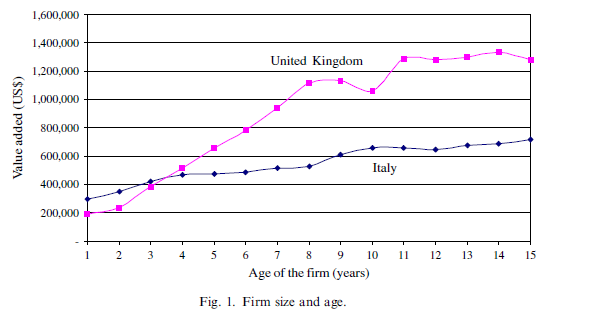
    • Work I did on entry regulation: Italian firms small. But low entry. Why? Work I did Rajan, Laeven and Klapper (2006). Italian firms need greater size to overcome fixed costs of entry but grow more slowly. Slower economic growth.
  • In India
    • License-Permit Raj: Remedy: Liberalization of the 1990s.
      • Entry of 23 new banks
    • Resources Raj: Privileged access to mines, spectrum, etc. Remedy: Auctions and transparency.
    • Inspector Raj: Remedy: Start up India, reducing red tape, entry barriers.
      • Continuing clean-up of laws gives hope, especially as states compete for simplifying regulations.
      • RBI master directions.
  • Some continuing infirmities that especially hurt new firms:
    • Infrastructure plus logistics: Weighted against the small.
      • Roads, ports, airports, power, internet marketplaces
    • Land: Weighted against the new.
      • Competition between states
    • Finance: Weighted against new and untried. Changing with technology and new institutions.
      • Small firms and small banks -- evidence: Small finance banks
      • Unique ID: Government
      • TReDS
      • Start-ups – liberalizing
  • Still uneven playing field on distress.
    • Resolving large firms very difficult: Workers as pawns.
      • Courts focus on revival rather than resolution
      • Promoter benefited
      • Hard for debt to recover money
      • Laws become more draconian to give creditors powers
    • Laws applied more quickly to small firms, sometimes with a bias to creditors.
    • Operational and speedy bankruptcy code will level the playing field.
      • Negotiating in the shadow of bankruptcy
  • Issues of excessive market power and predation.
    • Competition Commission showing its mettle
    • Need to ensure awards survive appeals
  • Why greater concern now on issues of competition and entry?
    • The jobs agenda: Job is the best form of inclusion.
    • Growing small firms as job creation

b) Protection of property rights

  • Private property protection needed to incentivize activity: I eat what I kill.
    • Broadly protected in India
    • Is it too well protected – land for infrastructure
  • Moderate and predictable taxes and estate duties – Government has delivered.
    • Administrative steps to rein in unnecessary tax demands
    • Automation of significant parts of the tax process
  • Retrospective taxation: Clear government statement. However, base erosion and profit shifting – worldwide issue that large corporations need to answer – equal requirement of transparency on corporate side: Need for global agreements.

c) Broadening access to capabilities

  • Aam aadmi attaches no value to free enterprise if he cannot participate.
  • Increasingly, enterprises of the future require employees to have decent education and health.
  • Malnutrition curses an individual for life, as does poor early education.
  • Effective delivery of social programs so that everyone has the ability to compete is absolutely necessary.
  • Capitalism starts at age 21!

d) A Basic Safety Net

  • Competition can be ruinous despite one’s best efforts.
  • Need a basic safety net, not focused on firms but on individuals:
    • Unemployment insurance, basic healthcare, old age pensions
  • Should not be prohibitively costly for government.
    • Cost entitlements and incorporate into budget liability projections
    • Charge reasonable premiums for the insurance
    • Recognize that if insurance is not explicit, it will be implicit in a democratic society.
  • Safety net can also encourage people to take risks they would shy away from otherwise.

In conclusion

  • India has come a long way in encouraging free enterprise.
  • From tiny shops to large internet start-ups, the spirit of entrepreneurship is alive.
  • Graduates increasingly want to start businesses or work for start-ups rather than go to an established consultancy or bank.
  • Doing business is more reputable, as is getting rich.
  • But a lot more work is needed to improve the environment so that everyone has a chance. Rather than looking for special dispensations, business has to push for improving the business environment for everyone. Glad business associations are increasingly doing this.
  • As Palkhivala said, India always seems to find the way, perhaps not quickly and not linearly, but in due course.

Topics

Acts Income Tax

