

Just a moment...

Top
Help
×

By creating an account you can:

Logo TaxTMI
>
Call Us / Help / Feedback

Contact Us At :

E-mail: [email protected]

Call / WhatsApp at: +91 99117 96707

For more information, Check Contact Us

FAQs :

To know Frequently Asked Questions, Check FAQs

Most Asked Video Tutorials :

For more tutorials, Check Video Tutorials

Submit Feedback/Suggestion :

Email :
Please provide your email address so we can follow up on your feedback.
Category :
Description :
Min 15 characters0/2000
Add to...
You have not created any category. Kindly create one to bookmark this item!
Create New Category
Hide
Title :
Description :
❮❮ Hide
Default View
Expand ❯❯
Close ✕
🔎 News - Adv. Search
TEXT SEARCH:

Press 'Enter' to add multiple search terms. Rules for Better Search

Search In:
Main Text + AI Text
  • Main Text
  • Main Text + AI Text
  • AI Text
Category: ?
Categorized by AI
---- All Categories ----
  • ---- All Categories ----
  • Income Tax
  • GST
  • Customs, DGFT & SEZ
  • FEMA & RBI
  • Corp. Laws, SEBI & IBC
  • PMLA, Black Money & ED
  • Budget
  • News and Press Release
  • PTI News
Month:
---- All Months ----
  • ---- All Months ----
  • January
  • February
  • March
  • April
  • May
  • June
  • July
  • August
  • September
  • October
  • November
  • December
Year:
---- All Years ----
  • ---- All Years ----
  • 2026
  • 2025
  • 2024
  • 2023
  • 2022
  • 2021
  • 2020
  • 2019
  • 2018
  • 2017
  • 2016
  • 2015
  • 2014
  • 2013
  • 2012
  • 2011
Sort By: ?
In Sort By 'Default', exact matches for text search are shown at the top, followed by the remaining results in their regular order.
RelevanceDefaultDate
    Gold set to extend record run; may hit Rs 90,000 in 2025 on global cues
    Calendar for Auction of Government of India Treasury Bills (For the Quarter ending March 2025)
    Auction for Sale (issue/re-issue) of (i) ‘6.79% GS 2034’ and (ii) ‘7.09% GS 2074’
    Gross NPAs of banks decline to 12-year low of 2.6 pc: RBI report
    Gross NPAs of banks decline to 12-yr low of 2.6 pc: RBI report
    Rupee falls 4 paise to close at 85.52 against US dollar
    Economy exhibiting resilience, GDP to grow at 6.6 pc in FY25: RBI report
    Remittix: What Is PayFi? The Newest Crypto Narrative Taking The Blockchain By Storm As Smart Money Positions Early
    Rupee falls 5 paise to 85.53 against US dollar in early trade
    Auction for Sale (issue/re-issue) of (i) ‘New GS 2031’, (ii) ‘6.92% GS 2039’ and (iii) ‘7.09% GS 2054’
    Strengthening the IBC Framework for Effective Resolution (Inaugural address delivered by Shri M. Rajeshwar Rao, Deputy Governor, Reserve Bank of India...
    DPIIT signs MoU with HDFC Bank to strengthen startup ecosystem and foster innovation
    IBC amended six times to strengthen the process of Insolvency Resolution, more than 100 amendments in regulations by IBBI for the purpose
    Auction for Sale (issue/re-issue) of (i) ‘New GS 2029’ and (ii) ‘7.34% GS 2064’
    Public Sector Banks: A Resurgent Force
    GNPA of PSBs declined from the peak of 14.58% in Mar-18 to 3.12% in Sep-24
    Prime Minister Shri Narendra Modi launches LIC’s Bima Sakhi Yojana
    Insolvency and Bankruptcy Board of India in association with INSOL India organises International Conclave 2024 on “Insolvency Resolution: Evolution ...
    Monetary Policy Statement, 2024-25 Resolution of the Monetary Policy Committee December 4 to 6, 2024
    Mitigating Climate Change Risks and Fostering a Robust Ecosystem for Sustainable Finance (Keynote address delivered by Shri M. Rajeshwar Rao, Deputy G...
❯❯
MaximizeMaximizeMaximize
0 / 200
Expand Note
Add to Folder

No Folders have been created

    +

    Are you sure you want to delete "My most important" ?

    NOTE:

    News
    Showing Results for :
    Reset Filters
    Results Found:
    Show All SummariesHide All Summaries
    December 31, 2024
    Show AI Summary
    Gold price outlook: safe haven demand and policy shifts may keep bullion elevated despite countervailing monetary and flow risks.
    Gold is expected to continue rising driven by geopolitical tensions, central bank purchases and a global move toward lower interest rates, while domestic import duty cuts have reduced local prices and spurred jewellery and investment demand; the interaction of monetary policy, currency movements, ETF flows and retail consumption will determine the pace and durability of future gains.
    December 31, 2024
    Show AI Summary
    Treasury bill issuance schedule notified with flexibility to modify auctions based on market conditions and prior notice.
    Notified schedule sets auction and issue dates for Treasury Bills across 91 day, 182 day and 364 day tenors for the quarter, with aggregate quarterly amounts. The Government, in consultation with the Reserve Bank, may modify notified amounts or timing due to market conditions or intervening events after giving due notice; auctions are governed by the standing General Notification and changes will be communicated via press releases.
    December 31, 2024
    Show AI Summary
    Government securities auction: sale and re-issue via multiple-price method with non-competitive allocation and defined bid windows.
    Auction and re-issue of two Government of India securities will be conducted by the Reserve Bank of India via price-based auctions using the multiple price method; the government may retain additional subscriptions within announced limits. Up to 5% of each notified amount is reserved for non-competitive bidders under the Scheme for Non-Competitive Bidding. Competitive and non-competitive bids must be submitted electronically on the RBI E-Kuber system within prescribed time windows. Securities will be eligible for When Issued trading under RBI guidelines.
    December 30, 2024
    Show AI Summary
    Asset quality improvement continues but rising write-offs may mask unsecured loan risks, says RBI report.
    The Financial Stability Report records a multi-year low in the aggregate GNPA ratio driven by lower slippages, higher write-offs and steady credit demand, while warning that elevated write-offs-notably in private sector banks-may mask worsening asset quality in the unsecured loan segment and dilution in underwriting standards; the report also notes a decline in the liquidity coverage ratio, improved large-borrower metrics, stronger profitability and modeled increases in GNPA under adverse scenarios.
    December 30, 2024
    Show AI Summary
    Gross non-performing assets decline, but rising write-offs and unsecured loan slippages raise concerns for bank asset quality.
    Gross non-performing assets (GNPA) of scheduled commercial banks fell to a multi year low due to lower slippages, higher write offs and steady credit demand, with fresh NPA accretion concentrated in unsecured retail loans; rising write offs-especially in private banks-may obscure weakening asset quality and diluted underwriting. Liquidity coverage declined amid higher net cash outflows, while large borrower GNPA shares fell and profitability and the banking stability indicator improved, supported by capital buffers and stronger earnings.
    December 30, 2024
    Show AI Summary
    Currency volatility: rupee pressured by importer dollar demand, foreign outflows and weak equities, with central bank support possible.
    The report explains that importer dollar demand, foreign institutional outflows and weak domestic equities caused rupee volatility and depreciation, amplified by currency futures expiries and maturing forwards; central bank intervention and reserve drawdowns have been used to smooth volatility amid pressures from higher crude prices and month-end dollar needs.
    December 30, 2024
    Show AI Summary
    Financial stability signals resilience with adequate bank capital buffers and projected GDP support for broader economic stability.
    The Financial Stability Report projects economic resilience with GDP supported by rural consumption, public investment and services exports, while identifying food-price disinflation from bumper harvests offset by inflation risks from extreme weather and geopolitical fragmentation. It highlights strengthened bank soundness-higher profitability, improved returns and lower gross non-performing assets-and reports macroprudential stress tests showing most banks maintain capital buffers above regulatory minimums; stress tests likewise validate mutual funds and clearing corporations.
    December 30, 2024
    Show AI Summary
    PayFi merges crypto and fiat payments, enabling instant cross-border transfers and driving strong token presale momentum.
    Remittix (RTX) is presented as a PayFi platform combining blockchain and traditional banking to convert cryptocurrencies to fiat and remit funds cross border via a native RTX token and Pay API. The document claims near instant settlement, single flat cross border fees, no buy/sell taxes, staking rewards based on lock up periods, completed security audits by identified firms, active presale sales, and planned listings on centralized and decentralized exchanges.
    December 30, 2024
    Show AI Summary
    Currency Depreciation pressures persist as import dollar demand, FII outflows and reserve interventions keep markets volatile.
    Rupee depreciation driven by elevated import dollar demand, foreign portfolio outflows and weak domestic equities intensified by futures expiry and maturing forwards produced sharp volatility. Reserve Bank interventions and a decline in forex reserves have partly mitigated losses, while a widening trade deficit, lower FII inflows and anticipated global volatility sustain near-term pressure on the currency.
    December 24, 2024
    Show AI Summary
    Government securities auction: multiple-price yield- and price-based auctions with non-competitive allocation and when-issued trading eligibility.
    The Government announced auctions for three central government securities using the multiple price method-one yield based and two price based-with discretionary additional subscription retention. Auctions will be conducted by the Reserve Bank of India via E Kuber, with prescribed competitive and non competitive bid windows and up to five percent of each issue reserved for the Scheme for Non Competitive Bidding Facility. Results, payment timetable, and eligibility for "When Issued" trading follow RBI guidelines.
    December 18, 2024
    Show AI Summary
    Insolvency resolution: strengthen creditor action, CoC conduct rules, RP incentives and data-driven, tech-enabled restructuring.
    The address assesses the Insolvency and Bankruptcy Code (IBC) as a key statutory resolution mechanism that has improved bank asset quality but remains constrained by delays in initiation, weak coordination in out-of-court workouts and low adoption of pre-pack processes, deficiencies in Committee of Creditors conduct, and variable capacity and incentives for Resolution Professionals; it proposes enforceable conduct norms, market-aligned RP compensation, systematic resolution data collection, technology adoption for valuation and default prediction, and closer integration between out-of-court and statutory processes to preserve enterprise value.
    December 18, 2024
    Show AI Summary
    Startup ecosystem partnership expands customised banking, mentorship and capacity-building to improve access to finance and scaling opportunities.
    An MoU creates a public-private partnership between DPIIT and HDFC Bank to provide DPIIT-supported startups with customised banking and financial products addressing working capital, credit access, and cash-flow management, while leveraging the bank's network. The collaboration also includes knowledge sharing, mentorship, and capacity-building programmes intended to strengthen the startup ecosystem, improve access to finance and investment, and support scaling and market entry for startups.
    December 17, 2024
    Show AI Summary
    Insolvency resolution of large non-bank finance companies brought under IBC framework via FSP rules, strengthening resolution process.
    Six amendments to the Insolvency and Bankruptcy Code and over one hundred regulatory changes by the Insolvency and Bankruptcy Board of India have been made to strengthen insolvency resolution, streamline implementation, and maximize asset value. Under Section 227, the Central Government, in consultation with the Reserve Bank of India, has notified that insolvency and liquidation proceedings of specified Non-Banking Finance Companies shall proceed under the Code read with the Insolvency and Bankruptcy (Insolvency and Liquidation Proceedings of Financial Service Providers and Application to Adjudicating Authority) Rules, 2019.
    December 16, 2024
    Show AI Summary
    Government securities auction using multiple price methods; non-competitive allocation and when-issued trading permitted under RBI rules.
    The Government of India announced auctions for two government securities to be conducted via the Reserve Bank of India's E-Kuber system: one through a yield-based auction using the multiple price method and the other through a price-based auction using the multiple price method, with the government retaining an option to accept additional subscriptions. Up to five percent of each issue is reserved under the Scheme for Non-Competitive Bidding. Competitive and non-competitive bids must be submitted electronically within prescribed windows; auction results and a specified settlement date will follow. The securities are eligible for When Issued trading per Reserve Bank guidelines.
    December 16, 2024
    Show AI Summary
    Decline in gross non-performing assets restores public sector bank resilience and strengthens capital adequacy and financial inclusion.
    The release reports a recovery of Public Sector Banks driven by reduced GNPA levels following the Asset Quality Review, strengthened capital buffers as reflected in higher CRAR, and institutional reforms under the EASE framework; it links these improvements to expanded branch networks, broader financial inclusion initiatives, and increased targeted credit to farmers and MSMEs, enabling reduced dependence on government recapitalisation.
    December 12, 2024
    Show AI Summary
    Banking sector asset quality improvement leads to strengthened capital, higher profitability, and expanded financial inclusion.
    Reforms since 2015 combining transparent NPA recognition, resolution and recovery, recapitalisation and systemic changes have improved PSB asset quality, strengthened capital adequacy, raised aggregate profitability and reduced reliance on government recapitalisation; parallel measures expanded financial inclusion through branch growth and targeted credit schemes and instituted uniform HR policies and enhanced welfare benefits for employees and retirees.
    December 10, 2024
    Show AI Summary
    Women insurance agent empowerment: scheme trains and pays stipends and commissions to expand female LIC agents nationwide.
    A national women focused insurance agent programme recruits women meeting basic age and educational eligibility for specialised training, provides a time limited stipend during the first three years of capacity building, and thereafter commission based earnings as LIC agents. The initiative sets recruitment targets to scale female participation, integrates with village sakhi intermediary models to enhance financial inclusion and social security outreach, and offers a pathway for trained agents to be considered for Development Officer roles within the insurer.
    December 9, 2024
    Show AI Summary
    Insolvency resolution reforms prioritize reducing delays and promoting mediation, creditor led processes, and investor facilitation in stressed assets.
    Speakers highlighted the transformative role of the Insolvency and Bankruptcy Code (IBC) in improving bank asset quality and debtor creditor behaviour, emphasising regulatory reforms to reduce delays and maximise asset value. Attention was given to mediation, creditor led resolution, group insolvency mechanisms, investor facilitation in stressed assets, and cross border enforcement issues-all aimed at strengthening resolution efficacy and market infrastructure.
    December 6, 2024
    Show AI Summary
    Monetary policy stance: neutral maintained and policy rate unchanged to prioritize durable inflation alignment while supporting growth.
    The MPC kept the policy repo rate unchanged and maintained corresponding liquidity facility rates, while continuing a neutral monetary policy stance focused on durable alignment of CPI inflation with the medium term target within the tolerance band, alongside supporting growth; the Committee highlighted near term upside risks to inflation from food and input costs, geopolitical uncertainty and market volatility, and recorded a minority vote in favour of a rate reduction.
    December 4, 2024
    Show AI Summary
    Climate-related financial risk: regulators push stronger disclosures, data infrastructure and capacity building to enable sustainable finance.
    Climate-related financial risks - both physical and transition - threaten price and financial stability by interacting with credit, market, liquidity and operational risks and can be amplified through interconnectedness and cross-border linkages. Effective regulatory response requires prudential safeguards plus enabling measures: disclosure standards, capacity building, inter-regulatory coordination, and improved data infrastructure. The Reserve Bank proposes measures including climate risk surveys, a draft disclosure framework, guidance on green deposits, and creation of a standardised data repository (RB-CRIS) to address fragmented climate data and support credible scenario analysis and sustainable finance mobilization.

    News

    Back

    All News

    Showing Results for :
    Reset Filters
      No Records Found

      News

      Back

      All News

      whatsappJoin Channel
      Showing Results for : Reset Filters

      Insolvency and Bankruptcy Board of India in association with INSOL India organises International Conclave 2024 on “Insolvency Resolution: Evolution & Global Perspective” at New Delhi

      December 9, 2024

      Contents
      Summary
      Note

      Note

      -

      Bookmark

      Print

      Print

      Deputy Governor, RBI, Shri M. Rajeshwar Rao highlights critical role of IBC in improving quality of bank assets

      Chairperson, IBBI, Shri Ravi Mital emphasises upon consideration of innovative approaches like mediation, creditor-led resolution processes, and group insolvency mechanisms

      Posted On: 08 DEC 2024 1:10PM by PIB Delhi

      The Insolvency and Bankruptcy Board of India (IBBI) in association with INSOL India organized an International Conclave focusing on “Insolvency Resolution: Evolution & Global Perspective”. The event brought together distinguished experts and practitioners from across jurisdictions to share insights and experiences in insolvency resolution.

      Mr. M. Rajeshwar Rao, Deputy Governor, Reserve Bank of India graced the occasion as Chief Guest. He highlighted the transformative journey of the Insolvency and Bankruptcy Code (IBC) since 2016, emphasizing its critical role in improving bank asset quality and facilitating substantial pre-admission settlements of underlying debts of over ₹10 lakh crore. While acknowledging the substantial progress made in cleaning up banks' balance sheets, the Deputy Governor also underscored potential areas of improvement. The address stressed the importance of collaborative efforts among stakeholders, with a focus on restructuring and revival, and suggested that detailed studies of IBC cases could provide valuable insights for future lending strategies.

      Mr. Ravi Mital, Chairperson, IBBI in his special address highlighted the versatility and transformative potential of the Code, underscoring its role in dismantling the "defaulters' paradise" through significant behavioural changes in the debtor-creditor ecosystem. He noted the remarkable settlement of over 28,000 cases before admission, while also addressing challenges such as time-sensitive nature of value preservation. Emphasizing IBBI's proactive approach, he outlined key regulatory reforms aimed at reducing delays and maximizing asset value. He also mentioned about consideration of innovative approaches like mediation, creditor-led resolution processes, and group insolvency mechanisms.
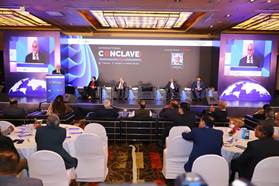
      Mr. Rajnish Kumar, Ex Chairman, State Bank of India delivered the special address. Drawing from his firsthand experience as SBI Chairman during the initial stages of the IBC, he characterized the IBC as one of the most significant economic reforms, highlighting its transformative impact on the banking ecosystem. He emphasized that the true success of IBC should not be measured solely by the recovery rate, but by its broader achievements in reshaping the debtor-creditor relationship and enhancing the overall health of the banking sector. He underscored the importance of the Committee of Creditors (CoC) pursuing the larger objective of value maximization.

      Dr. Sonali Abeyratne, Technical Director of INSOL International, also delivered the special address. In her address she outlined the organization's core functions and recent initiatives. She specifically discussed INSOL International's engagement with INSOL India and emphasized the importance of international collaboration and sharing global best practices in insolvency resolution.

      Mr. Dinkar Venkatasubramanian, President of INSOL India, delivered welcome address. In his address, he traced the evolutionary journey of the Insolvency and Bankruptcy Code (IBC) in India. He highlighted the Code's significant impact on the insolvency resolution landscape. He also outlined INSOL India's recent initiatives aimed at strengthening the insolvency ecosystem in the country.

      Mr. Rana Ashutosh Kumar Singh, Managing Director, SBI delivered a keynote address. He provided lenders' perspective on the Code, highlighting its phenomenal evolution and significant contribution. Drawing from his international experience in insolvency frameworks, Mr. Singh lauded the IBC's transformative impact on bank profits and asset quality. He emphasized the critical need for maintaining bank health as a cornerstone of achieving the vision of Viksit Bharat, and offered constructive suggestions for further improvement.

      The Conclave included three panel discussions. The first Panel Discussion was on the theme "Issues, Recent Developments & New Trends in Restructuring & Insolvency Across Jurisdictions". The session was chaired by Mr. Sumant Batra, President, Insolvency Law Academy. The eminent speakers of the session included Mr. Craig Martin, Partner, Global Co-Chair, Restructuring and Managing Partner, DLA Piper; Mr. Jose Carles, Managing Partner, Charles, Cuesta, Spain; Ms. Lauren Tang, Managing Partner, Virtus Law, Stephenson Harwood; and Mr. Debanshu Mukherjee, Co-Founder & Lead, Vidhi Centre for Legal Policy. The session was moderated by Mr. Ashwin Bishnoi, Partner, Khaitan & Co.

      The second Panel Discussion was on the theme "Judgment Enforcement, Asset Recovery and Personal Guarantees". The session was chaired by Ms. Anita Shah Akella, Joint Secretary, MCA. The distinguished speakers included Mr. Steven Kargman, Founder & President, Kargman Associates; Ms. Amelia Tan, Counsel, Carey Olsen Singapore LLP; and Mr. Wei Yang, Partner, Kirkland & Ellis, Hong Kong.

      The session was moderated by Mr. Anoop Rawat, Partner, Shardul Amarchand Mangaldas & Co.

      The third Panel Discussion focused on "Role of Institutional Creditors in Corporate Resolution Across Jurisdictions". The distinguished speakers included Mr. R. Subramaniakumar, MD & CEO, RBL Bank; Mr. Ravi Subramanian Shankar, Partner, Kirkland & Ellis, United States; Mr. Shaun Langhorne, Partner, Clifford Chance, Singapore; and Mr. Rajat Agrawal, Head of Acquisitions, Corporate & SME, ARCIL. The session was moderated by Ms. Pooja Mahajan, Managing Partner, Chandhiok & Mahajan.

      Two insightful Fire Side Chat sessions were conducted during the conclave. The first session focused on the role of investors in the stressed assets ecosystem, featuring Mr. Arijit Basu, Retd. Managing Director, State Bank of India; Mr. Amit Agarwal, President & Head – Private Credit, Edelweiss Alternatives; and Mr. Shantanu Nalavadi, Managing Director, India Resurgence Asset Management Business Pvt. Ltd. Mr. Basu in his address, noted the positive impact of IBC on debtor-creditor relationship. The session included deliberation on issues related to facilitation of investment, particularly foreign investment and private credit, in stressed asset market.

      The second Fire Side Chat session featured representatives from Resolution Applicants including Mr. Hemant Kumar, Executive Director -- Corporate Finance, Dalmia Bharat Group and Mr. Shailesh Apte, President, Group Head-M&A and Growth Strategy, Welspun World, who shared the perspectives of resolution applicants on the issues related to the Code. The session was moderated by Ms. Smiti Tewari, Partner, Khaitan Legal Associates. They discussed the issues related to resolution applicants and importance of development of stressed asset market to achieve IBC’s objective of value maximisation.

      Large number of stakeholders of the IBC ecosystem, including insolvency professionals, legal firms, consulting firms, financial creditors, service providers, professionals, regulators, academia and government officers joined the Conclave both in physical as well as online mode.

      Mr. Jayanti Prasad, Whole Time Member, IBBI, felicitated the esteemed guests of the inaugural session. Mr. Kulwant Singh, Executive Director, IBBI concluded the conclave with a vote of thanks to all participants and stakeholder.

      ****

      NB/AD

      Topics

      ActsIncome Tax