

Loading...

⚠ ✕
❮ Top
☎ Help
☰
×

By creating an account you can:

Logo TaxTMI
Call Us / Help / Feedback✕

Contact Us At :

✉ E-mail: [email protected]

✆ To Call / Whatsapp, Check Contact Us

FAQs :

To know Frequently Asked Questions, Check FAQs

Most Asked Video Tutorials :

For more tutorials, Check Video Tutorials

Submit Feedback/Suggestion :

Email :
Please provide your email address so we can follow up on your feedback.
Category :
Description :
Min 15 characters 0/2000
Make Most of Text Search ✕
  1. Checkout this video tutorial: How to search effectively on TaxTMI.
  2. Put words in double quotes for exact word search, eg: "income tax"
  3. Avoid noise words such as : 'and, of, the, a'
  4. Sort by Relevance to get the most relevant document.
  5. Press Enter to add multiple terms/multiple phrases, and then click on Search to Search.
  6. Text Search
  7. The system will try to fetch results that contains ALL your words.
  8. Once you add keywords, you'll see a new 'Search In' filter that makes your results even more precise.
  9. Text Search
╳
Add to...
You have not created any category. Kindly create one to bookmark this item!
✕
Create New Category
Hide
Title :
Description :
❮❮ Hide
❮ Default View
Expand ❯❯
Close ✕
🔎 Filters / Advanced Search ❯
TEXT

Press 'Enter' to add multiple search terms. Rules for Better Search

Search In
Main Text + AI Text ❯
  • Main Text
  • Main Text + AI Text
  • AI Text
Category: ?
Categorized by AI
---- All Categories ---- ❯
  • ---- All Categories ----
  • Income Tax
  • GST
  • Customs, DGFT & SEZ
  • FEMA & RBI
  • Corp. Laws, SEBI & IBC
  • PMLA, Black Money & ED
  • Budget
  • News and Press Release
  • PTI News
Month:
---- All Months ---- ❯
  • ---- All Months ----
  • January
  • February
  • March
  • April
  • May
  • June
  • July
  • August
  • September
  • October
  • November
  • December
Year:
---- All Years ---- ❯
  • ---- All Years ----
  • 2026
  • 2025
  • 2024
  • 2023
  • 2022
  • 2021
  • 2020
  • 2019
  • 2018
  • 2017
  • 2016
  • 2015
  • 2014
  • 2013
  • 2012
  • 2011
Sort By: ?
In Sort By 'Default', exact matches for text search are shown at the top, followed by the remaining results in their regular order.
Relevance Default Date
☰   Show Results ❯
    MCA only performs administrative role in the conduct of appointment process for Judicial and Technical Members of the NCLT
    Commerce and Industry Shri Piyush Goyal Chairs Chintan Shivir on Digitisation of Trade
    19th India–BLEU Joint Economic Commission Session Held in Luxembourg to Strengthen Trade and Economic Cooperation
    The Government of India Constitutes the ‘High Level Committee on Banking for Viksit Bharat’
    UPI Acceptance Enabled for Online Bookings at At the Top, Burj Khalifa and Resorts World Sentosa
    Monthly review of accounts of Government of India upto September 2026 (FY 2026-27)
    DRI deals major blow to Myanmar-linked drug smuggling network; seizes huge consignment of 50 kg methamphetamine tablets and crystal meth in North-East...
    DRI busts a big clandestine synthetic drug manufacturing laboratory in Uttar Pradesh; seizes approx. 1,100 kg drugs and precursor chemicals; two arres...
    Union Minister of Commerce and Industry, Shri Piyush Goyal Calls for Greater FTA Utilisation by Telangana
    Clarification on the Process of Strategic Restructuring of the IDBI Bank Ltd.
    Advisory – Scheduled Maintenance of e-Invoice Services (31 October – 1 November 2026)
    Commerce and Industry Minister Shri Piyush Goyal Calls for Quality, Scale and Global Market Access to Drive India’s Industrial Transformation
    Economic Resilience, Thinner Buffers, Emerging Risks Globally: Where Does India Stand?[1] - Address by Dr. Poonam Gupta, Deputy Governor, Reserve Bank...
    Union Commerce and Industry Minister Shri Piyush Goyal’s Netherlands Visit Strengthens India-Netherlands Trade and Investment Partnership
    DPIIT Launches 6th Edition of National Startup Awards to Recognise Innovation and Entrepreneurship
    Commerce and Industry Minister Shri Piyush Goyal Meets H.S.H. Hereditary Prince Alois of Liechtenstein
    India and Mexico launch Negotiations for Preferential Trade Agreement, Sign Terms of Reference
    NLMC Issues Corrigenda-6 and 7 for RINL Land e-Auction at Visakhapatnam; Revises Auction Schedule
    Cabinet approves Dearness Allowance to Central Government employees and Dearness Relief to Pensioners
    DRI seizes around 55,000 e-cigarettes worth more than Rs. 13.5 crore in two operations at Syama Prasad Mookerjee Port in Kolkata
❮
❯
❯❯
Maximize Maximize Maximize
0 / 200
Expand Note
Add to Folder

No Folders have been created

+

Are you sure you want to delete "My most important" ?

NOTE:

News
Showing Results for :
Reset Filters
Results Found:
Show All Summaries Hide All Summaries
October 31, 2026
Show AI Summary
Administrative role in Tribunal Member appointments remains distinct from the Tribunal's independent authority over staff appointment and management.
The Ministry of Corporate Affairs performs an administrative role in conducting appointments of Judicial and Technical Members of the National Company Law Tribunal. The Tribunal independently appoints and manages its officers and staff, including Deputy Registrars, Court Officers, Stenographers, Office Assistants and Multi-Tasking Staff. Delegated personnel responsibility supports the Tribunal's effective and independent functioning.
October 31, 2026
Show AI Summary
Digital procurement infrastructure supports kirana ordering and supply-chain efficiency while preserving distributor relationships and expanding digital participation.
ONDC DigiDukaan enables kirana retailers to operate as digital buyers through a single interface for discovering and ordering products across multiple brands, distributors and wholesalers, with visibility of pricing, trade schemes and availability. It is intended to reinforce existing distributor relationships while creating a shared digital foundation for logistics, formal credit and related services. Priority areas include a common retailer identity, shared logistics and micro-warehousing, transaction-linked financing, simplified technology integration and commercial incentive alignment for sustained digital ordering.
October 31, 2026
Show AI Summary
Trade facilitation and investment partnerships support market access and sectoral collaboration across logistics, clean energy, digital technologies, and healthcare.
Trade and investment cooperation focused on enhancing trade and investment flows, addressing market-related concerns, facilitating market access, and expanding business engagement and investment partnerships. Priority sectors included logistics, renewable energy and clean technology, financial services and FinTech, digital transformation and ICT, healthcare and life sciences, Ayurveda and traditional medicine, and agro-food processing.
October 31, 2026
Show AI Summary
Banking-sector reform establishes a high-level committee to develop reforms for globally competitive, inclusive and resilient banking.
High Level Committee on Banking for Viksit Bharat is constituted to review India's banking sector and recommend structural, institutional, regulatory and legislative reforms supporting globally competitive, financially inclusive and resilient banking. Its remit includes prudential norms, banking regulation, capital requirements, cost of capital, AI and digital innovation, cyber-risk safeguards, workforce capacity, Priority Sector Lending and the Lead Bank Scheme. The Committee will also consider reforms affecting Regional Rural Banks, Cooperative Banks, Development Financial Institutions and Non-Banking Financial Companies.
October 31, 2026
Show AI Summary
Cross-border UPI acceptance enables Indian travellers to make online bookings at international attractions using familiar payment applications.
Cross-border UPI acceptance enables Indian travellers to make online experience bookings at At the Top, Burj Khalifa and Resorts World Sentosa using preferred UPI applications. The UAE integration involves NPCI International Payments Limited, NEOPAY and Emaar Entertainment, while the Singapore arrangement with FOMO Pay extends acceptance to Resorts World Sentosa attractions. These e-commerce facilities build on QR-based merchant payment arrangements and support seamless cross-border digital transactions for advance travel planning.
October 31, 2026
Show AI Summary
Monthly fiscal account reporting records consolidated receipts, expenditure, tax devolution, interest payments, and major subsidies through September.
Consolidated monthly accounts through September 2026 record total receipts of Rs.18,35,422 crore, comprising net tax revenue, non-tax revenue and non-debt capital receipts. Tax devolution transfers to State Governments total Rs.6,99,409 crore. Total expenditure stands at Rs.25,49,835 crore, with Rs.18,95,288 crore on revenue account and Rs.6,54,547 crore on capital account. Revenue expenditure includes interest payments of Rs.6,46,010 crore and major subsidies of Rs.2,22,905 crore.
October 31, 2026
Show AI Summary
Cross-border narcotics trafficking: intelligence-led operations seized methamphetamine concealed in furniture and tea packets, with arrests and vehicle seizures.
Intelligence-based interceptions resulted in the seizure of methamphetamine tablets concealed in an office table within a vehicle and crystal methamphetamine hidden above a truck cabin in tea packets carrying foreign markings. Four persons were arrested under the Narcotic Drugs and Psychotropic Substances Act, 1985, and three vehicles were seized. Preliminary investigation linked the drugs to cross-border smuggling from Myanmar.
October 31, 2026
Show AI Summary
Clandestine synthetic drug manufacturing: enforcement uncovered an illicit laboratory, seized drugs and precursors, and made arrests under narcotics law.
An intelligence-led operation uncovered a functional clandestine synthetic-drug manufacturing laboratory and seized semi-prepared drugs, finished methaqualone, precursor chemicals, and manufacturing equipment. Follow-up residential searches recovered additional chemicals and a manufacturing machine. Approximately 1,100 kg of drugs and precursor chemicals were seized in total, and two persons associated with the facility were arrested under the Narcotic Drugs and Psychotropic Substances Act, 1985.
October 30, 2026
Show AI Summary
Free trade agreement utilisation can expand preferential market access through district help desks, product mapping and exporter support.
Free trade agreement utilisation is proposed through identification of leading export products, mapping of preferential markets and district-level FTA help desks for MSMEs, farmers and startups. GI-tagged products are to receive traceability, packaging and branding support for global exports. Pharmaceutical development is to focus on domestic key starting materials and active pharmaceutical ingredients, innovation, biosimilars and biotechnology. Ease-of-doing-business reforms include decriminalisation of minor offences, reduced compliance burdens, simplified procedures and time-bound single-window clearances.
October 30, 2026
Show AI Summary
Strategic disinvestment procedure permits delegated procedural deviations and contemporaneous independent valuation in determining bid reasonableness.
Strategic restructuring of IDBI Bank is governed by a flexible bidding framework in which DIPAM's internal practices operate as indicative guidelines rather than rigid legal rules. No a-priori bidding benchmark applies: bidders undertake confidential valuation, while independently appointed agencies prepare contemporaneous fair valuations as comparators for assessing bid reasonableness. Where the highest financial bid is below the reserve price, the further course is left to the Government of India and QIPs cannot subsequently challenge that decision.
October 29, 2026
Show AI Summary
e-Invoice service maintenance temporarily suspends invoice data retrieval, GSTR-1 auto-population, and JSON downloads during the upgrade period.
Scheduled infrastructure maintenance will temporarily affect GST e-Invoice data retrieval and processing from IRPs, automatic population of e-Invoice data in GSTR-1, and e-Invoice JSON downloads through the portal and application programming interfaces. Taxpayers and other stakeholders should plan related activities around the maintenance period, with services expected to resume upon completion.
October 29, 2026
Show AI Summary
Comprehensive trade agreements advance market access, technology partnerships and sensitive-sector protection within an industrial transformation strategy.
Comprehensive trade agreements are treated as instruments of global economic integration rather than tariff-reduction arrangements alone. Their scope includes preferential market access, protection of sensitive sectors, access to high-technology products, services, investment, skill development, technology partnerships and climate cooperation. Agreements are to be shaped through stakeholder consultations and preserve defensive interests while reflecting comparative advantage, competitiveness and complementary trade relationships. Innovation requires collaboration between public institutions, private enterprise and academia, with government functioning as a facilitator and catalyst for private-sector-led innovation.
October 29, 2026
Show AI Summary
Macroeconomic resilience depends on credible policy frameworks, fiscal prudence, inflation targeting, and financial-sector safeguards against emerging global shocks.
Macroeconomic resilience rests on credible monetary, fiscal and financial-policy frameworks, financial cushions, adaptable trade and energy arrangements, and AI-related investment, but remains vulnerable to conflict, commodity and food shocks, AI asset repricing, public debt and higher borrowing costs. India's position is attributed to a large diversified domestic economy, flexible inflation targeting, fiscal consolidation, GST, stronger banking regulation and timely shock management. Monetary policy must contain second-round inflation effects, while fiscal prudence, capital and liquidity buffers, stress testing and macroprudential safeguards support financial stability.
October 28, 2026
Show AI Summary
Bilateral trade and investment cooperation advances through manufacturing, clean energy, semiconductor and supply-chain partnerships supporting strategic economic ties.
India-Netherlands economic cooperation focused on expanding bilateral trade, investment and commercial partnerships through ministerial engagements, business discussions and sector-specific consultations. Priority areas included resilient supply chains, manufacturing, research and development, infrastructure, renewable energy, logistics, digital technologies, semiconductors, green hydrogen, clean energy, critical minerals and advanced manufacturing. The India-EU Free Trade Agreement was identified as a prospective framework for additional trade and investment opportunities. Dutch enterprises were invited to invest, co-manufacture and co-innovate in India.
October 28, 2026
Show AI Summary
Startup innovation awards expand sectoral and student recognition while providing prizes, mentorship, investment engagement, market access and visibility.
National Startup Awards 6.0 establishes a national recognition framework for startups demonstrating innovation, scalability, sustainability and socio-economic impact. Recognition is available across 20 sectoral categories and three special categories, including the Student Innovator / Aspiring Entrepreneur Award. Eligible award recipients may receive monetary prizes subject to applicable guidelines, alongside mentorship, investor engagement, market access, industry partnerships and ecosystem visibility. Applications are open through the Startup India portal.
October 28, 2026
Show AI Summary
India-EFTA investment framework promotes long-term investment, manufacturing partnerships, technology collaboration, and employment through deeper commercial engagement.
The India-EFTA Trade and Economic Partnership Agreement provides a framework for increased foreign direct investment, employment generation and deeper commercial engagement. Engagement with Liechtenstein focuses on manufacturing partnerships, technology collaboration, research and development, supplier integration and global value chains. Priority cooperation areas include precision engineering, advanced manufacturing, industrial technologies and innovation, supported by simplified regulatory processes, digital governance and ease of doing business.
October 28, 2026
Show AI Summary
Preferential trade agreement negotiations commence under terms covering market access, origin rules, customs procedures, and trade remedies.
India and Mexico have launched negotiations for a mutually beneficial and balanced Preferential Trade Agreement through signed Terms of Reference establishing the negotiation framework, scope, modalities and roadmap. Negotiations encompass market access for goods, rules of origin, customs procedures and trade facilitation, dispute settlement, sanitary and phytosanitary measures, technical barriers to trade, and trade remedies.
October 28, 2026
Show AI Summary
Land e-auction corrigenda withdraw judicially restricted plots, extend registration and deposit deadlines, and retain original conditions unless expressly modified.
Corrigendum-6 withdraws 35 identified RINL land plots from the e-auction process because a court order prohibits their sale. Corrigendum-7 extends registration and Earnest Money Deposit submission until 1 November 2026, 8:00 PM, and schedules the e-auction of remaining plots for 3 November 2026. Property inspection remains available by prior appointment, while all other Request for Proposal terms and prior corrigenda remain unchanged unless specifically modified.
October 28, 2026
Show AI Summary
Dearness allowance and pension relief are increased under the accepted pay commission formula to address price rise.
Additional instalments of Dearness Allowance for Central Government employees and Dearness Relief for pensioners take effect from 1 July 2026. The prevailing rate increases by 3 percentage points from 60% of basic pay or pension to compensate for price rise, using the accepted formula based on Seventh Central Pay Commission recommendations. The measure has an annual fiscal impact and benefits employees and pensioners.
October 28, 2026
Show AI Summary
Electronic cigarette prohibition applies to concealed e-cigarettes intercepted in misdeclared Nepal-bound transshipment cargo after specific intelligence.
Two Nepal-bound transshipment containers were intercepted following intelligence of e-cigarette smuggling. Declared as water glass and ceramic mugs, the consignments contained e-cigarettes concealed within cover cargo, including IGET, VTV, VOKO, Bang and Ejoy products. Around 55,000 e-cigarettes valued at Rs. 13.50 crore, together with the cover cargo, were seized under relevant Customs Act provisions.

News

Back

All News

Showing Results for :
Reset Filters
No Records Found

News

Back

All News

Conference on “Financing India’s Journey towards Viksit Bharat” concludes in New Delhi

September 21, 2026

Contents
Summary
Note

Note

-

Bookmark

Print

Print

Day One focused on macroeconomic priorities, savings, investment and fiscal resilience; Day Two focused on agricultural transformation, energy transition and included short sessions on role of technology, banking and aspects of measuring GSDP

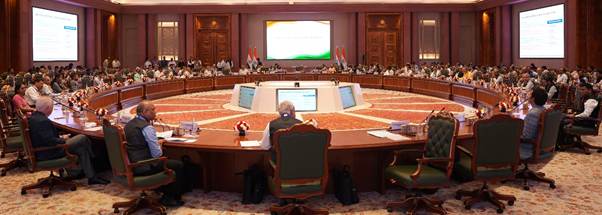
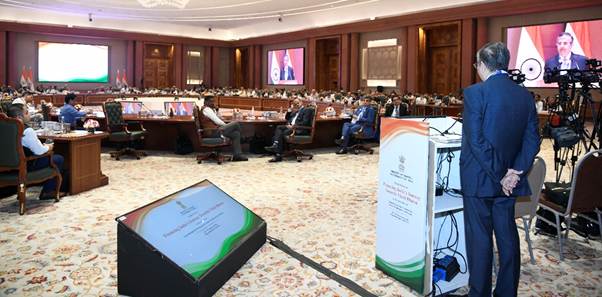
The Conference on “Financing India’s Journey towards Viksit Bharat” with Finance Ministers and Finance Secretaries of States and Union Territories with Legislature, experts from academia, industry, banking and policymaking, concluded in New Delhi, today. The conference witnessed series of deliberations across two days on India’s financing requirements and pathways for sustained, inclusive and broad-based growth.
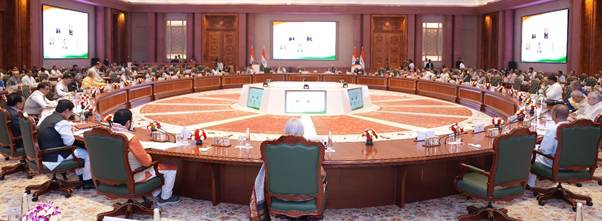
The two-day conference was attended by the Union Minister for Finance & Corporate Affairs and had the Chief Ministers of Assam, Delhi, Goa, Haryana, Jammu & Kashmir, Keralam, Manipur, Meghalaya, Nagaland; Deputy Chief Ministers of Arunachal Pradesh, Bihar, and Odisha; and Finance Ministers of Andhra Pradesh, Assam, Gujarat, Himachal Pradesh, Jharkhand, Maharashtra, Tamil Nadu, Tripura, UP, Uttarakhand, and West Bengal, besides senior officers of States and Ministry of Finance in attendance.
DAY ONE

On day one, Smt. Anuradha Thakur, Secretary, Department of Economic Affairs (DEA) Ministry of Finance, welcomed the participants and set out the context in the inaugural session.

Smt. Thakur highlighted that this first-of-its-kind Conference adopts a longer-term and broader canvas, bringing together issues related to public & private finance, assembling experts from academia, industry, banking and policymaking States shared their perspectives and underscored that the journey towards Viksit Bharat rests on deep complementarities and multi-tiered partnership between the Union & the States. She mentioned that macroeconomic stability and fiscal prudence have received global recognition, including four sovereign rating upgrades by major international rating agencies over the past 16–17 months, with JCR recently upgrading India by one notch from BBB+ to A-.
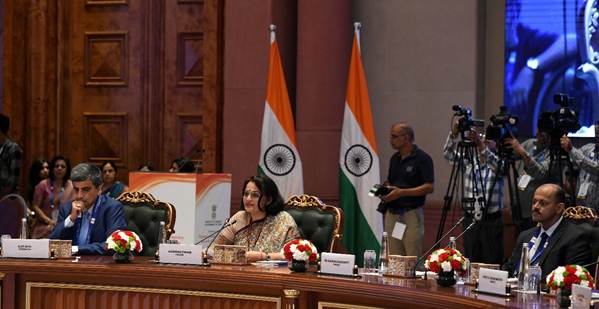
The DEA Secretary emphasised that the scale of transformation to attain Viksit Bharat could not be met by Government Budgets alone. Private-sector financing, innovative financing mechanisms and stronger cooperation across levels of government will play a critical role.

She informed the gathering that working groups, with participation from States, will take forward the thematic deliberations and identify sectoral financing requirements and actionable recommendations.

Shri Sudhir Shrivastava, former Additional Chief Secretary, Government of Maharashtra, made a presentation on States’ Financing Perspective in the inaugural session.
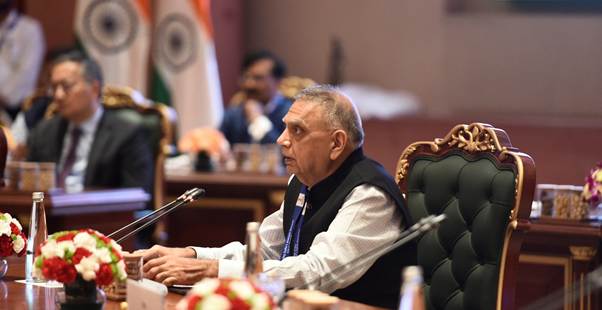
In his Keynote Address, Shri N.K. Singh, President and Life Trustee, Institute of Economic Growth, and Chairman, 15th Finance Commission (XVFC), highlighted India’s strong macroeconomic foundation, and noted the 7.8 per cent GDP growth in Q1 of FY 2026–27 and the recent upgrade by Japan Credit Rating Agency from BBB+ to A-.
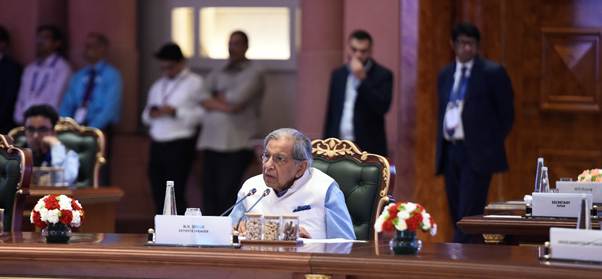
He emphasised that India’s gross domestic savings rate, currently around 34 per cent of GDP, needs to rise towards 38–40 per cent to sustain the 7–8 per cent growth required for Viksit Bharat. On fiscal sustainability, Shri Singh advocated State-wise debt sustainability assessments, and stressed greater fiscal transparency, including accounting for off-budget borrowings, guarantees, arrears and borrowings through State-owned entities. On revenue mobilisation, he observed that the larger opportunity lies in leveraging information rather than merely increasing tax rates. AI and machine learning, combined with existing tax databases, can help identify compliance gaps, broaden the effective tax base and improve revenue mobilisation. Shri Singh stressed the need to move from public finance to private capital, with public resources playing a catalytic role. He also emphasised predictable rules, enforceable contracts, faster dispute resolution and stronger investment treaties to facilitate domestic and foreign investment. On factor-market reforms, Shri Singh identified capital, labour and land as critical areas, touched upon our relatively higher cost of capital, emphasised labour productivity through skilling, apprenticeships and stronger university-industry linkages, and urged States to improve land-use efficiency, streamline approvals and strengthen digital land records.

THEMATIC SESSIONS

The first thematic session, “Macroeconomic Overview,” was moderated by Shri Ajay Seth, Chairman, Insurance Regulatory and Development Authority of India. Dr. Sajjid Z. Chinoy, Managing Director and Chief India Economist, J.P. Morgan, and Part-time Member, Prime Minister’s Economic Advisory Council (PM-EAC), delivered the keynote address in this thematic session.

The panel deliberated on three themes: “Enhancing Savings and Investment Rates for Viksit Bharat 2047,” presented by Dr. Samiran Chakraborty, Chief Economist, India, Citibank; “Fiscal Golden Rule at the State Level, Facilitated by Innovative Finance,” addressed by Prof. Ashima Goyal, Professor, Indira Gandhi Institute of Development Research, Mumbai; and “Strengthening Public Finances to Improve Fiscal Resilience and Mobilising Resources,” discussed by Prof. N. R. Bhanumurthy, Director, Madras School of Economics.

A special session featured Shri Uday Kotak, Founder and Non-Executive Director, Kotak Mahindra Bank.
DAY TWO

The second day commenced with as session on “Financing Agriculture Sector Transformation,” moderated by Dr. Devesh Chaturvedi, former Secretary, Department of Agriculture. The keynote address was delivered by Dr. Harsh Kumar Bhanwala, Public Interest Director and Chairman of MCX.

The panel examined “Market Access and Reliable Agricultural Financing,” with Shri Anil Kumar SG, Founder and Non-Executive Chairman, Samunnati; “Issues in Post-Harvest Marketing, Logistic Support, Infrastructure and Food Processing,” with Dr. Shoumitro Chatterjee, Assistant Professor, Johns Hopkins University, USA; and “Experience of IFAD on Financial Instruments that Could Be Scaled Up or Need to Be Explored in the Context of Agriculture Transformation,” with Dr. Marc De Sousa Shield, Country Director and Head, South Asia Hub, International Fund for Agricultural Development (IFAD).

The third thematic session, “Financing the Energy Transition,” was moderated by Shri Alok Kumar, former Secretary, Ministry of Power. Shri Tarun Kapoor, Advisor to the Prime Minister, delivered the keynote address for this session.

The panelists made presentations on “Financing Renewable Energy and Transmission Assets,” with Mr. Harsh Shah, Managing Director, IndiGrid; “Financing of Battery Energy Storage Systems (BESS), Pumped Storage Projects (PSP) and Other Energy Storage Solutions,” with Dr. Praveer Sinha, Managing Director and Chief Executive Officer, Tata Power; and “Financing Carbon Capture, Utilization and Storage (CCUS) and Designing a Carbon Credits Framework to Ensure Primacy for the Country’s NDC Targets,” with Mr. Rahul Kitchlu, Practice Manager and Head of Energy and Mining Sectors, South Asia Region, The World Bank.

All the sessions included experience-sharing by State Governments, providing an opportunity to exchange perspectives on financing priorities and challenges.

SPECIAL SESSIONS

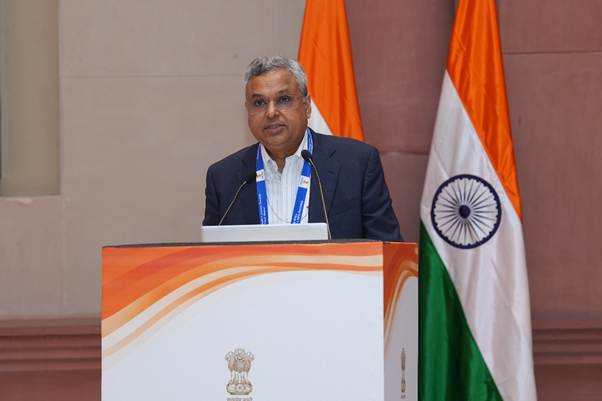
Two special-session presentations addressed emerging dimensions of India’s development journey. Dr. Saurabh Garg, Secretary, Ministry of Statistics and Programme Implementation (MoSPI), presented “Measuring India’s Viksit Bharat Journey: A Gross State Domestic Product (GSDP) Perspective”; and Shri S. Krishnan, Secretary, Ministry of Electronics and Information Technology (MeitY), spoke on “Role of New-Age Technology in India’s Journey Towards Viksit Bharat.”
CONCLUDING SESSION

In his remarks during the concluding session, Dr. V. Anantha Nageswaran, Chief Economic Adviser, Government of India, observed that the Conference had provided a valuable opportunity for the Union and States to move beyond discussions on resource generation and sharing, and deliberate collectively on financing India’s development over the next two decades. He noted that the quality of discussions and the openness with which States shared their perspectives had strongly established the case for holding the Conference annually. He emphasised that while India’s savings base was substantial and would need to grow further, significantly greater participation by private capital would be essential to mobilise the investment required for Viksit Bharat.
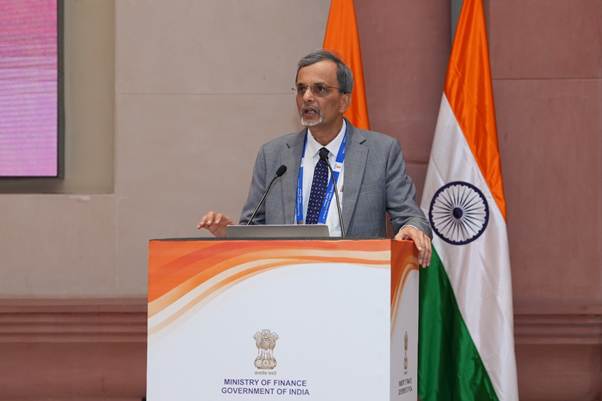
He outlined three priorities for States: creating an enabling environment for private investment through the availability of land, power and logistics, supported by effective single-window clearances; improving the quality of investment through robust project-preparation pipelines and credible project reports to facilitate access to domestic and multilateral finance, alongside directing credit towards underserved districts with growth potential; and strengthening States’ own capital expenditure despite fiscal constraints. In this context, he referred to Shri Sudhir Shrivastava’s proposal to raise capital outlay from approximately 2.4 per cent to 3 per cent of GSDP by 2031-32.

Emphasising that “Viksit Bharat depends on Viksit Rajya,” Dr. Nageswaran called for the practices shared by States, ongoing deregulation efforts and expert recommendations to be taken forward and translated into partnerships with clear responsibilities and timelines. He concluded by underscoring the dual imperative before India: sustaining the long-term development journey towards 2047 while accelerating resource mobilisation over the next five years, when global financing opportunities remain available.

Shri Challa Sreenivasulu Setty, Chairman, State Bank of India, addressed the topic of “Sources of Finance from Banking Sector”, in the concluding session of the two-day conference.

Topics

Acts Income Tax