Transfer pricing and tax deductions upheld on established principles, while employee contributions and warranty provisions returned for fresh examinat...
Captive transfer pricing relies on industrial consumer tariffs, while genuine quotations can benchmark effluent treatment transfers under the Other Me...
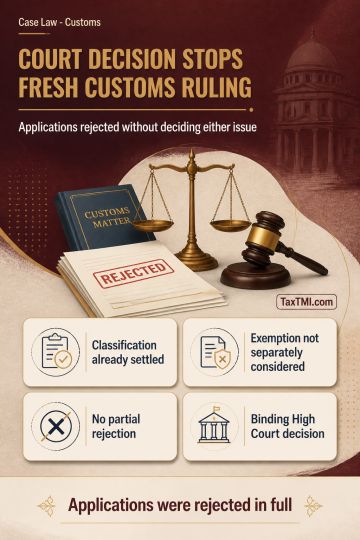
Specific tariff classification for ophthalmic instruments and extended limitation principles determine the treatment of duty demands, confiscation, an...
Integrated golf function determines classification, placing launch monitors and simulators under other golf equipment rather than measuring instrument...
Public servant status under anti-corruption law extends to recognised stock exchange leadership; constitutional and sanction challenges do not succeed...
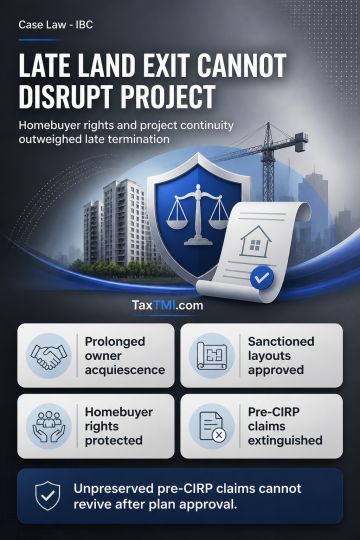
Acquiescence, homebuyer protection and clean-slate resolution principles prevent landowners from disrupting an integrated project through late termina...
Sections 73 and 74 of the CGST Act do not bar a common or consolidated show cause notice for more than one tax period or financial year. The Court held that the references to "any period" and the limitation provisions do not confine notice issuance to a single financial year, while each component of a consolidated notice must still independently satisfy the applicable limitation test. It also rejected the objection based on pecuniary jurisdiction of the proper officer. Where Orders-in-Original were challenged, the Court restored the statutory position and granted time to file appeals, with limitation objections not to be raised if appeals were filed within the period allowed.
Sections 73 and 74 of the CGST Act do not bar a common or consolidated show cause notice for more than one tax period or financial year. The Court held that the references to "any period" and the limitation provisions do not confine notice issuance to a single financial year, while each component of a consolidated notice must still independently satisfy the applicable limitation test. It also rejected the objection based on pecuniary jurisdiction of the proper officer. Where Orders-in-Original were challenged, the Court restored the statutory position and granted time to file appeals, with limitation objections not to be raised if appeals were filed within the period allowed.
Note: It is a system-generated summary and is for quick reference only.
 TaxTMI
  TaxTMI
 of 4811
















 Join Channel


