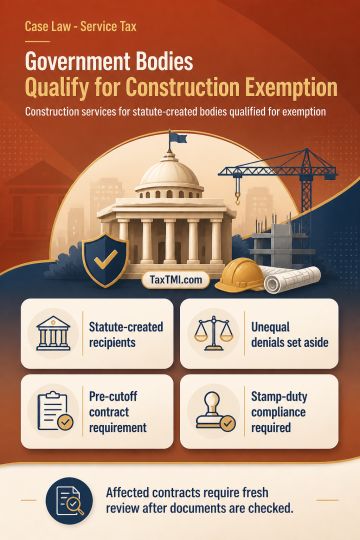
Governmental authority status supports construction-service exemption, while pre-cutoff contract and stamp-duty compliance requires verification on re...
Automated Free Sale and Commerce Certificates enable paperless processing while retaining risk-based manual verification for selected exporter applica...
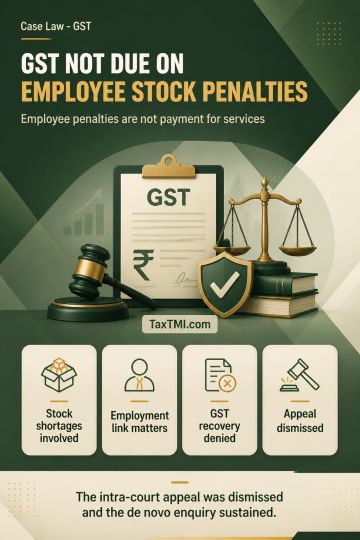
Employee stock-shortage penalties do not constitute consideration for services, preventing GST collection under Schedule II in employment relationship...
Sanction for prosecution of a public servant must be granted by the authority competent to remove the officer; a sanction accorded by a subordinate authority is a jurisdictional defect, rendering the sanction void ab initio and necessitating discharge, which was accordingly upheld and proceedings terminated. The statutory requirement in Section 19(1)(c) of the PC Act is anchored in the constitutional safeguard of Article 311(1), and departmental circulars cannot cure the defect; the curative principle is inapplicable where a superior legal impediment exists (withdrawal of general consent), so no fresh sanction could sustain the prosecution.
Sanction for prosecution of a public servant must be granted by the authority competent to remove the officer; a sanction accorded by a subordinate authority is a jurisdictional defect, rendering the sanction void ab initio and necessitating discharge, which was accordingly upheld and proceedings terminated. The statutory requirement in Section 19(1)(c) of the PC Act is anchored in the constitutional safeguard of Article 311(1), and departmental circulars cannot cure the defect; the curative principle is inapplicable where a superior legal impediment exists (withdrawal of general consent), so no fresh sanction could sustain the prosecution.
Note: It is a system-generated summary and is for quick reference only.
 TaxTMI
  TaxTMI
 of 4827








 Join Channel


