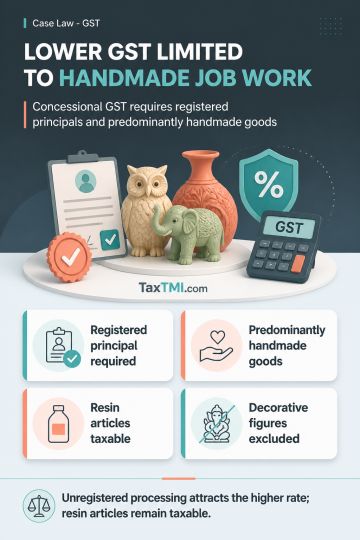
Handicraft job work receives concessional GST only for registered principals and predominantly handmade goods; commercial resin articles remain taxabl...
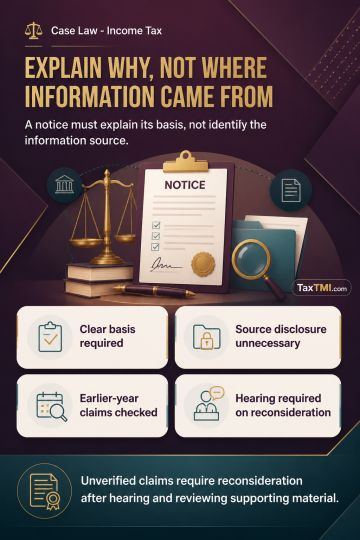
Reassessment disclosure requirements permit stated reasons without revealing information sources, but prior-taxation claims require full examination b...
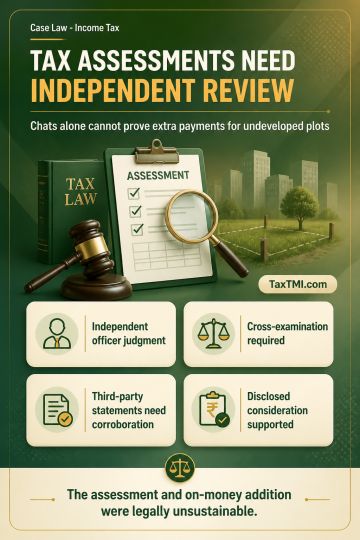
Independent assessment discretion and corroborated electronic evidence determine validity of on-money additions and undisclosed-consideration assessme...
Sanction for prosecution of a public servant must be granted by the authority competent to remove the officer; a sanction accorded by a subordinate authority is a jurisdictional defect, rendering the sanction void ab initio and necessitating discharge, which was accordingly upheld and proceedings terminated. The statutory requirement in Section 19(1)(c) of the PC Act is anchored in the constitutional safeguard of Article 311(1), and departmental circulars cannot cure the defect; the curative principle is inapplicable where a superior legal impediment exists (withdrawal of general consent), so no fresh sanction could sustain the prosecution.
Sanction for prosecution of a public servant must be granted by the authority competent to remove the officer; a sanction accorded by a subordinate authority is a jurisdictional defect, rendering the sanction void ab initio and necessitating discharge, which was accordingly upheld and proceedings terminated. The statutory requirement in Section 19(1)(c) of the PC Act is anchored in the constitutional safeguard of Article 311(1), and departmental circulars cannot cure the defect; the curative principle is inapplicable where a superior legal impediment exists (withdrawal of general consent), so no fresh sanction could sustain the prosecution.
Note: It is a system-generated summary and is for quick reference only.
 TaxTMI
  TaxTMI
 of 4828












 Join Channel


