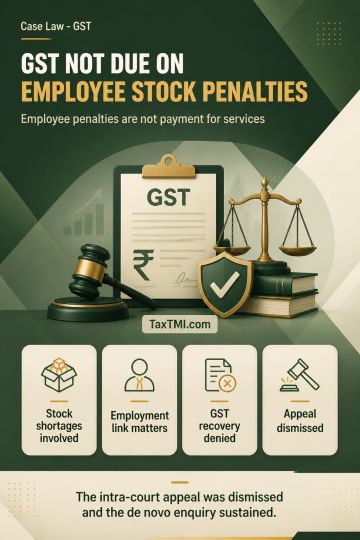
Employee stock-shortage penalties do not constitute consideration for services, preventing GST collection under Schedule II in employment relationship...
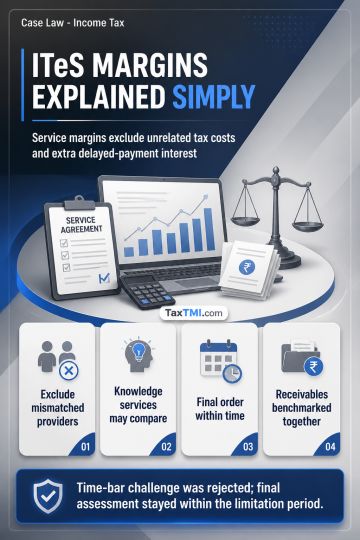
Transfer-pricing treatment of ITeS margins excludes pass-through tax recoveries and separate delayed-receivables interest after working-capital adjust...
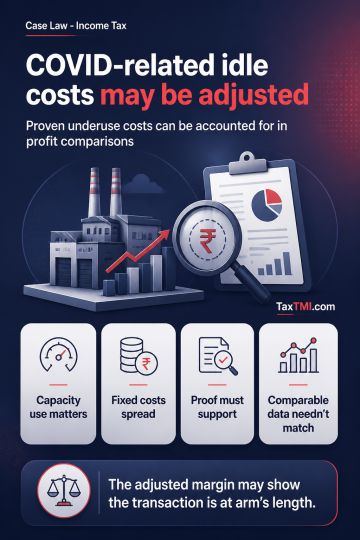
Capacity-utilisation adjustments under TNMM can neutralise substantiated COVID-related idle costs where underutilisation materially affects profitabil...
Page of 4830
Press 'Enter' after typing page number.
181 to 200 of 96587 Results
❮
❯
❯❯
0 / 200
Expand Note
Add to Folder
No Folders have been created
+
Are you sure you want to delete "My most important" ?
Notification introduces the Insolvency and Bankruptcy Board of India (Insolvency Professionals) (Second Amendment) Regulations, 2025, effective upon publication in the Official Gazette. It inserts Regulation 7B into the 2016 Regulations, limiting an individual insolvency professional (not an insolvency professional entity) to a maximum of ten assignments at any time across corporate insolvency resolution and liquidation processes, with no more than three assignments involving admitted claims exceeding INR 1,000 crore each. Professionals already above these limits on commencement cannot accept new assignments until they fall below the cap. The amendment also revises the Code of Conduct, requiring prior approval of the Adjudicating Authority in clause 6 and omitting the clarification to clause 22.
Notification introduces the Insolvency and Bankruptcy Board of India (Insolvency Professionals) (Second Amendment) Regulations, 2025, effective upon publication in the Official Gazette. It inserts Regulation 7B into the 2016 Regulations, limiting an individual insolvency professional (not an insolvency professional entity) to a maximum of ten assignments at any time across corporate insolvency resolution and liquidation processes, with no more than three assignments involving admitted claims exceeding INR 1,000 crore each. Professionals already above these limits on commencement cannot accept new assignments until they fall below the cap. The amendment also revises the Code of Conduct, requiring prior approval of the Adjudicating Authority in clause 6 and omitting the clarification to clause 22.
Note: It is a system-generated summary and is for quick reference only.
 TaxTMI
  TaxTMI
 of 4830



 Join Channel


