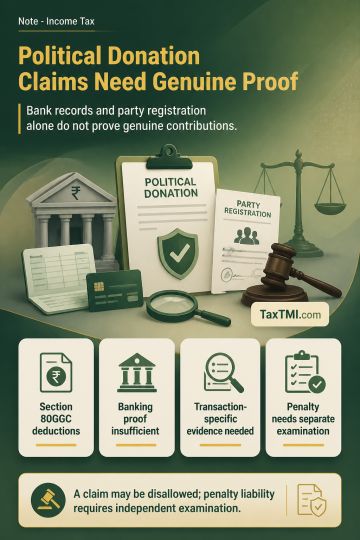
Political contribution deductions require genuine transactions; banking records and party registration alone cannot defeat evidence of accommodation e...
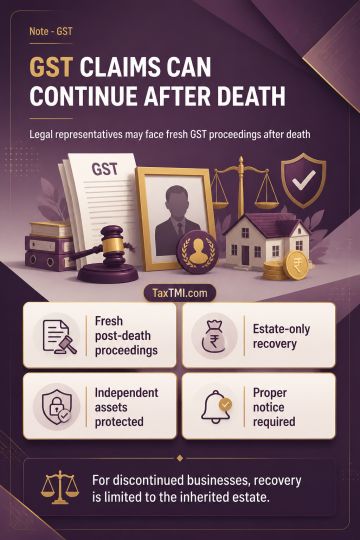
Post-death GST liability permits fresh proceedings against legal representatives, while discontinued-business recovery remains limited to the inherite...
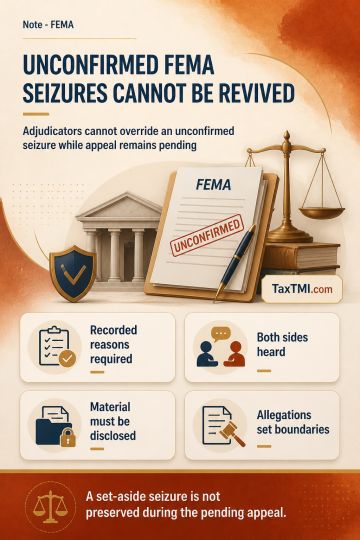
Non-confirmation of FEMA seizure prevents adjudicators from overriding pending appellate findings on recorded reasons and suspected foreign asset hold...
Notification introduces the Insolvency and Bankruptcy Board of India (Insolvency Professionals) (Second Amendment) Regulations, 2025, effective upon publication in the Official Gazette. It inserts Regulation 7B into the 2016 Regulations, limiting an individual insolvency professional (not an insolvency professional entity) to a maximum of ten assignments at any time across corporate insolvency resolution and liquidation processes, with no more than three assignments involving admitted claims exceeding INR 1,000 crore each. Professionals already above these limits on commencement cannot accept new assignments until they fall below the cap. The amendment also revises the Code of Conduct, requiring prior approval of the Adjudicating Authority in clause 6 and omitting the clarification to clause 22.
Notification introduces the Insolvency and Bankruptcy Board of India (Insolvency Professionals) (Second Amendment) Regulations, 2025, effective upon publication in the Official Gazette. It inserts Regulation 7B into the 2016 Regulations, limiting an individual insolvency professional (not an insolvency professional entity) to a maximum of ten assignments at any time across corporate insolvency resolution and liquidation processes, with no more than three assignments involving admitted claims exceeding INR 1,000 crore each. Professionals already above these limits on commencement cannot accept new assignments until they fall below the cap. The amendment also revises the Code of Conduct, requiring prior approval of the Adjudicating Authority in clause 6 and omitting the clarification to clause 22.
Note: It is a system-generated summary and is for quick reference only.
 TaxTMI
  TaxTMI