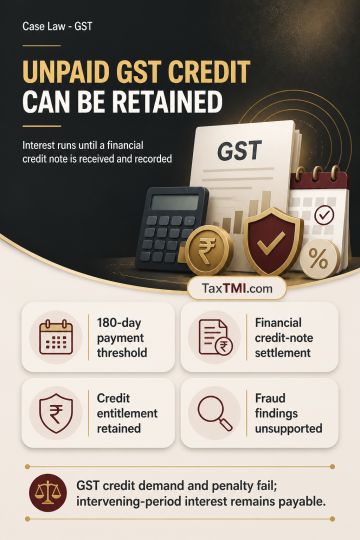
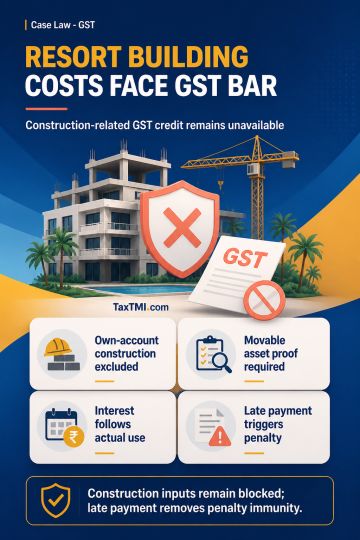
Blocked input tax credit for resort construction remains unavailable; interest follows actual utilisation, while delayed payment attracts statutory pe...
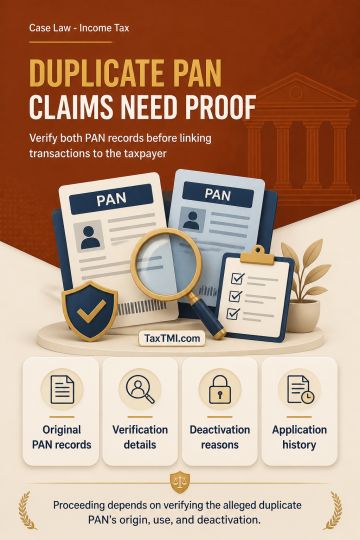
Duplicate PAN allocation requires record verification and deactivation reasons before assessment-related transactions can be attributed to an assessee...
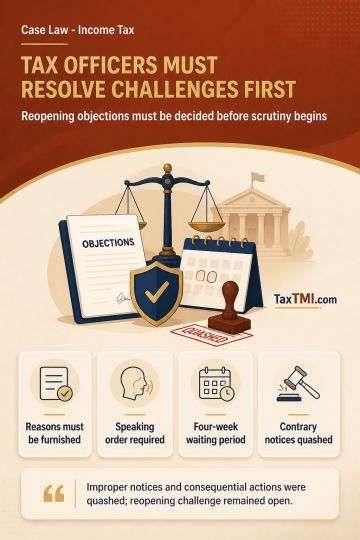
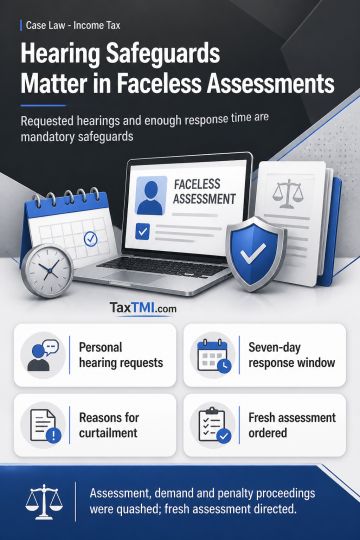
Faceless assessment safeguards require requested personal hearings and adequate final show-cause response time, failing which reassessment is required...
The appellant imported ELISA Test Kits for food testing but classified them under 3822 00 90 as diagnostic kits to claim exemption under customs notifications. The Tribunal held that ELISA kits for food testing cannot be treated as diagnostic kits eligible for exemption. Explanatory notes clarify that diagnostic reagents covered under 3822 are for evaluating processes in humans/animals, not for food testing. The exemption notification must be construed strictly, and its intent is to cover medical products. Appellant failed to prove the imported kits fell within the exemption parameters. The term "food testing" cannot be implied or added to "diagnostic kits" in the notification. Therefore, the imported ELISA kits for food testing did not qualify for exemption as diagnostic reagents/kits.
The appellant imported ELISA Test Kits for food testing but classified them under 3822 00 90 as diagnostic kits to claim exemption under customs notifications. The Tribunal held that ELISA kits for food testing cannot be treated as diagnostic kits eligible for exemption. Explanatory notes clarify that diagnostic reagents covered under 3822 are for evaluating processes in humans/animals, not for food testing. The exemption notification must be construed strictly, and its intent is to cover medical products. Appellant failed to prove the imported kits fell within the exemption parameters. The term "food testing" cannot be implied or added to "diagnostic kits" in the notification. Therefore, the imported ELISA kits for food testing did not qualify for exemption as diagnostic reagents/kits.
Note: It is a system-generated summary and is for quick reference only.
 TaxTMI
  TaxTMI