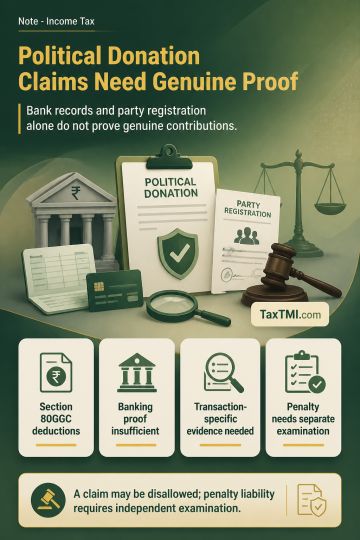
Political contribution deductions require genuine transactions; banking records and party registration alone cannot defeat evidence of accommodation e...
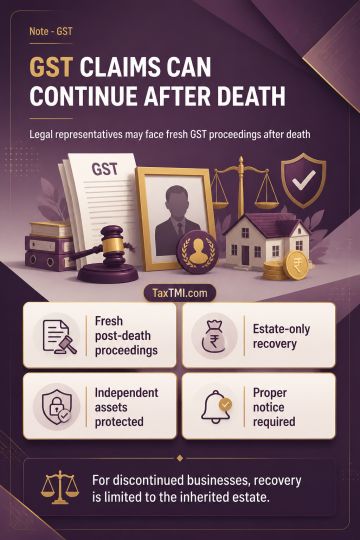
Post-death GST liability permits fresh proceedings against legal representatives, while discontinued-business recovery remains limited to the inherite...
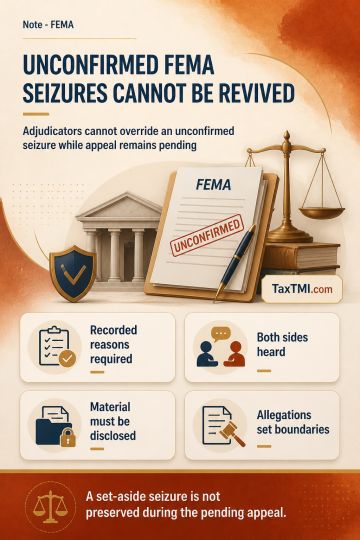
Non-confirmation of FEMA seizure prevents adjudicators from overriding pending appellate findings on recorded reasons and suspected foreign asset hold...
The court held that even if a debt is time-barred, the issuance of a cheque towards such debt creates a fresh legally enforceable liability u/s 25(3) of the Indian Contract Act, 1872. This provision deems a written promise to pay a time-barred debt as a valid contract. Consequently, the dishonor of such a cheque can attract penal provisions u/s 138 of the Negotiable Instruments Act. The acquittal order was set aside, recognizing that the furnishing of a cheque for a time-barred debt effectively resurrects the debt itself through a fresh agreement u/s 25(3) of the ICA. Denying the drawee's right to invoke Section 138 despite Section 25(3)'s recognition of a fresh agreement to pay would be an unfortunate disentitlement.
The court held that even if a debt is time-barred, the issuance of a cheque towards such debt creates a fresh legally enforceable liability u/s 25(3) of the Indian Contract Act, 1872. This provision deems a written promise to pay a time-barred debt as a valid contract. Consequently, the dishonor of such a cheque can attract penal provisions u/s 138 of the Negotiable Instruments Act. The acquittal order was set aside, recognizing that the furnishing of a cheque for a time-barred debt effectively resurrects the debt itself through a fresh agreement u/s 25(3) of the ICA. Denying the drawee's right to invoke Section 138 despite Section 25(3)'s recognition of a fresh agreement to pay would be an unfortunate disentitlement.
Note: It is a system-generated summary and is for quick reference only.
 TaxTMI
  TaxTMI