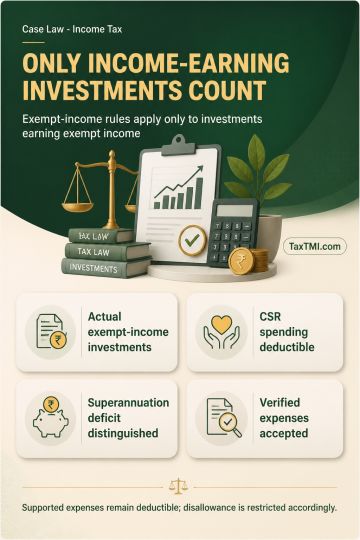
Exempt-income expenditure disallowance is confined to investments that actually generated exempt income, while supported business expenses remain dedu...
Objective characteristics and principal use govern mining-tyre classification, while fresh advance ruling applications may rely on additional technica...
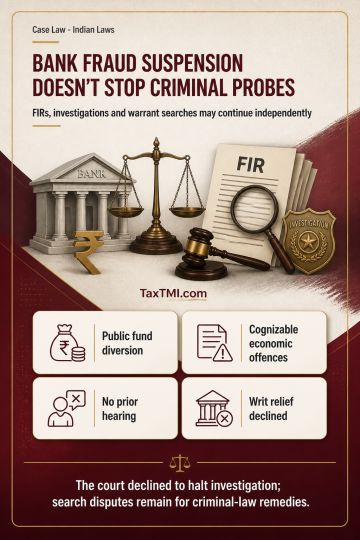
Administrative fraud classification suspension does not halt independent criminal investigation or warrant-based searches into alleged economic offenc...
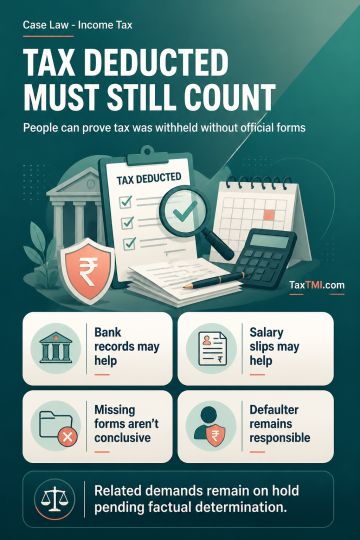
TDS credit must be considered where tax was actually deducted from a deductee's income or payment but was not remitted by the deductor. The statutory bar on recovering such tax from the deductee operates once actual deduction is established, preventing double recovery while permitting action against the defaulting deductor. Absence of Form 16, Form 16A or Form 26AS is not conclusive where the deductor has failed to deposit or report TDS. Deductees may rely on cogent evidence, including salary slips, bank records, invoices, payment advices, ledgers, correspondence or insolvency claims. Prima facie claims require factual verification rather than mechanical rejection, with related demands kept in abeyance pending determination.
TDS credit must be considered where tax was actually deducted from a deductee's income or payment but was not remitted by the deductor. The statutory bar on recovering such tax from the deductee operates once actual deduction is established, preventing double recovery while permitting action against the defaulting deductor. Absence of Form 16, Form 16A or Form 26AS is not conclusive where the deductor has failed to deposit or report TDS. Deductees may rely on cogent evidence, including salary slips, bank records, invoices, payment advices, ledgers, correspondence or insolvency claims. Prima facie claims require factual verification rather than mechanical rejection, with related demands kept in abeyance pending determination.
Note: It is a system-generated summary and is for quick reference only.
 TaxTMI
 of 4805
















 Join Channel


 TaxTMI