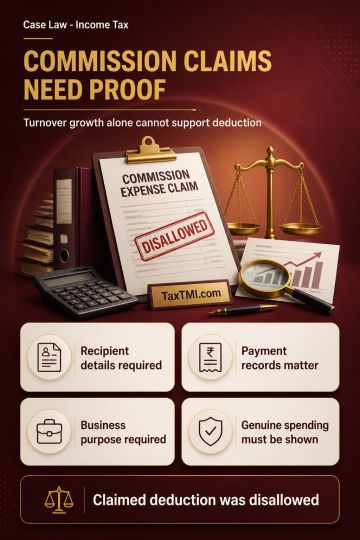
Business expenditure deduction requires proof of genuine commission payments and commercial allowability; turnover growth alone cannot validate the cl...
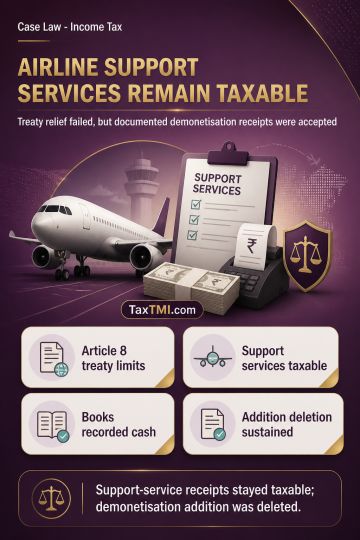
Article 8 treaty coverage excluded third-party airline support services, while documented demonetisation cash receipts remained accepted business inco...
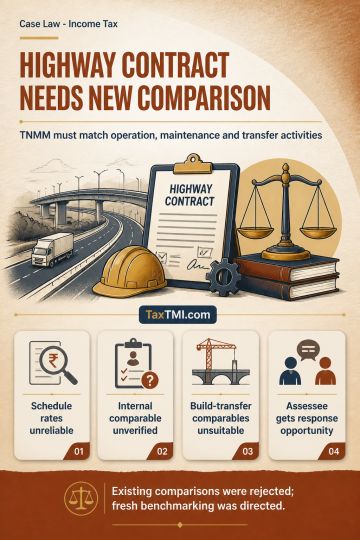
Functional comparability under TNMM requires highway contract benchmarks to reflect operation, maintenance and transfer activities, requiring fresh be...
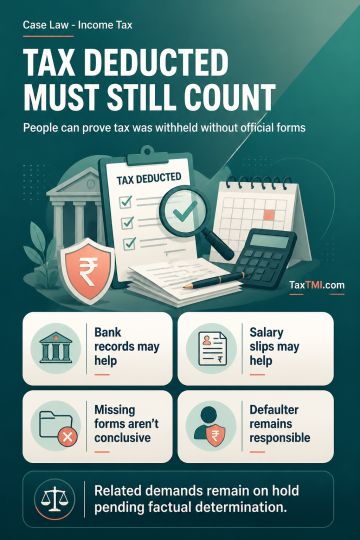
TDS credit must be considered where tax was actually deducted from a deductee's income or payment but was not remitted by the deductor. The statutory bar on recovering such tax from the deductee operates once actual deduction is established, preventing double recovery while permitting action against the defaulting deductor. Absence of Form 16, Form 16A or Form 26AS is not conclusive where the deductor has failed to deposit or report TDS. Deductees may rely on cogent evidence, including salary slips, bank records, invoices, payment advices, ledgers, correspondence or insolvency claims. Prima facie claims require factual verification rather than mechanical rejection, with related demands kept in abeyance pending determination.
TDS credit must be considered where tax was actually deducted from a deductee's income or payment but was not remitted by the deductor. The statutory bar on recovering such tax from the deductee operates once actual deduction is established, preventing double recovery while permitting action against the defaulting deductor. Absence of Form 16, Form 16A or Form 26AS is not conclusive where the deductor has failed to deposit or report TDS. Deductees may rely on cogent evidence, including salary slips, bank records, invoices, payment advices, ledgers, correspondence or insolvency claims. Prima facie claims require factual verification rather than mechanical rejection, with related demands kept in abeyance pending determination.
Note: It is a system-generated summary and is for quick reference only.
 TaxTMI
 of 4805







 Join Channel


 TaxTMI