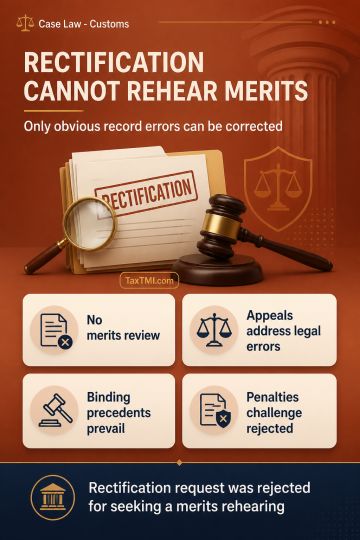
Rectification of mistake remains limited to self-evident record errors, preventing merits review through miscellaneous applications and preserving fin...
Tender creditworthiness conditions may extend to de facto Promoter Directors, with post-participation challenges generally barred absent arbitrariness...
Corporate representation in PMLA summons proceedings permitted through an authorised signatory, subject to directors' continuing cooperation and atten...
Helicopter charter classification requires effective control analysis, while territorial performance, reasoned credit orders and wilful suppression de...
Specified fund definition expands PAN exemption eligibility for registered alternative investment funds and qualifying International Financial Service...
Section 153C jurisdiction for assessment years beyond the six preceding years requires the Assessing Officer to record satisfaction that escaped income is represented by an asset. The six-year period is reckoned from the assessment year relevant to the previous year in which seized material is received by the Assessing Officer having jurisdiction over the other person; on that basis, AY 2015-16 fell within the extended period. However, a satisfaction note referring only to alleged cash transactions did not establish the mandatory asset-representation condition. The assessment was therefore treated as void for lack of valid jurisdiction, and the consequential addition could not survive; issues concerning digital evidence, consolidated satisfaction and merits remained open.
Section 153C jurisdiction for assessment years beyond the six preceding years requires the Assessing Officer to record satisfaction that escaped income is represented by an asset. The six-year period is reckoned from the assessment year relevant to the previous year in which seized material is received by the Assessing Officer having jurisdiction over the other person; on that basis, AY 2015-16 fell within the extended period. However, a satisfaction note referring only to alleged cash transactions did not establish the mandatory asset-representation condition. The assessment was therefore treated as void for lack of valid jurisdiction, and the consequential addition could not survive; issues concerning digital evidence, consolidated satisfaction and merits remained open.
Note: It is a system-generated summary and is for quick reference only.
 TaxTMI
 of 4786





















 Join Channel



 TaxTMI
