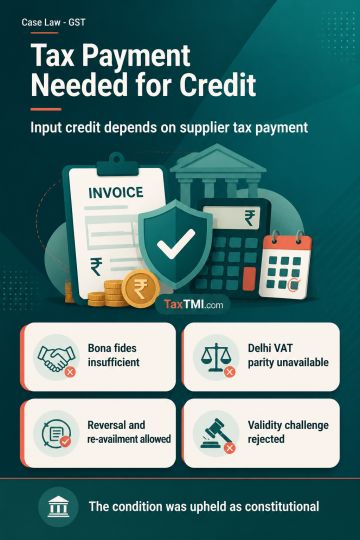
Input tax credit conditions remain constitutionally valid, with eligible recipient claims considered under GST circulars and retrospective filing dead...
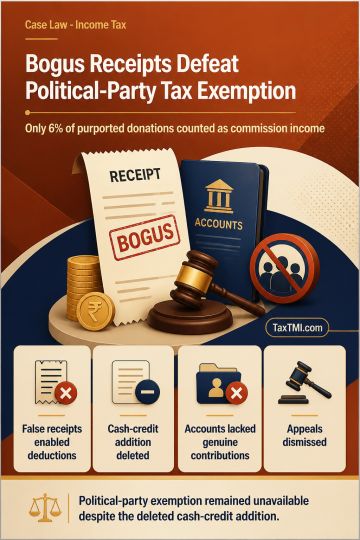
Bogus donation receipts justified commission income assessment and defeated political-party tax exemption for inaccurate accounts and reporting failur...
Pure reimbursement without income element escapes tax withholding, while delayed withholding and unsupported provisions face deferred or renewed scrut...
Public benefit requirement defeats charitable registration where residents' association services are reciprocal, member-only facilities governed by mu...
Exempt-income expenditure disallowance is confined to investments that actually generated exempt income, while supported business expenses remain dedu...
Section 153C jurisdiction for assessment years beyond the six preceding years requires the Assessing Officer to record satisfaction that escaped income is represented by an asset. The six-year period is reckoned from the assessment year relevant to the previous year in which seized material is received by the Assessing Officer having jurisdiction over the other person; on that basis, AY 2015-16 fell within the extended period. However, a satisfaction note referring only to alleged cash transactions did not establish the mandatory asset-representation condition. The assessment was therefore treated as void for lack of valid jurisdiction, and the consequential addition could not survive; issues concerning digital evidence, consolidated satisfaction and merits remained open.
Section 153C jurisdiction for assessment years beyond the six preceding years requires the Assessing Officer to record satisfaction that escaped income is represented by an asset. The six-year period is reckoned from the assessment year relevant to the previous year in which seized material is received by the Assessing Officer having jurisdiction over the other person; on that basis, AY 2015-16 fell within the extended period. However, a satisfaction note referring only to alleged cash transactions did not establish the mandatory asset-representation condition. The assessment was therefore treated as void for lack of valid jurisdiction, and the consequential addition could not survive; issues concerning digital evidence, consolidated satisfaction and merits remained open.
Note: It is a system-generated summary and is for quick reference only.
 TaxTMI
 of 4782

















 Join Channel



 TaxTMI