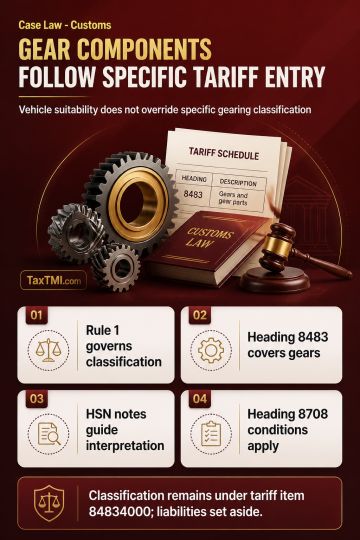
Tariff classification of vehicle gear components follows the specific gearing entry, displacing motor-vehicle parts classification and related liabili...
Necessary-party requirements limit impleadment of independent entities, while deferred consideration does not create an appealable adverse determinati...
Food supplement classification requires common parlance and authoritative tests, preventing treatment as proprietary Ayurvedic medicines without suppo...
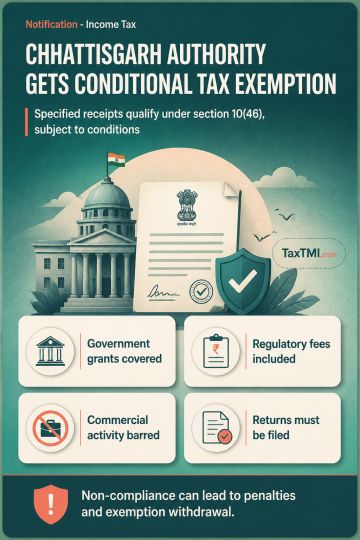
Specified regulatory authority income receives conditional tax exemption, subject to non-commercial activity, unchanged income character, and return f...
Tax exemption for regulatory authority income applies retrospectively, subject to non-commercial activity, unchanged income sources, and return-filing...
Section 153C jurisdiction for assessment years beyond the six preceding years requires the Assessing Officer to record satisfaction that escaped income is represented by an asset. The six-year period is reckoned from the assessment year relevant to the previous year in which seized material is received by the Assessing Officer having jurisdiction over the other person; on that basis, AY 2015-16 fell within the extended period. However, a satisfaction note referring only to alleged cash transactions did not establish the mandatory asset-representation condition. The assessment was therefore treated as void for lack of valid jurisdiction, and the consequential addition could not survive; issues concerning digital evidence, consolidated satisfaction and merits remained open.
Section 153C jurisdiction for assessment years beyond the six preceding years requires the Assessing Officer to record satisfaction that escaped income is represented by an asset. The six-year period is reckoned from the assessment year relevant to the previous year in which seized material is received by the Assessing Officer having jurisdiction over the other person; on that basis, AY 2015-16 fell within the extended period. However, a satisfaction note referring only to alleged cash transactions did not establish the mandatory asset-representation condition. The assessment was therefore treated as void for lack of valid jurisdiction, and the consequential addition could not survive; issues concerning digital evidence, consolidated satisfaction and merits remained open.
Note: It is a system-generated summary and is for quick reference only.
 TaxTMI
 of 4782



















 Join Channel



 TaxTMI
