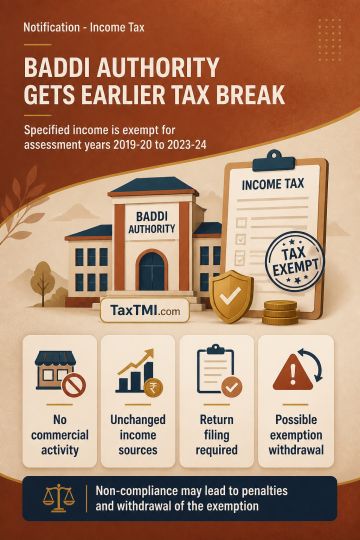
Specified income of Baddi Barotiwala Nalagarh Development Authority receives conditional tax exemption, retrospectively covering its designated assess...
Specified development authority income receives retrospective tax exemption, subject to non-commercial activity, unchanged income sources, and return-...
Unified Brand India framework introduces voluntary Trust Mark certification and funding support for export branding, packaging and global promotional ...
Origin Declaration authentication governs preferential tariff claims under India-UK CETA, requiring a validated reference number before import clearan...
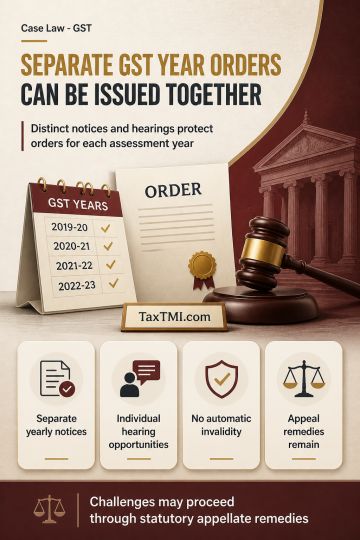
Separate assessment orders for different years remain valid when distinct notices and hearing opportunities prevent prejudice from combined proceeding...
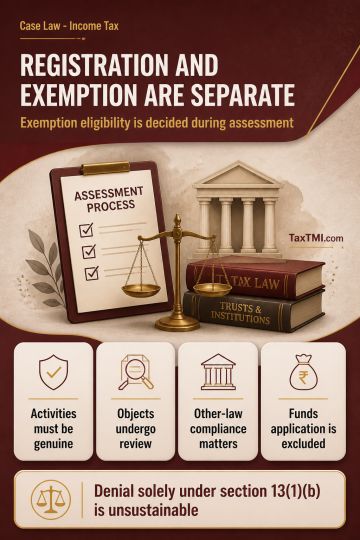
Defined public benefit can retain charitable character; registration renewal requires examining genuine activities and legal compliance, not surplus a...
Capital reduction is distinct from share buy-back, preventing buy-back tax; restructuring interest and related business deductions also survive scruti...
Page of 4784
Press 'Enter' after typing page number.
821 to 840 of 95673 Results
❮
❯
❯❯
0 / 200
Expand Note
Add to Folder
No Folders have been created
+
Are you sure you want to delete "My most important" ?
Place of effective management residence rules do not apply to a company whose turnover or gross receipts fall within the stipulated threshold under the Board circular, effective from Assessment Year 2017-18. The notes state that a New Zealand-incorporated company was therefore not liable to Indian tax merely because it had assumed Indian residence and filed returns on that basis, making the tax paid refundable. They further explain that rectification is available where foreign-tax payment was previously disputed but is later settled, and that procedural barriers should not deny substantive double-taxation relief. The rejection of refund was quashed and refund with interest was directed in accordance with law.
Place of effective management residence rules do not apply to a company whose turnover or gross receipts fall within the stipulated threshold under the Board circular, effective from Assessment Year 2017-18. The notes state that a New Zealand-incorporated company was therefore not liable to Indian tax merely because it had assumed Indian residence and filed returns on that basis, making the tax paid refundable. They further explain that rectification is available where foreign-tax payment was previously disputed but is later settled, and that procedural barriers should not deny substantive double-taxation relief. The rejection of refund was quashed and refund with interest was directed in accordance with law.
Note: It is a system-generated summary and is for quick reference only.
 TaxTMI
 of 4784












 Join Channel



 TaxTMI