Specialized Investment Fund distribution now requires dedicated certification, while transitional recognition preserves existing qualified distributor...
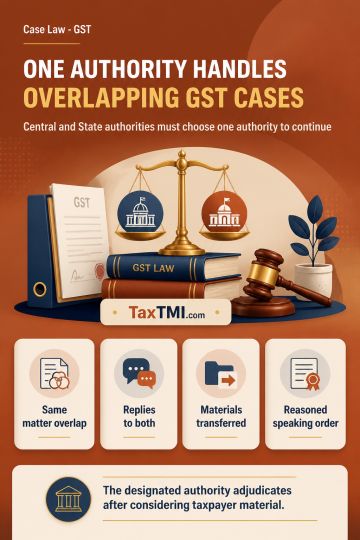
Overlapping GST proceedings require Central and State authorities to designate one competent authority for coordinated adjudication of the same matter...
Composite healthcare supplies retain exemption when patient care is the contract's essential character, despite payment through an implementing agency...
Inordinate delay in filing the first appeal was not condoned because the assessee failed to show sufficient or bona fide cause. The Tribunal found that the explanation of being unaware of the ex parte assessment was unconvincing, noting the failure to file a return even after notice under section 148 and the non-participation in assessment proceedings, which showed negligence and a lackadaisical approach. Applying the principle that sufficient cause does not extend to inaction, negligence or absence of bona fides, it upheld the CIT(A)'s refusal to exercise discretion under section 249(3) and sustained dismissal of the appeal as time-barred.
Inordinate delay in filing the first appeal was not condoned because the assessee failed to show sufficient or bona fide cause. The Tribunal found that the explanation of being unaware of the ex parte assessment was unconvincing, noting the failure to file a return even after notice under section 148 and the non-participation in assessment proceedings, which showed negligence and a lackadaisical approach. Applying the principle that sufficient cause does not extend to inaction, negligence or absence of bona fides, it upheld the CIT(A)'s refusal to exercise discretion under section 249(3) and sustained dismissal of the appeal as time-barred.
Note: It is a system-generated summary and is for quick reference only.
 TaxTMI
 of 4805














 Join Channel


 TaxTMI