Co-operative deduction eligibility excludes refund and commercial-bank interest, while qualifying co-operative investments require entity-wise verific...
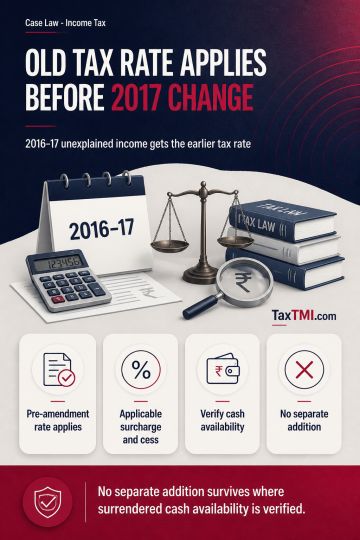
Enhanced tax rate on surrendered unexplained income applies prospectively, while cash-deposit telescoping requires verification of available surrender...
Customs Broker licence proceedings require accurate procedural facts before delay or natural-justice findings can justify setting aside regulatory act...
Inordinate delay in filing the first appeal was not condoned because the assessee failed to show sufficient or bona fide cause. The Tribunal found that the explanation of being unaware of the ex parte assessment was unconvincing, noting the failure to file a return even after notice under section 148 and the non-participation in assessment proceedings, which showed negligence and a lackadaisical approach. Applying the principle that sufficient cause does not extend to inaction, negligence or absence of bona fides, it upheld the CIT(A)'s refusal to exercise discretion under section 249(3) and sustained dismissal of the appeal as time-barred.
Inordinate delay in filing the first appeal was not condoned because the assessee failed to show sufficient or bona fide cause. The Tribunal found that the explanation of being unaware of the ex parte assessment was unconvincing, noting the failure to file a return even after notice under section 148 and the non-participation in assessment proceedings, which showed negligence and a lackadaisical approach. Applying the principle that sufficient cause does not extend to inaction, negligence or absence of bona fides, it upheld the CIT(A)'s refusal to exercise discretion under section 249(3) and sustained dismissal of the appeal as time-barred.
Note: It is a system-generated summary and is for quick reference only.
 TaxTMI
  TaxTMI
 of 4811













 Join Channel