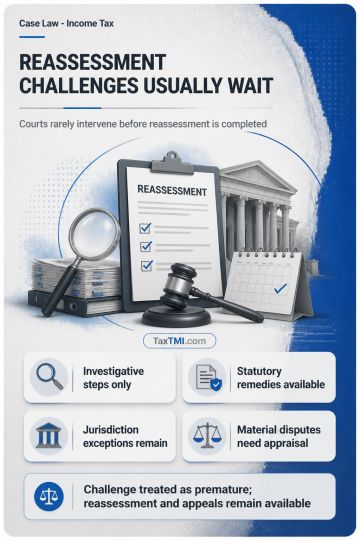
Preliminary reassessment proceedings generally require statutory remedies unless jurisdiction is wholly absent or mandatory conditions are patently br...
Agricultural land classification requires cumulative factual indicators, while industrial-purpose land and absent agricultural use defeat reinvestment...
Composite residential flat exemption upheld where supplementary agreement merged adjoining units and additional evidence supported the taxpayer's inve...
Recall of an order passed on merits was held impermissible where the appellant had participated through counsel, advanced submissions, and was effectively on notice; the plea of non-impleadment, absence of notice and denial of hearing was rejected because no apparent procedural flaw attributable to the Tribunal was shown. The Tribunal held that recall cannot be used to reopen a merits-based order after hearing. The separate appeal against the original order was also held time-barred under the IBC, and exclusion of time under Section 14 of the Limitation Act was denied because the recall and writ proceedings could not be used to bypass the statutory appeal period. The delay condonation plea was rejected.
Recall of an order passed on merits was held impermissible where the appellant had participated through counsel, advanced submissions, and was effectively on notice; the plea of non-impleadment, absence of notice and denial of hearing was rejected because no apparent procedural flaw attributable to the Tribunal was shown. The Tribunal held that recall cannot be used to reopen a merits-based order after hearing. The separate appeal against the original order was also held time-barred under the IBC, and exclusion of time under Section 14 of the Limitation Act was denied because the recall and writ proceedings could not be used to bypass the statutory appeal period. The delay condonation plea was rejected.
Note: It is a system-generated summary and is for quick reference only.
 TaxTMI
  TaxTMI
 of 4814
















 Join Channel