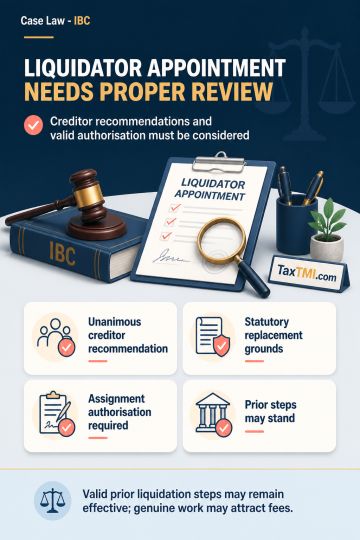
Liquidator appointment under Section 34 requires consideration of creditor recommendations, valid professional authorisation, and preservation of vali...
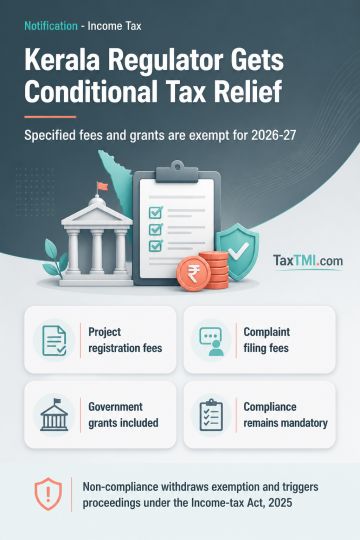
Income-tax exemption for specified regulatory fees and government grants applies subject to non-commercial activity and continuing compliance conditio...
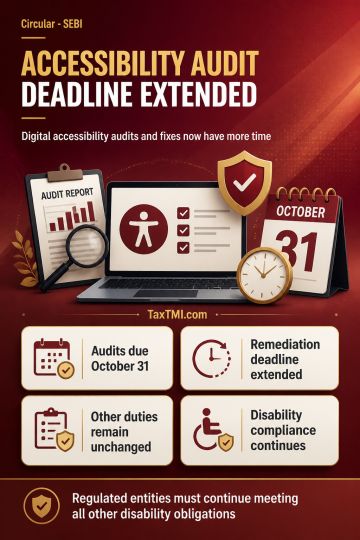
Digital accessibility audit and remediation deadlines extended, while all other disability-compliance obligations for regulated entities remain unchan...
Recall of an order passed on merits was held impermissible where the appellant had participated through counsel, advanced submissions, and was effectively on notice; the plea of non-impleadment, absence of notice and denial of hearing was rejected because no apparent procedural flaw attributable to the Tribunal was shown. The Tribunal held that recall cannot be used to reopen a merits-based order after hearing. The separate appeal against the original order was also held time-barred under the IBC, and exclusion of time under Section 14 of the Limitation Act was denied because the recall and writ proceedings could not be used to bypass the statutory appeal period. The delay condonation plea was rejected.
Recall of an order passed on merits was held impermissible where the appellant had participated through counsel, advanced submissions, and was effectively on notice; the plea of non-impleadment, absence of notice and denial of hearing was rejected because no apparent procedural flaw attributable to the Tribunal was shown. The Tribunal held that recall cannot be used to reopen a merits-based order after hearing. The separate appeal against the original order was also held time-barred under the IBC, and exclusion of time under Section 14 of the Limitation Act was denied because the recall and writ proceedings could not be used to bypass the statutory appeal period. The delay condonation plea was rejected.
Note: It is a system-generated summary and is for quick reference only.
 TaxTMI
  TaxTMI
 of 4809



 Join Channel