Business expenditure deduction requires proof of genuine commission payments and commercial allowability; turnover growth alone cannot validate the cl...
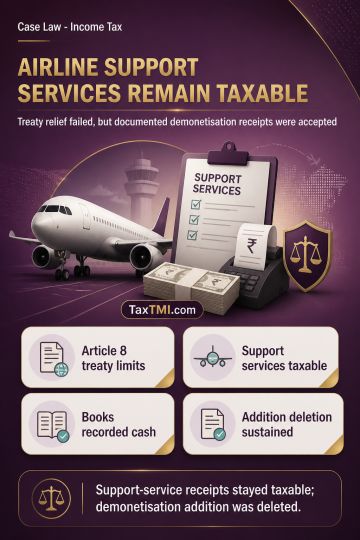
Article 8 treaty coverage excluded third-party airline support services, while documented demonetisation cash receipts remained accepted business inco...
Page of 4809
Press 'Enter' after typing page number.
701 to 720 of 96177 Results
❮
❯
❯❯
0 / 200
Expand Note
Add to Folder
No Folders have been created
+
Are you sure you want to delete "My most important" ?
Recall of an order passed on merits was held impermissible where the appellant had participated through counsel, advanced submissions, and was effectively on notice; the plea of non-impleadment, absence of notice and denial of hearing was rejected because no apparent procedural flaw attributable to the Tribunal was shown. The Tribunal held that recall cannot be used to reopen a merits-based order after hearing. The separate appeal against the original order was also held time-barred under the IBC, and exclusion of time under Section 14 of the Limitation Act was denied because the recall and writ proceedings could not be used to bypass the statutory appeal period. The delay condonation plea was rejected.
Recall of an order passed on merits was held impermissible where the appellant had participated through counsel, advanced submissions, and was effectively on notice; the plea of non-impleadment, absence of notice and denial of hearing was rejected because no apparent procedural flaw attributable to the Tribunal was shown. The Tribunal held that recall cannot be used to reopen a merits-based order after hearing. The separate appeal against the original order was also held time-barred under the IBC, and exclusion of time under Section 14 of the Limitation Act was denied because the recall and writ proceedings could not be used to bypass the statutory appeal period. The delay condonation plea was rejected.
Note: It is a system-generated summary and is for quick reference only.
 TaxTMI
  TaxTMI
 of 4809








 Join Channel