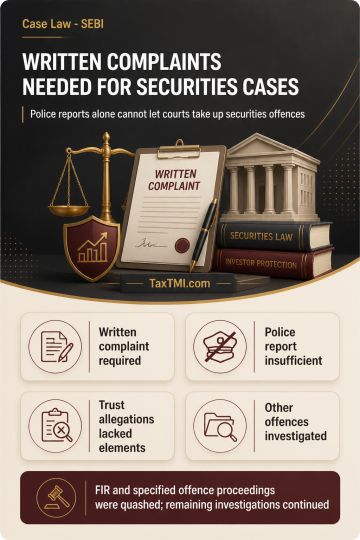
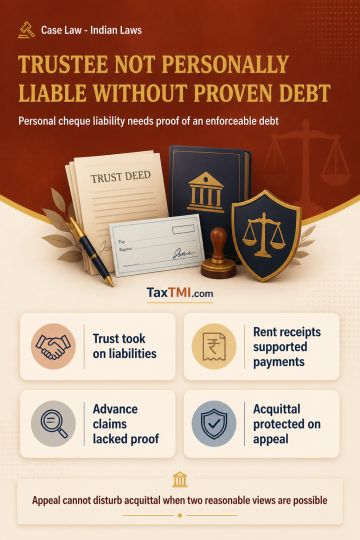
Written complaint requirement bars cognizance on police reports for securities offences, while unsupported breach of trust and cheating allegations fa...
Risk-based postal import clearance standardises electronic assessment, document requests, duty realisation and delivery controls at Foreign Post Offic...
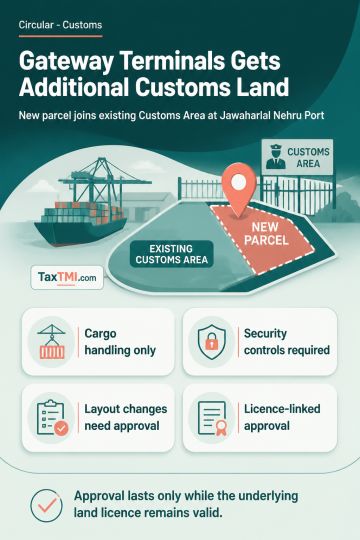
Customs Cargo Service Provider appointment extends custodianship to additional terminal land, subject to cargo-control, security and licence condition...
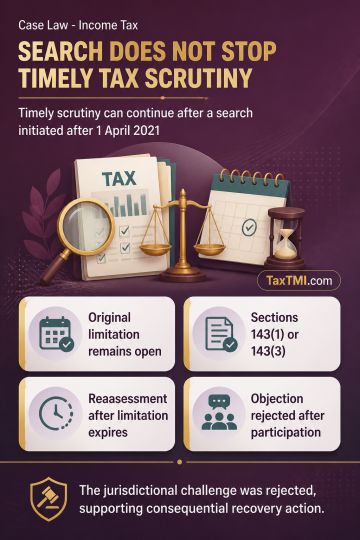
Post-search scrutiny assessment remains available where original assessment limitation is unexpired, permitting timely completion under regular assess...
Page of 4814
Press 'Enter' after typing page number.
621 to 640 of 96262 Results
❮
❯
❯❯
0 / 200
Expand Note
Add to Folder
No Folders have been created
+
Are you sure you want to delete "My most important" ?
GSTAT has classified GST appeals into three categories and mapped them to Single, Division and designated benches. Matters below the specified threshold and not involving a question of law are to be placed before a Single Bench, while pending and future matters before the Principal and State Benches are to be listed first before a Division Bench, which may remit cases lacking a question of law for further directions. Category I covers core classification, valuation, input tax credit, registration and tax-liability disputes; Category II covers registration, composition, recovery, refund, assessment and related matters; Category III covers seizure, confiscation, rectification, penalty, compounding and residual matters. The order also assigns member combinations, hearing days and travel/daily expense entitlements for members posted away from their normal station.
GSTAT has classified GST appeals into three categories and mapped them to Single, Division and designated benches. Matters below the specified threshold and not involving a question of law are to be placed before a Single Bench, while pending and future matters before the Principal and State Benches are to be listed first before a Division Bench, which may remit cases lacking a question of law for further directions. Category I covers core classification, valuation, input tax credit, registration and tax-liability disputes; Category II covers registration, composition, recovery, refund, assessment and related matters; Category III covers seizure, confiscation, rectification, penalty, compounding and residual matters. The order also assigns member combinations, hearing days and travel/daily expense entitlements for members posted away from their normal station.
Note: It is a system-generated summary and is for quick reference only.
 TaxTMI
  TaxTMI
 of 4814







 Join Channel