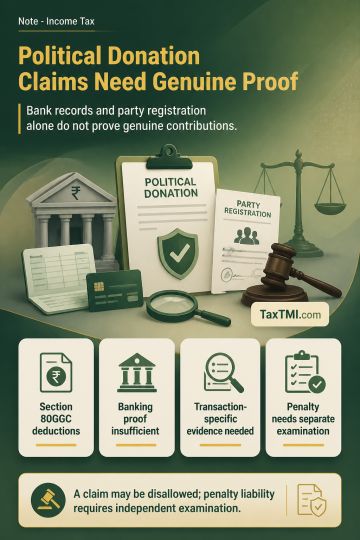
Political contribution deductions require genuine transactions; banking records and party registration alone cannot defeat evidence of accommodation e...
Post-death GST liability permits fresh proceedings against legal representatives, while discontinued-business recovery remains limited to the inherite...
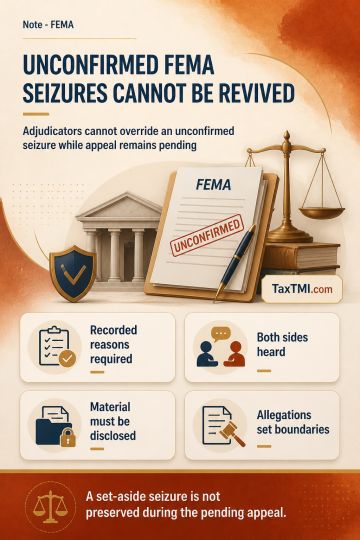
Non-confirmation of FEMA seizure prevents adjudicators from overriding pending appellate findings on recorded reasons and suspected foreign asset hold...
GSTAT has classified GST appeals into three categories and mapped them to Single, Division and designated benches. Matters below the specified threshold and not involving a question of law are to be placed before a Single Bench, while pending and future matters before the Principal and State Benches are to be listed first before a Division Bench, which may remit cases lacking a question of law for further directions. Category I covers core classification, valuation, input tax credit, registration and tax-liability disputes; Category II covers registration, composition, recovery, refund, assessment and related matters; Category III covers seizure, confiscation, rectification, penalty, compounding and residual matters. The order also assigns member combinations, hearing days and travel/daily expense entitlements for members posted away from their normal station.
GSTAT has classified GST appeals into three categories and mapped them to Single, Division and designated benches. Matters below the specified threshold and not involving a question of law are to be placed before a Single Bench, while pending and future matters before the Principal and State Benches are to be listed first before a Division Bench, which may remit cases lacking a question of law for further directions. Category I covers core classification, valuation, input tax credit, registration and tax-liability disputes; Category II covers registration, composition, recovery, refund, assessment and related matters; Category III covers seizure, confiscation, rectification, penalty, compounding and residual matters. The order also assigns member combinations, hearing days and travel/daily expense entitlements for members posted away from their normal station.
Note: It is a system-generated summary and is for quick reference only.
 TaxTMI
  TaxTMI