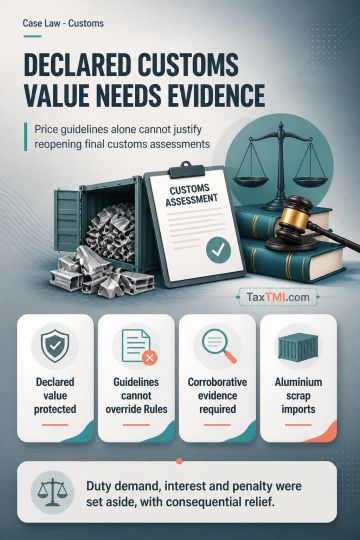
Transaction value cannot be rejected solely on non-statutory valuation guidelines without corroborative evidence supporting reassessment of final cust...
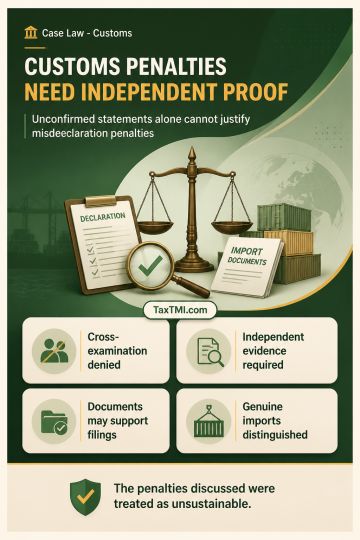
Cross-examination rights and corroborated evidence limit customs penalties for misdeclaration in genuine import transactions involving documented clea...
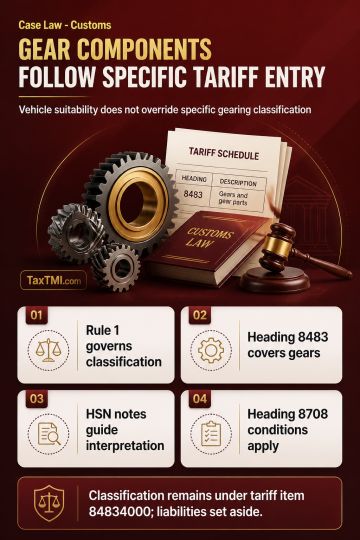
Tariff classification of vehicle gear components follows the specific gearing entry, displacing motor-vehicle parts classification and related liabili...
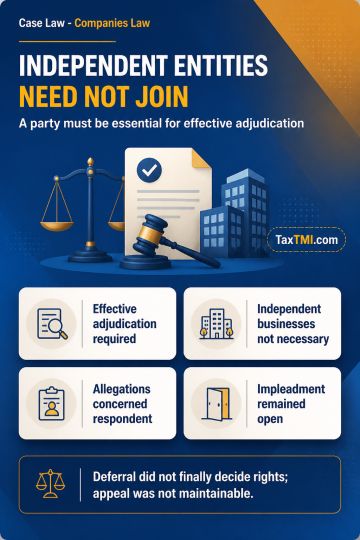
Necessary-party requirements limit impleadment of independent entities, while deferred consideration does not create an appealable adverse determinati...
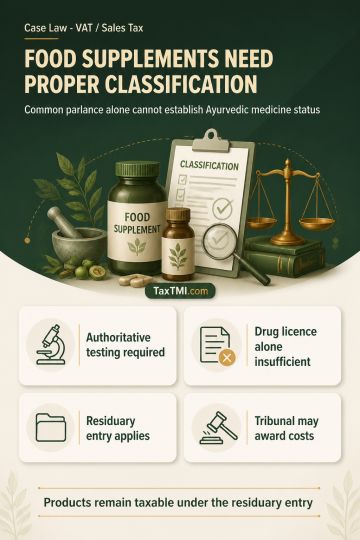
Food supplement classification requires common parlance and authoritative tests, preventing treatment as proprietary Ayurvedic medicines without suppo...
A single show-cause notice or composite assessment order cannot cover more than one tax period under Sections 73 and 74 of the GST Act, 2017. Following its earlier Division Bench view, the HC held that separate proceedings are required for each assessment year once the annual return due date has passed. As the impugned order covered multiple financial years in one proceeding, it was set aside. The Court did not examine the other grounds and left them open. Fresh proceedings may be initiated separately for each assessment year, with exclusion of the intervening period for limitation.
A single show-cause notice or composite assessment order cannot cover more than one tax period under Sections 73 and 74 of the GST Act, 2017. Following its earlier Division Bench view, the HC held that separate proceedings are required for each assessment year once the annual return due date has passed. As the impugned order covered multiple financial years in one proceeding, it was set aside. The Court did not examine the other grounds and left them open. Fresh proceedings may be initiated separately for each assessment year, with exclusion of the intervening period for limitation.
Note: It is a system-generated summary and is for quick reference only.
 TaxTMI
  TaxTMI
 of 4814







 Join Channel