Agricultural land classification requires cumulative factual indicators, while industrial-purpose land and absent agricultural use defeat reinvestment...
Composite residential flat exemption upheld where supplementary agreement merged adjoining units and additional evidence supported the taxpayer's inve...
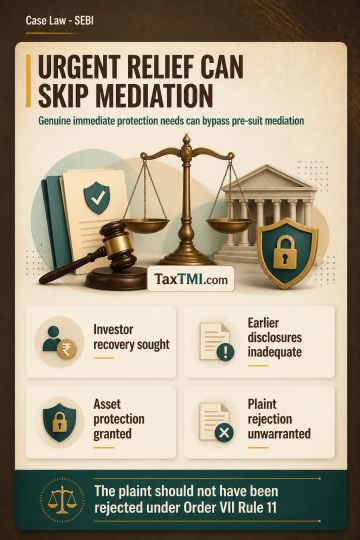
Urgent interim relief exception permits commercial suit without pre-institution mediation where immediate disclosure and asset protection are genuinel...
Page of 4816
Press 'Enter' after typing page number.
141 to 160 of 96301 Results
❮
❯
❯❯
0 / 200
Expand Note
Add to Folder
No Folders have been created
+
Are you sure you want to delete "My most important" ?
Ad hoc disallowance of business expenditure was deleted because the assessee had produced books of account, bills, vouchers, stock register, purchase details, bank statements and expense vouchers, and the books were not rejected under section 145(3). In respect of purchases from one supplier, the estimated profit addition was deleted in full because payments were through banking channels, supporting records were filed, notices were replied to by the supplier confirming the transactions, and there was no evidence of cash return or doubt about corresponding sales. For another supplier, only the embedded profit in the disputed purchases was brought to tax as grey market purchases, and the addition was restricted to 2 per cent.
Ad hoc disallowance of business expenditure was deleted because the assessee had produced books of account, bills, vouchers, stock register, purchase details, bank statements and expense vouchers, and the books were not rejected under section 145(3). In respect of purchases from one supplier, the estimated profit addition was deleted in full because payments were through banking channels, supporting records were filed, notices were replied to by the supplier confirming the transactions, and there was no evidence of cash return or doubt about corresponding sales. For another supplier, only the embedded profit in the disputed purchases was brought to tax as grey market purchases, and the addition was restricted to 2 per cent.
Note: It is a system-generated summary and is for quick reference only.
 TaxTMI
  TaxTMI
 of 4816











 Join Channel