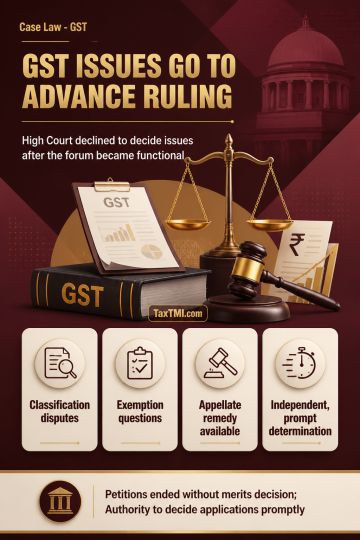
Advance-ruling mechanism governs pending GST classification, exemption and taxability disputes, limiting writ review once the specialised forum functi...
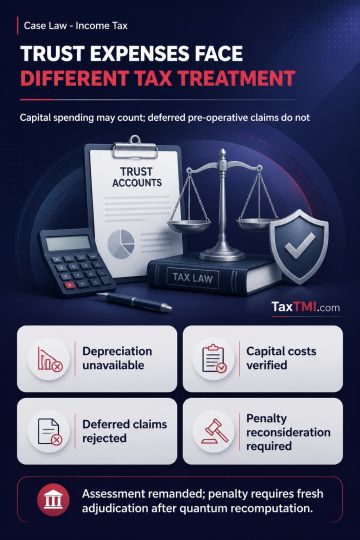
Charitable trust income application permits verified capital expenditure but rejects deferred pre-operative claims and requires reconsideration of con...
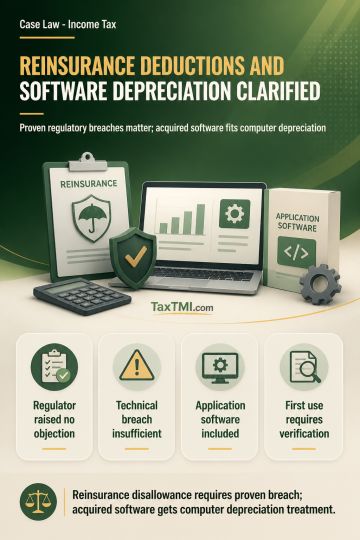
Reinsurance premium deductions require established regulatory breaches, while independently acquired software qualifies within the computer depreciati...
Ad hoc disallowance of business expenditure was deleted because the assessee had produced books of account, bills, vouchers, stock register, purchase details, bank statements and expense vouchers, and the books were not rejected under section 145(3). In respect of purchases from one supplier, the estimated profit addition was deleted in full because payments were through banking channels, supporting records were filed, notices were replied to by the supplier confirming the transactions, and there was no evidence of cash return or doubt about corresponding sales. For another supplier, only the embedded profit in the disputed purchases was brought to tax as grey market purchases, and the addition was restricted to 2 per cent.
Ad hoc disallowance of business expenditure was deleted because the assessee had produced books of account, bills, vouchers, stock register, purchase details, bank statements and expense vouchers, and the books were not rejected under section 145(3). In respect of purchases from one supplier, the estimated profit addition was deleted in full because payments were through banking channels, supporting records were filed, notices were replied to by the supplier confirming the transactions, and there was no evidence of cash return or doubt about corresponding sales. For another supplier, only the embedded profit in the disputed purchases was brought to tax as grey market purchases, and the addition was restricted to 2 per cent.
Note: It is a system-generated summary and is for quick reference only.
 TaxTMI
  TaxTMI
 of 4809






 Join Channel


