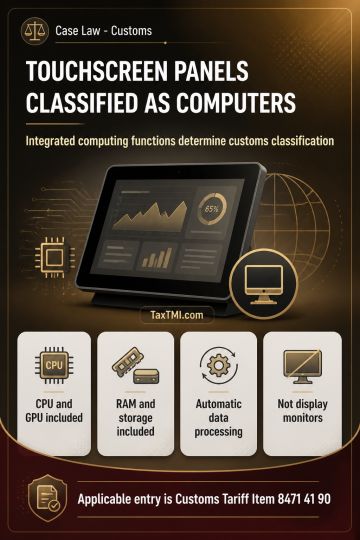
Interactive touchscreen panels with integrated computing functions fall under automatic data-processing machines rather than display monitors for cust...
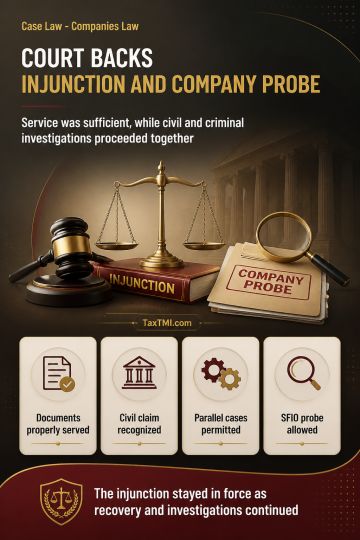
Ex parte injunction service requirements were substantially met, while civil recovery and SFIO investigation into provident fund defalcation continued...
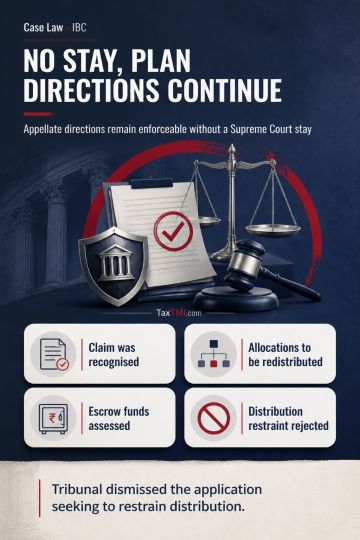
Enforcement of resolution-plan directions continues without a Supreme Court stay, preventing suspension of redistribution and escrowed-fund distributi...
Third-party ownership claims over attached property require Special Court adjudication where purchasers lack registered sale deeds and bona fides rema...
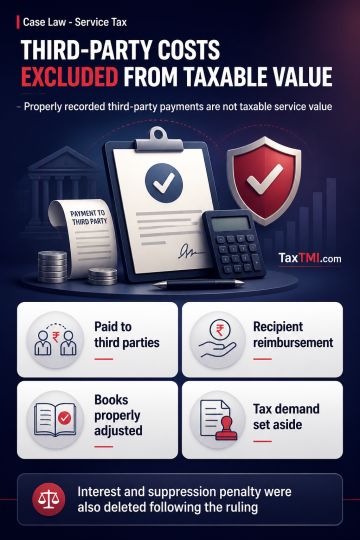
Pure-agent reimbursements in clearing and forwarding services are excluded from taxable value when qualifying third-party payments are properly record...
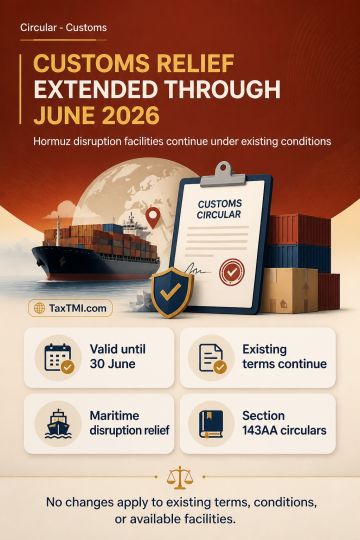
Customs relief for Strait of Hormuz maritime disruptions remains available, with existing conditions continuing unchanged through the extended validit...
Ad hoc disallowance of business expenditure was deleted because the assessee had produced books of account, bills, vouchers, stock register, purchase details, bank statements and expense vouchers, and the books were not rejected under section 145(3). In respect of purchases from one supplier, the estimated profit addition was deleted in full because payments were through banking channels, supporting records were filed, notices were replied to by the supplier confirming the transactions, and there was no evidence of cash return or doubt about corresponding sales. For another supplier, only the embedded profit in the disputed purchases was brought to tax as grey market purchases, and the addition was restricted to 2 per cent.
Ad hoc disallowance of business expenditure was deleted because the assessee had produced books of account, bills, vouchers, stock register, purchase details, bank statements and expense vouchers, and the books were not rejected under section 145(3). In respect of purchases from one supplier, the estimated profit addition was deleted in full because payments were through banking channels, supporting records were filed, notices were replied to by the supplier confirming the transactions, and there was no evidence of cash return or doubt about corresponding sales. For another supplier, only the embedded profit in the disputed purchases was brought to tax as grey market purchases, and the addition was restricted to 2 per cent.
Note: It is a system-generated summary and is for quick reference only.
 TaxTMI
  TaxTMI
 of 4811









 Join Channel