Cross-examination rights and corroborated evidence limit customs penalties for misdeclaration in genuine import transactions involving documented clea...
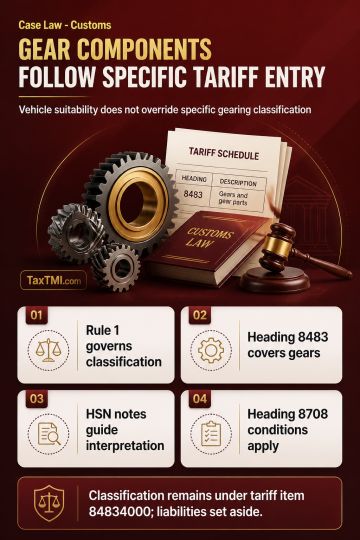
Tariff classification of vehicle gear components follows the specific gearing entry, displacing motor-vehicle parts classification and related liabili...
Necessary-party requirements limit impleadment of independent entities, while deferred consideration does not create an appealable adverse determinati...
Food supplement classification requires common parlance and authoritative tests, preventing treatment as proprietary Ayurvedic medicines without suppo...
Specified regulatory authority income receives conditional tax exemption, subject to non-commercial activity, unchanged income character, and return f...
Tax exemption for regulatory authority income applies retrospectively, subject to non-commercial activity, unchanged income sources, and return-filing...
Dividend distribution tax paid on dividends distributed to non-resident shareholders was treated as falling within the more beneficial treaty rate under the India-Japan and India-Thailand DTAA, because the tax was viewed in substance as a tax on dividend income of the shareholder. Following binding precedent, the ITAT accepted the assessee's challenge to the higher domestic rate for AY 2017-18 and applied the same view to AY 2018-19. It also held that corporate club membership fees were allowable business expenditure under section 37 and not personal expenditure, as the membership served business purposes and the Revenue's authorities were distinguishable. Both appeals were allowed.
Dividend distribution tax paid on dividends distributed to non-resident shareholders was treated as falling within the more beneficial treaty rate under the India-Japan and India-Thailand DTAA, because the tax was viewed in substance as a tax on dividend income of the shareholder. Following binding precedent, the ITAT accepted the assessee's challenge to the higher domestic rate for AY 2017-18 and applied the same view to AY 2018-19. It also held that corporate club membership fees were allowable business expenditure under section 37 and not personal expenditure, as the membership served business purposes and the Revenue's authorities were distinguishable. Both appeals were allowed.
Note: It is a system-generated summary and is for quick reference only.
 TaxTMI
  TaxTMI
 of 4809



















 Join Channel




