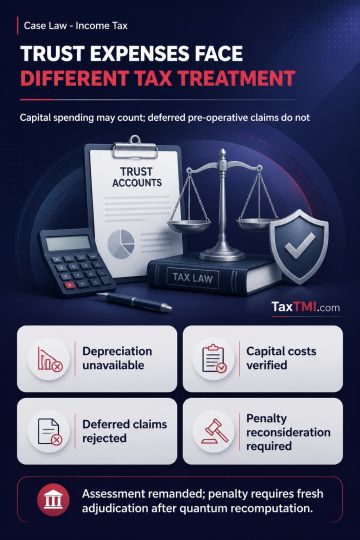
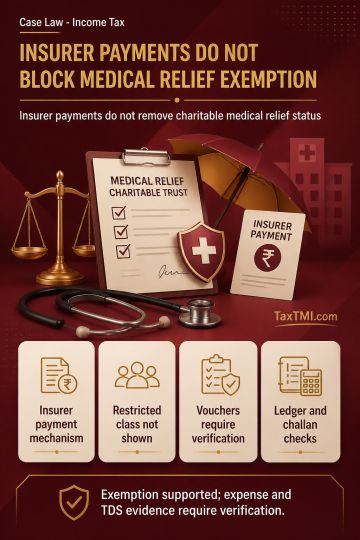
Charitable trust income application permits verified capital expenditure but rejects deferred pre-operative claims and requires reconsideration of con...
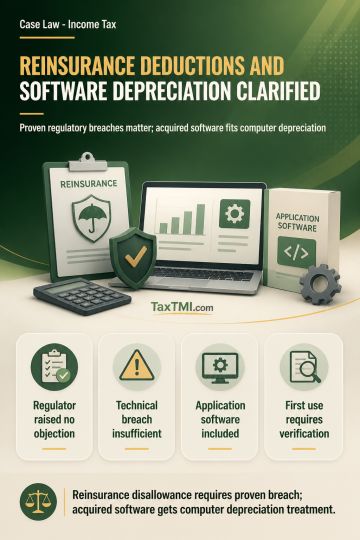
Reinsurance premium deductions require established regulatory breaches, while independently acquired software qualifies within the computer depreciati...
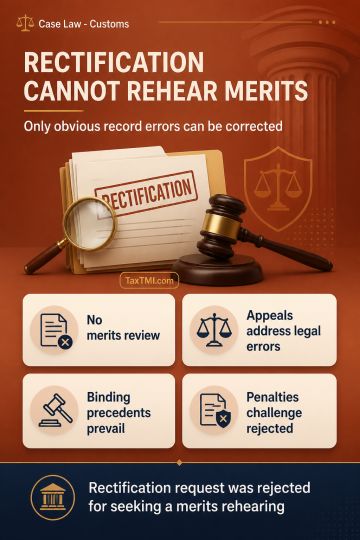
Rectification of mistake remains limited to self-evident record errors, preventing merits review through miscellaneous applications and preserving fin...
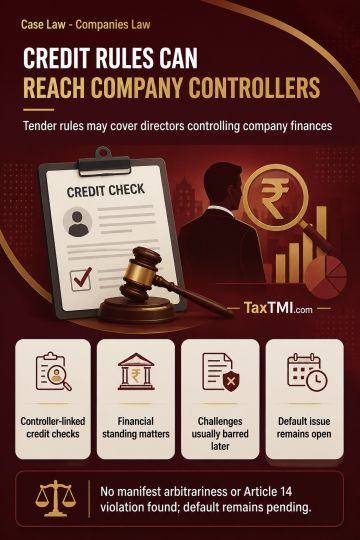
Tender creditworthiness conditions may extend to de facto Promoter Directors, with post-participation challenges generally barred absent arbitrariness...
Page of 4814
Press 'Enter' after typing page number.
1121 to 1140 of 96262 Results
❮
❯
❯❯
0 / 200
Expand Note
Add to Folder
No Folders have been created
+
Are you sure you want to delete "My most important" ?
The High Court held that an Assessing Officer could not invoke Section 154 of the Income-tax Act, 1961 to rectify a determination made by the Principal Commissioner under Section 5(2) of the Direct Tax Vivad se Vishwas Act, 2020. The scheme itself contains no rectification power, and Section 5(3) makes the amount determined and the order passed under the scheme final and conclusive. As the Act of 2020 does not apply the rectification provisions of the Income-tax Act to such determinations, the rectification order was without authority and was quashed.
The High Court held that an Assessing Officer could not invoke Section 154 of the Income-tax Act, 1961 to rectify a determination made by the Principal Commissioner under Section 5(2) of the Direct Tax Vivad se Vishwas Act, 2020. The scheme itself contains no rectification power, and Section 5(3) makes the amount determined and the order passed under the scheme final and conclusive. As the Act of 2020 does not apply the rectification provisions of the Income-tax Act to such determinations, the rectification order was without authority and was quashed.
Note: It is a system-generated summary and is for quick reference only.
 TaxTMI
  TaxTMI
 of 4814







 Join Channel


