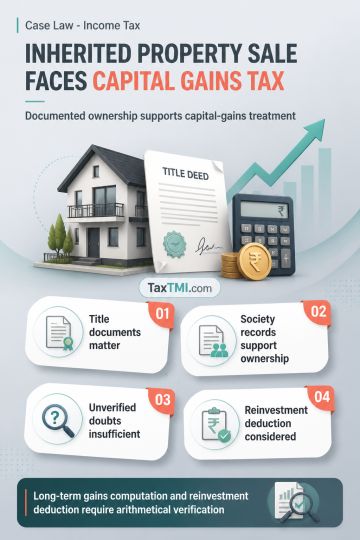
Inherited property sale proceeds require capital-gains treatment where ownership is supported by evidence, not suspicion or unverified signature doubt...
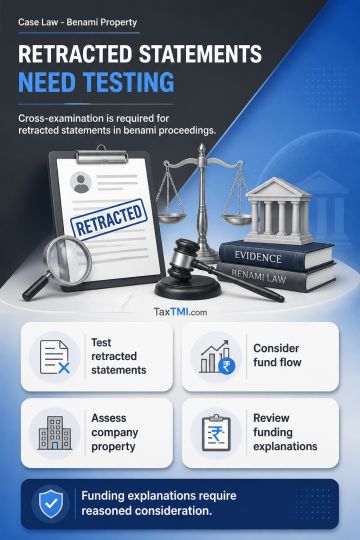
Cross-examination of retracted statements is essential where foundational evidence supports a benami allegation and documented funding explanations re...
Capital-goods exemption covers plant-modernisation accessories, while the import restriction applies only to earlier capital-goods components and spar...
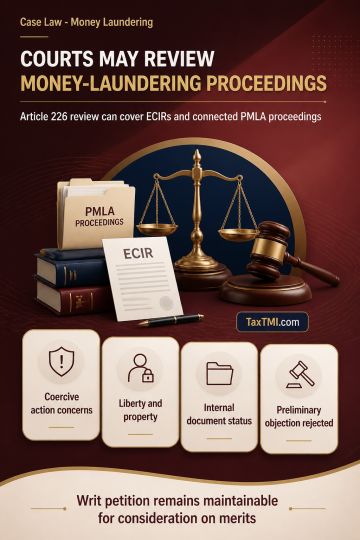
Constitutional judicial review permits challenges to ECIRs and connected money-laundering proceedings where coercive action affects fundamental intere...
The High Court held that an Assessing Officer could not invoke Section 154 of the Income-tax Act, 1961 to rectify a determination made by the Principal Commissioner under Section 5(2) of the Direct Tax Vivad se Vishwas Act, 2020. The scheme itself contains no rectification power, and Section 5(3) makes the amount determined and the order passed under the scheme final and conclusive. As the Act of 2020 does not apply the rectification provisions of the Income-tax Act to such determinations, the rectification order was without authority and was quashed.
The High Court held that an Assessing Officer could not invoke Section 154 of the Income-tax Act, 1961 to rectify a determination made by the Principal Commissioner under Section 5(2) of the Direct Tax Vivad se Vishwas Act, 2020. The scheme itself contains no rectification power, and Section 5(3) makes the amount determined and the order passed under the scheme final and conclusive. As the Act of 2020 does not apply the rectification provisions of the Income-tax Act to such determinations, the rectification order was without authority and was quashed.
Note: It is a system-generated summary and is for quick reference only.
 TaxTMI
  TaxTMI
 of 4817








 Join Channel