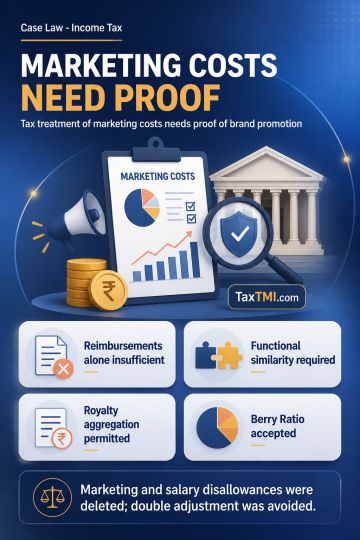
Transfer pricing requires evidence for AMP transactions, functionally reliable comparables, and appropriate aggregation or Berry Ratio benchmarking me...
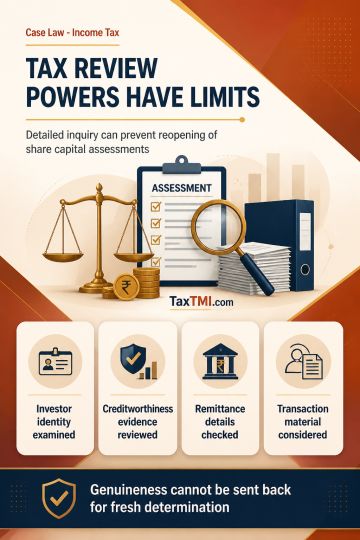
Revisionary jurisdiction cannot reopen share capital assessments where adequate inquiry supports a permissible view and no independent error is establ...
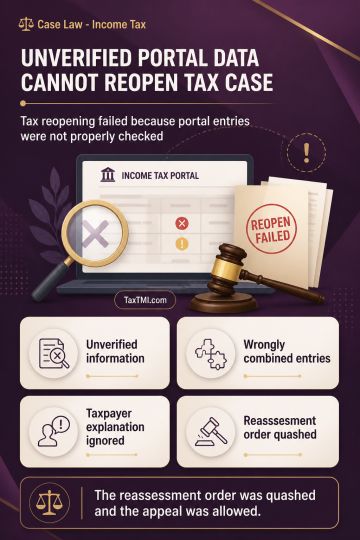
Reassessment jurisdiction fails where unverified portal information is aggregated without examining the taxpayer's explanation or relevance of entries...
Statutory sanction for delayed reassessment requires approval from the prescribed authority; approval by an inferior authority invalidates jurisdictio...
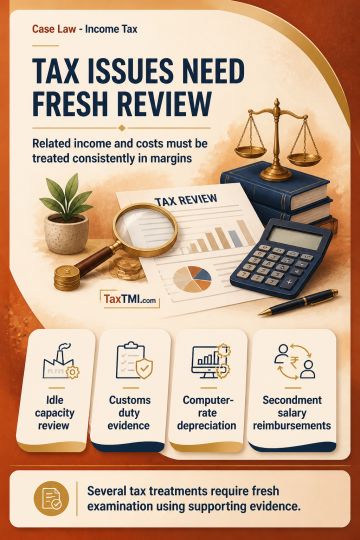
Transfer pricing margin adjustments require matching treatment of non-operating income and related costs, with comparability issues reconsidered on ev...
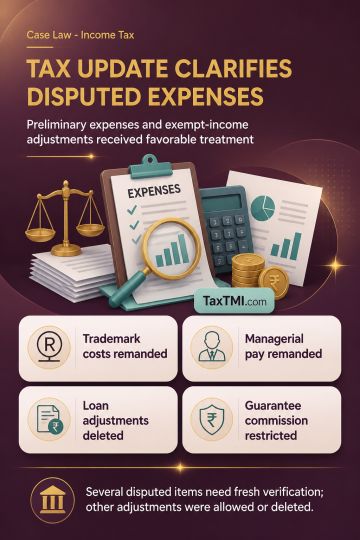
Preliminary-expense amortisation and MAT exempt-income adjustments prevailed, while trademark costs and managerial remuneration require fresh verifica...
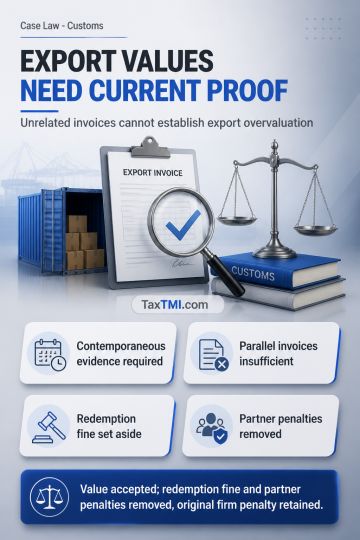
Export valuation requires contemporaneous evidence; unrelated invoices cannot prove overvaluation, and dual penalties on firm and partner are impermis...
Transfer pricing analysis turned on comparability and receivables benchmarking. EClerx Services Limited was excluded as a KPO, and Infosys BPO Limited was excluded because of its large turnover and intangibles; the Tribunal accepted the consistent approach taken in the assessee's own earlier years and declined remand for fresh benchmarking. Interest on outstanding receivables was upheld at LIBOR plus 200 basis points, following the assessee's prior year treatment and rejecting the SBI term deposit rate. The 120-day credit period was set aside as case-specific and was to follow the period adopted in the assessee's own case for AY 2013-14; section 92CE and Rule 10CB were held inapplicable by analogy.
Transfer pricing analysis turned on comparability and receivables benchmarking. EClerx Services Limited was excluded as a KPO, and Infosys BPO Limited was excluded because of its large turnover and intangibles; the Tribunal accepted the consistent approach taken in the assessee's own earlier years and declined remand for fresh benchmarking. Interest on outstanding receivables was upheld at LIBOR plus 200 basis points, following the assessee's prior year treatment and rejecting the SBI term deposit rate. The 120-day credit period was set aside as case-specific and was to follow the period adopted in the assessee's own case for AY 2013-14; section 92CE and Rule 10CB were held inapplicable by analogy.
Note: It is a system-generated summary and is for quick reference only.
 TaxTMI
  TaxTMI
 of 4816












 Join Channel


