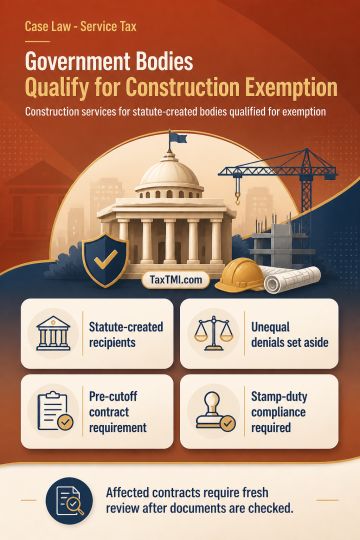
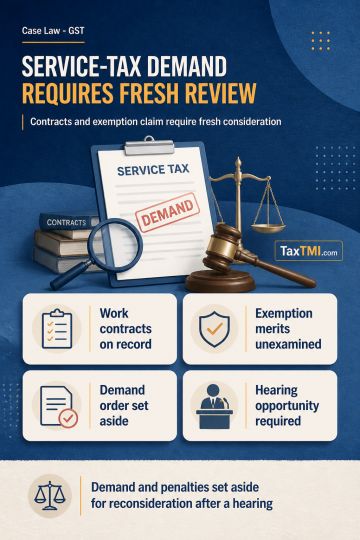
Governmental authority status supports construction-service exemption, while pre-cutoff contract and stamp-duty compliance requires verification on re...
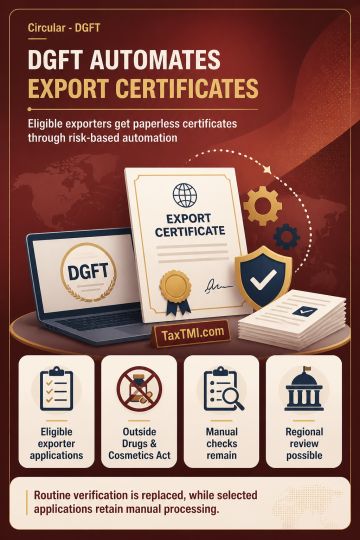
Automated Free Sale and Commerce Certificates enable paperless processing while retaining risk-based manual verification for selected exporter applica...
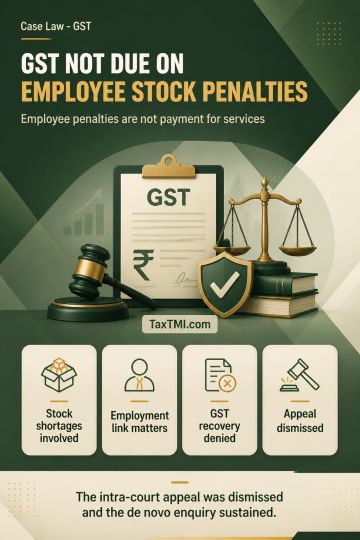
Employee stock-shortage penalties do not constitute consideration for services, preventing GST collection under Schedule II in employment relationship...
Limitation for an appeal under the Insolvency and Bankruptcy Code runs from the date the impugned order is pronounced in open court, not from the date it is uploaded, received, or actually known to the appellant. Where pronouncement is established, a party must act diligently, apply for a certified copy, and can claim only the statutory exclusion for time requisite to obtain it. The appellate tribunal also reiterated that the condonable period under the appeal provision is strictly confined to thirty days plus a further fifteen days; no equitable extension is available beyond that outer limit. On that basis, both appeals filed after the limit were treated as time-barred and the delay applications were rejected.
Limitation for an appeal under the Insolvency and Bankruptcy Code runs from the date the impugned order is pronounced in open court, not from the date it is uploaded, received, or actually known to the appellant. Where pronouncement is established, a party must act diligently, apply for a certified copy, and can claim only the statutory exclusion for time requisite to obtain it. The appellate tribunal also reiterated that the condonable period under the appeal provision is strictly confined to thirty days plus a further fifteen days; no equitable extension is available beyond that outer limit. On that basis, both appeals filed after the limit were treated as time-barred and the delay applications were rejected.
Note: It is a system-generated summary and is for quick reference only.
 TaxTMI
  TaxTMI
 of 4827



 Join Channel


