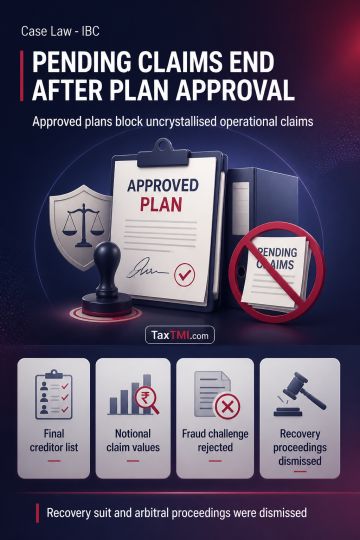
Clean slate principle extinguishes uncrystallised operational claims and bars continuation of pending recovery and arbitral proceedings after plan app...
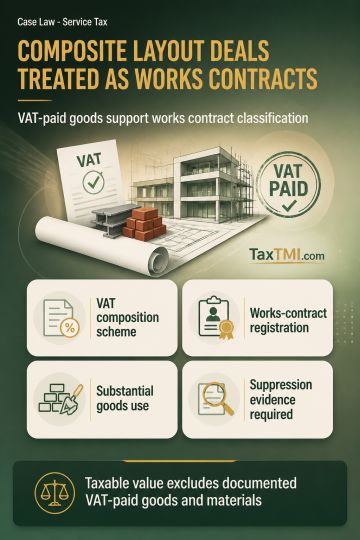
Works contract classification governs composite layout-development contracts where VAT-paid goods are transferred alongside construction and infrastru...
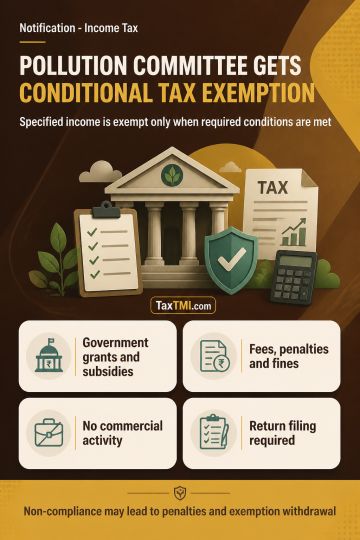
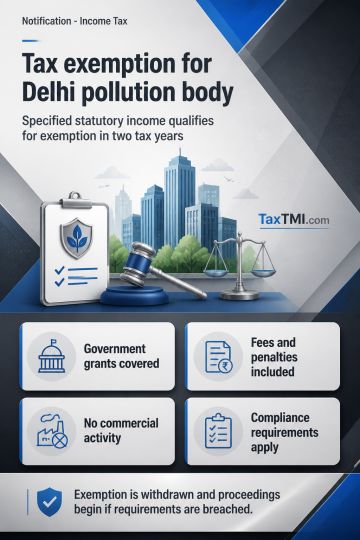
Specified income tax exemption for pollution control body remains conditional on non-commercial activity, unchanged income character, and return filin...
Limitation for an appeal under the Insolvency and Bankruptcy Code runs from the date the impugned order is pronounced in open court, not from the date it is uploaded, received, or actually known to the appellant. Where pronouncement is established, a party must act diligently, apply for a certified copy, and can claim only the statutory exclusion for time requisite to obtain it. The appellate tribunal also reiterated that the condonable period under the appeal provision is strictly confined to thirty days plus a further fifteen days; no equitable extension is available beyond that outer limit. On that basis, both appeals filed after the limit were treated as time-barred and the delay applications were rejected.
Limitation for an appeal under the Insolvency and Bankruptcy Code runs from the date the impugned order is pronounced in open court, not from the date it is uploaded, received, or actually known to the appellant. Where pronouncement is established, a party must act diligently, apply for a certified copy, and can claim only the statutory exclusion for time requisite to obtain it. The appellate tribunal also reiterated that the condonable period under the appeal provision is strictly confined to thirty days plus a further fifteen days; no equitable extension is available beyond that outer limit. On that basis, both appeals filed after the limit were treated as time-barred and the delay applications were rejected.
Note: It is a system-generated summary and is for quick reference only.
 TaxTMI
  TaxTMI
 of 4814





 Join Channel